

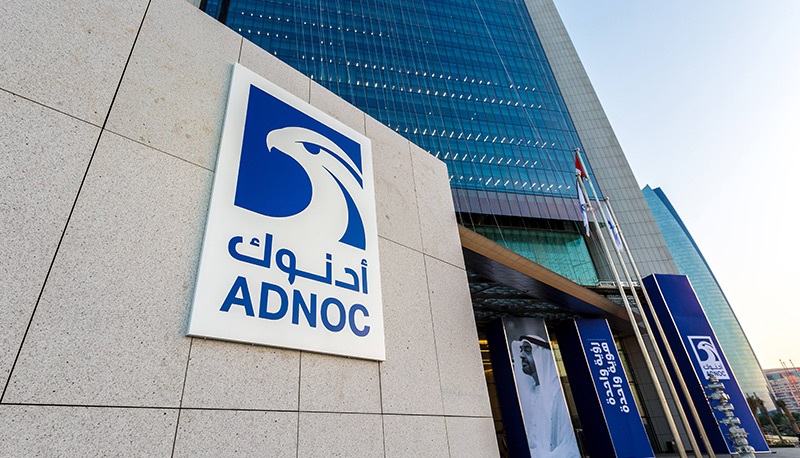
UAE-based energy technology company AIQ has signed an agreement to deploy its artificial intelligence technology across the operations of an Indian oil and gas conglomerate, marking a significant step in its effort to build an international business beyond its dominant relationship with Abu Dhabi National Oil Co.
AIQ will deploy its technology across the Indian company’s refineries, gas stations and digital stores, Chief Executive Officer Dennis Jol said at a media briefing on Wednesday. He declined to identify the customer.
The agreement gives AIQ a foothold in one of the world’s largest and fastest-growing energy markets as oil and gas companies increasingly use artificial intelligence to automate operations, analyze geological data and improve the economics of producing, processing and selling energy.
Register for the next Tekedia Mini-MBA.
Register for Tekedia AI in Business Masterclass.
Join Tekedia Capital Syndicate and co-invest in great global startups.
For AIQ, however, the Indian expansion has significance beyond a single customer win. The company still generates most of its revenue from ADNOC, while customers outside its parent ecosystem account for only about 5% of its business. That makes international expansion an important test of whether AIQ can turn technology developed inside one of the world’s largest national oil companies into a scalable commercial platform for the wider energy industry.
“At the end of the day, you need an entry into this international market, which we are trying to focus on right now,” Chief Technology Officer Saravan Penubarthi said.
AIQ began exporting its technology about 12 to 15 months ago and has since established operations across a growing group of markets, including North America, Kazakhstan, Egypt, Colombia, Malaysia, Vietnam and Kuwait.

The company was formed in 2023 as a joint venture between ADNOC and Presight, an Abu Dhabi-based artificial intelligence company. It develops AI and machine-learning applications designed to improve profitability and operational performance across the energy industry, including within ADNOC. Its expansion reflects a broader shift in the oil and gas sector, where AI is increasingly moving from experimental applications into operational systems.
Energy companies are using AI for cloud-based software, remote-operations automation and seismic-data analysis, among other applications. The objective is practical: extract more value from existing infrastructure, reduce downtime, improve production decisions and lower operating costs.
AIQ’s biggest challenge is that its commercial success remains closely tied to ADNOC.

The company has access to a valuable testing environment through its relationship with the Abu Dhabi producer, where AI applications can be deployed against large-scale energy operations. But selling those technologies internationally requires demonstrating that the systems can work across different companies, assets, regulatory environments and operating models.
The Indian agreement could provide an important reference point.
Refineries, retail fuel stations and digital stores expose AIQ to several layers of the energy value chain, rather than limiting its technology to upstream oil production. That potentially broadens the company’s addressable market and gives it an opportunity to demonstrate applications across industrial operations and consumer-facing businesses.
India is also a relevant market because its energy demand is expanding while its oil and gas companies are investing heavily in refining, distribution, and digital infrastructure.
Analysts say that winning business in such a market would provide more than additional revenue for AIQ. It could help establish the commercial credibility needed to compete for other international energy customers.
That is seen as leverage because AI software for the energy industry can be difficult to sell on the basis of technology alone. Operators typically need evidence that an AI system can work reliably in highly complex industrial environments where operational errors can have substantial financial and safety consequences.
AIQ’s international customer base is still relatively young. The company only began exporting its technology around a year ago, meaning its expansion is entering a phase in which individual contracts could become important references for future sales.
The company is also looking beyond organic growth.
AIQ Considers Acquisitions to Accelerate Expansion
Jol said AIQ is exploring acquisition opportunities as part of its international expansion and indicated that the company has significant financial resources available to deploy.
“We sit on a ton of cash … so deploying capital is definitely up front and center,” he said.
Acquisitions could allow AIQ to accelerate its entry into markets or acquire specialist technologies that would otherwise take years to develop internally.
The strategy also reflects the competitive nature of industrial AI. Energy companies can source technology from established oilfield-services providers, cloud companies, specialist software developers and AI startups.
AIQ already has partnerships with some of the largest companies in those markets, including Microsoft, Nvidia and Amazon Web Services, as well as oilfield-services companies SLB and Baker Hughes.
Those relationships give AIQ access to major technology and energy-industry ecosystems, but they also illustrate the competitive environment it faces. Many of the same companies are developing or providing AI capabilities directly to energy producers.
AIQ therefore needs to establish where it creates distinctive value rather than simply acting as an intermediary between energy companies and major technology providers. Its strongest advantage may be the combination of energy-sector operating experience and AI expertise gained through ADNOC. If the company can package that experience into repeatable software products that work across multiple operators, its international revenue could eventually become less dependent on its parent.
That transition will not happen simply because the company signs contracts in more countries. The more important indicators will be the scale and recurrence of revenue from international customers, the speed at which deployments move from pilots into full operations, and whether AIQ can maintain margins as it expands.
The Indian agreement is thus an early test of a much larger ambition. AIQ is attempting to move from being an AI technology provider closely associated with ADNOC into a global energy-technology company capable of selling its systems across the industry’s entire value chain.
With AI adoption accelerating across oil and gas and AIQ willing to deploy its cash on acquisitions, the company has the resources and industry relationships to pursue that strategy. However, its next challenge is proving that technology developed within Abu Dhabi’s energy ecosystem can become a repeatable international business.