

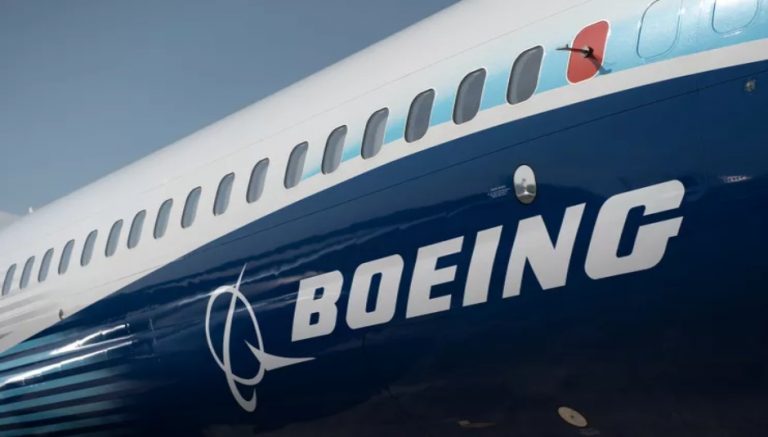
Boeing will resume aircraft deliveries to China next month, marking a breakthrough in the icy trade relationship between Washington and Beijing.
The move comes after months of stalled transactions that left the American aerospace giant shut out of its second-largest market. The restart also follows President Donald Trump’s announcement of a 90-day truce in the U.S.-China trade conflict earlier this month — a key development that appears to have paved the way for the return of Boeing jets to Chinese tarmacs.
CEO Kelly Ortberg confirmed the update on Thursday during a presentation at the Bernstein investor conference, saying China had now given the green light to resume deliveries after previously halting them amid heightened trade tensions.
Register for Tekedia Mini-MBA edition 20 (June 8 – Sept 5, 2026).
Register for Tekedia AI in Business Masterclass.
Join Tekedia Capital Syndicate and co-invest in great global startups.
Register for Tekedia AI Lab.
“China has now indicated … they’re going to take deliveries,” Ortberg said. “The first deliveries will be next month.”
The renewed flow of Boeing jets into China highlights what could be a significant shift in U.S.-China commercial relations — one catalyzed by President Trump’s unexpected trade truce announcement on May 5. The 90-day pause in new tariffs and trade hostilities was framed by Trump as a window to “allow our teams to work on a more comprehensive agreement.”
The truce marked a rare cooling of rhetoric in a trade war that has spanned tariffs on billions of dollars worth of goods, export restrictions, and a near halt in cross-border industrial cooperation. For Boeing, which is often seen as a proxy for broader U.S. manufacturing and export health, the resumption is an early sign that the truce is already having commercial consequences.

Boeing has long depended on China’s booming aviation sector, fueled by a growing middle class and rapid domestic airport expansion, to drive long-term sales growth. But the company’s deliveries to Chinese airlines have slowed to a trickle in recent years, weighed down by regulatory uncertainty, pandemic disruptions, and a wider geopolitical chill.
Ortberg declined to comment on whether the resumed deliveries came with additional conditions or concessions but acknowledged that the development was “encouraging for everyone watching the U.S.-China dynamic.”
Boeing’s Strategic Stakes in China
China is not just a major buyer of Boeing aircraft — it is a critical linchpin in the company’s global business. The country is expected to account for nearly 20% of all global aircraft demand over the next two decades, according to Boeing’s own forecasts. Missing out on Chinese contracts leaves Boeing exposed to European rival Airbus, which has capitalized on the opening to deepen its footprint in the country.

Thursday’s announcement provides a shot in the arm to Boeing’s embattled commercial division, which has been trying to recover from a series of crises — including the two fatal 737 Max crashes and the more recent midair blowout of a door panel on an Alaska Airlines Max 9 jet. Those incidents invited waves of regulatory scrutiny and production restrictions, including a Federal Aviation Administration (FAA) cap limiting output to 38 Max jets per month.
However, Ortberg said Boeing is aiming to ramp up production to 42 planes per month by midyear and will assess increasing that number to 47 by the end of 2025. The company is also targeting certification for its Max 7 and Max 10 models by year-end, which would restore its full narrow-body lineup for the first time in years.
Even with the resumed deliveries, Boeing continues to face tariff pressures. Ortberg noted that the company is still paying duties on some imported aircraft components, particularly from Japan and Italy, used in the production of wide-body Dreamliner jets. Those jets are primarily assembled in South Carolina.
He, however, pointed out that most of those duties can be recouped once the aircraft are exported.
“The only duties that we would have to cover would be the duties for a delivery, say, to a U.S. airline,” he said, downplaying any lasting financial impact for international orders.
He added that the current trade environment, while volatile, is unlikely to be permanent.
“I personally don’t think these [tariffs] will be permanent in the long term,” Ortberg said, expressing cautious optimism about a thaw in U.S. trade relations with its key partners.
Ortberg’s leadership, which began last August, has won cautious praise from major airline CEOs, who had grown increasingly frustrated with Boeing’s delayed deliveries during a period of surging post-pandemic travel demand. United Airlines CEO Scott Kirby, speaking on CNBC Thursday, said he believed Boeing “has turned the corner.”
“We over-ordered aircraft believing the supply chain would be challenged,” Kirby said, noting that global production remains under strain even as demand returns.
Airlines have welcomed the prospect of more predictable Boeing deliveries, especially as summer travel season approaches and capacity constraints loom.
Turning a Corner or Temporary Relief?
While the resumed deliveries to China are a clear win for Boeing, questions remain about whether this shift is a permanent reordering of the U.S.-China trade balance — or just a temporary reprieve under Trump’s 90-day truce.
China’s willingness to re-engage in commercial aviation may indicate a strategic pivot to secure essential industrial partnerships while avoiding further economic fallout. For Trump, allowing Boeing to restart deliveries gives his administration leverage to claim a trade win — even as structural issues in U.S.-China relations remain unresolved.
In the meantime, Boeing is capitalizing on the opportunity, using the breakthrough to reset its narrative. The company still faces a long road to recovery, burdened by regulatory hurdles, production constraints, and the lingering reputational scars of its past missteps.