

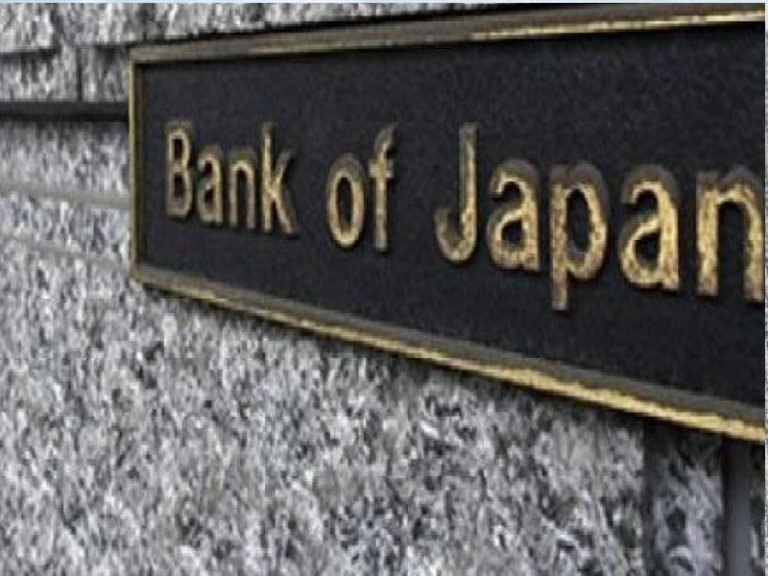
The Bank of Japan appears poised to deliver another historic shift in monetary policy next week, with policymakers expected to raise interest rates to 1%, the highest level in 31 years.
The move underscores how rapidly Japan’s inflation landscape has changed amid rising energy costs, a weak yen, and escalating geopolitical tensions in the Middle East, and would lift the policy rate from 0.75% and mark the first increase since December, further dismantling the ultra-loose monetary framework that defined Japan’s economy for decades.
The expected decision comes at an unpleasant moment for the central bank, with Governor Kazuo Ueda absent from the June 16 meeting due to hospital treatment, leaving Deputy Governor Shinichi Uchida to deliver the post-meeting briefing. However, an economist quoted by Reuters said the central bank governor’s absence won’t affect the decision.
Register for the next Tekedia Mini-MBA.
Register for Tekedia AI in Business Masterclass.
Join Tekedia Capital Syndicate and co-invest in great global startups.
“Ueda’s absence won’t affect the BOJ’s institutional decision to focus on mounting inflation risks rather than ?risks to growth from the Middle East conflict,” said Saisuke Sakai, senior economist at Mizuho Research Institute.
The anticipated rate increase would place the BOJ among a growing group of major central banks that have shifted toward tighter monetary settings as inflationary pressures intensify globally. While the U.S. Federal Reserve is expected to keep rates elevated for longer and the European Central Bank has resumed tightening amid energy-driven inflation concerns, Japan’s move would represent a particularly significant departure given its long history of deflation and near-zero rates.
Inflation, Not Growth, Driving Policy
The expected hike is borne of a growing conviction inside the BOJ that inflation risks now outweigh concerns about slowing economic growth.

The outbreak of conflict in the Middle East has pushed energy prices higher, increasing import costs for resource-dependent economies such as Japan. Combined with a persistently weak yen and a tight labor market, these developments have reinforced fears that inflation could become more deeply embedded in the economy.
Recent data underscore those concerns. Japan’s wholesale prices rose 6.3% year-on-year in May, the fastest pace in three years, reflecting higher energy and import costs. Economists expect those pressures to filter through to consumer prices in the second half of the year, potentially pushing core inflation well above the BOJ’s long-standing 2% target once the effects of government subsidies fade.
That outlook has strengthened the argument among policymakers that emergency-era monetary settings are no longer appropriate.

The expected decision also suggests that the BOJ is increasingly willing to prioritize price stability over growth support. For years, policymakers worried that tightening policy prematurely could derail fragile economic recovery. Now, the concern has shifted toward the risk of acting too slowly and allowing inflation expectations to become entrenched.
A Weak Yen Remains a Major Concern
Currency markets are another factor influencing policy deliberations. The yen has remained under pressure as the gap between Japanese and overseas interest rates widened. Although the BOJ has begun normalizing policy, the pace of tightening has lagged that of other central banks, contributing to yen weakness.
The currency is hovering around the psychologically important 160-per-dollar level, a threshold closely watched by investors because it has previously triggered official intervention by Japanese authorities.
A weaker yen boosts export competitiveness but also raises import costs, particularly for fuel, food, and industrial materials. Those higher costs ultimately feed into consumer prices and corporate expenses. As a result, policymakers face a delicate balancing act. Moving too slowly risks further currency depreciation and imported inflation. Moving too aggressively could undermine economic activity at a time when global growth remains uncertain.
This tension is expected to shape the messaging from Uchida following next week’s meeting.
While financial markets have largely priced in a move to 1%, investors are focused on what comes next. A Reuters survey of economists indicates expectations for another rate increase to 1.25% in the fourth quarter, suggesting markets believe Japan’s tightening cycle is far from over.
The challenge for investors will be interpreting guidance from Uchida, who is generally viewed as one of the more cautious voices on the policy board.
Analysts expect him to signal continued vigilance on inflation while avoiding commitments on the timing of future moves. Such an approach would allow the BOJ to retain flexibility amid uncertainty surrounding the economic fallout from the Iran conflict and broader global growth trends.
“While Uchida is seen as among the more dovish members of the board, he’ll probably try to sound fairly hawkish to avoid triggering unwelcome yen falls,” said Nobuyasu Atago, chief economist at Rakuten Securities Economic Research Institute.
“It’s a dilemma. The BOJ won’t want to pre-commit to any timing given so much uncertainty. But sounding too ?cautious about the next move could weaken ?the yen, push up prices and ?heighten the risk of being behind the curve.”
However, excessively cautious communication could reignite yen weakness, potentially forcing policymakers into more aggressive action later. That makes next week’s press conference nearly as important as the rate decision itself.
Bond Market Strategy Under Review
Beyond interest rates, the BOJ is also expected to provide fresh guidance on its government bond purchasing program. The central bank will review its current bond tapering framework, which runs through March next year, and outline plans for fiscal 2027 and beyond.
Sources familiar with the discussions told Reuters that policymakers may opt to maintain the current pace of bond purchases longer than previously expected. The rationale is to preserve stability in Japan’s government bond market, which has become sensitive to inflation risks and geopolitical uncertainty.
This appears as another balancing act confronting the BOJ. While it seeks to normalize policy and reduce its enormous footprint in financial markets, it must avoid triggering excessive volatility in a bond market that has operated under extraordinary central bank support for years.
The expected move to 1% would be symbolically important because it places Japan’s benchmark rate within the lower end of estimates for a neutral interest rate, generally considered to be between 1.1% and 2.5%.
That milestone suggests the BOJ is entering a new phase of policymaking. The central bank is confronting the traditional challenge faced by its global peers: containing inflation without choking off growth, rather than focusing primarily on stimulating demand and escaping deflation.
The transition marks one of the most significant changes in Japanese monetary policy in decades.
The implications, however, are said to be substantial for investors, businesses, and households. Borrowing costs are likely to continue rising, the era of virtually free money is fading, and policymakers appear willing to tolerate slower growth if that is what is required to prevent inflation from becoming entrenched.