

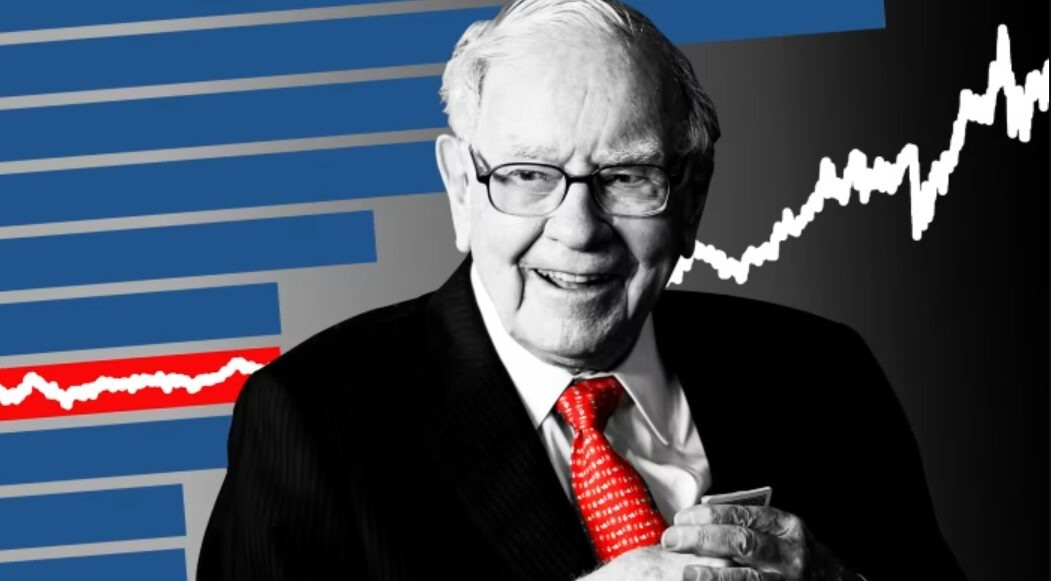
Warren Buffett has moved decisively to close the succession chapter at Berkshire Hathaway, insisting that the conglomerate he spent six decades building is structurally stronger than any single individual — including himself — and fully prepared to endure for generations under new leadership.
In a televised interview with CNBC’s Becky Quick, parts of which aired on Friday, Buffett offered an unqualified endorsement of Greg Abel, who officially assumed the role of chief executive on Thursday. Buffett, now 95, will remain chairman, but the handover ends one of the longest and most influential CEO tenures in modern corporate history.
“It has a better chance, I think, of being here 100 years from now than any company I can think of,” Buffett said, underscoring his conviction that Berkshire’s culture, decentralized operating model, and financial firepower give it unmatched durability.
Register for Tekedia Mini-MBA edition 20 (June 8 – Sept 5, 2026).
Register for Tekedia AI in Business Masterclass.
Join Tekedia Capital Syndicate and co-invest in great global startups.
Register for Tekedia AI Lab.
From textile mill to trillion-dollar empire
Buffett took control of Berkshire Hathaway in the mid-1960s when it was a struggling New England textile company. Over time, he repurposed it into a sprawling conglomerate with businesses ranging from insurance and railroads to utilities, manufacturing, and consumer brands. Today, Berkshire employs close to 400,000 people worldwide and sits on a cash pile of more than $300 billion, one of the largest corporate war chests in the world.
That balance sheet strength, Buffett suggested, is central to why Berkshire can thrive beyond its founder. The company’s ability to withstand economic shocks, seize opportunities during downturns, and operate without reliance on debt markets has long been a defining feature of its strategy.
Abel takes the wheel
Buffett was emphatic that real authority now rests with Abel, a long-time Berkshire executive who previously ran Berkshire Hathaway Energy and later oversaw most of the conglomerate’s non-insurance operations.

“Greg will be the decider,” Buffett said. “I can’t imagine how much more he can get accomplished in a week than I can in a month.”
He went further, adding that he would rather have Abel manage his own money than “any of the top investment advisors or any of the top CEOs in the United States.”
That endorsement is aimed squarely at investors who have questioned whether Abel can command the same level of confidence as Buffett, whose reputation and personal brand have long been closely tied to Berkshire’s valuation. When Buffett announced in May that he would retire as CEO, Berkshire shares briefly lagged the broader market as some investors reassessed the conglomerate’s premium standing.

The skepticism reflects the scale of the challenge Abel inherits. Beyond overseeing dozens of wholly owned businesses, he must also help steward Berkshire’s massive equity portfolio, which includes significant stakes in companies such as Apple. While Buffett has always insisted that Berkshire is run by systems and principles rather than personality, markets have often treated his presence as an intangible asset.
Buffett sought to counter that perception by highlighting Abel’s temperament rather than his profile. He described his successor as practical, grounded, and far removed from the celebrity culture that surrounds many top executives.
“He’s not a distorted individual,” Buffett said. “He likes to play ice hockey with his kids. If the neighbors didn’t know who he was, they wouldn’t have any idea that on Jan. 1, he’s going to be the decider on a company that employs close to 400,000 people.”
The comment echoes Buffett’s long-held belief that sound judgment and discipline matter more than charisma, particularly at an organization designed to operate with minimal interference from headquarters.
While stepping down as CEO, Buffett made clear that he is not cutting ties with Berkshire. He will remain chairman and continue to be involved at the board level, providing continuity during the transition. However, he signaled a noticeable retreat from the public stage.
For the first time in decades, Buffett will not take questions at Berkshire’s annual shareholder meeting this year, an event that has drawn tens of thousands of investors to Omaha and become a fixture on the global investment calendar.
“Everything will be the same,” Buffett said. “I will come in. I won’t be up there speaking at the annual meeting, but I’ll be in the directors’ section.”
What lies ahead?
Abel’s early tenure will be closely watched, particularly how Berkshire deploys its vast cash reserves at a time when large acquisitions are scarce, and valuations remain elevated. Capital allocation has always been Buffett’s defining skill, and investors will be keen to see whether Berkshire maintains its patient approach or adapts under new leadership.
There is also the longer-term question of cultural continuity. Buffett has often argued that Berkshire’s decentralized structure, where subsidiary CEOs run their businesses with little interference, is the company’s true moat. Preserving that culture while navigating a more complex global economy will be one of Abel’s most consequential tasks.