

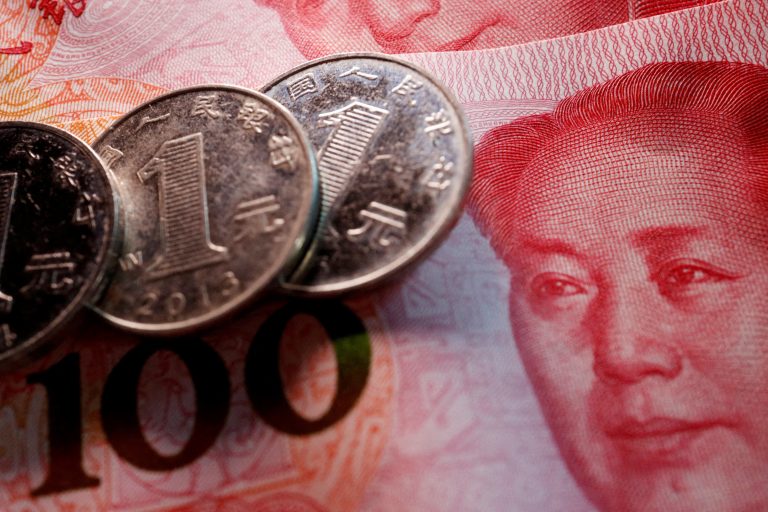
Businesses across global markets see growing scope to increase borrowing in China’s currency, a trend that could provide fresh momentum to China’s long-running effort to expand the global role of the Chinese yuan in trade and finance.
A survey of 300 corporate clients by Standard Chartered found that many companies have greater exposure to the yuan through revenue streams, procurement, and supply chains than through debt, suggesting that the currency remains underutilized as a financing tool.
Nearly a quarter of companies with existing yuan exposure said they expect to increase either onshore or offshore yuan borrowing within the next three years. Overall, about 31% of firms surveyed expect yuan financing to either increase or remain steady over that period.
Register for Tekedia Mini-MBA edition 20 (June 8 – Sept 5, 2026).
Register for Tekedia AI in Business Masterclass.
Join Tekedia Capital Syndicate and co-invest in great global startups.
Register for Tekedia AI Lab.
“Across sectors, RMB revenue exposure through sales, procurement and supply-chain activity exceeds RMB debt exposure,” the bank said in the report, using the formal name for the yuan, the Renminbi.
“This imbalance points to a structural underutilization of RMB financing.”
The findings suggest that many companies are effectively operating with a currency mismatch — earning revenues or paying suppliers in yuan while relying on funding in other currencies such as the U.S. dollar or the Euro.

Corporate treasurers often seek to align liabilities with revenues to reduce exposure to exchange-rate volatility. As trade flows with China deepen, borrowing in yuan could therefore become a natural hedge for companies with growing commercial ties to the world’s second-largest economy.
The survey, conducted between December and January through emailed invitations to Standard Chartered clients, underscores how supply chains and cross-border trade are quietly expanding the yuan’s role in corporate finance.
For Beijing, that shift aligns with a strategic policy goal that has taken shape over the past decade: transforming the yuan from a largely domestic currency into one used more widely for global trade settlement, investment, and financing.

China has pursued that ambition through a range of initiatives, including the development of offshore yuan markets, currency swap agreements with foreign central banks, and cross-border payment infrastructure designed to support international transactions in the currency.
One such initiative is the Cross-Border Interbank Payment System, a Chinese platform created to facilitate international yuan transactions and provide an alternative channel to the dollar-centric global financial architecture.
The growth of yuan-denominated debt markets has been gradual but noticeable. China’s domestic bond market — now one of the largest in the world — has opened more broadly to foreign investors in recent years, while offshore “dim sum” bond markets have expanded to accommodate issuers seeking to raise capital outside mainland China.
Still, the yuan’s footprint in global finance remains small relative to dominant currencies. Data from the financial messaging network SWIFT show the yuan accounts for roughly 3% of global payments, compared with about 50% for the U.S. dollar. The gap underscores the entrenched role of the dollar as the world’s primary currency for trade, reserves, and global capital markets.
Even so, incremental shifts in corporate financing behavior could gradually strengthen the yuan’s presence, particularly in regions where trade links with China are expanding rapidly.
The Standard Chartered survey found significant regional variations in how companies are adopting yuan financing.
In Southeast Asia, adoption is being driven largely by supply chains tied to Chinese manufacturing. Companies sourcing components or finished goods from China increasingly settle trade in yuan, and some are beginning to finance those transactions in the same currency.
Meanwhile, in the Middle East and parts of Africa, the use of yuan is concentrated in sectors such as energy trade, infrastructure development, and large-scale construction projects where Chinese companies and state-backed lenders are heavily involved.
That pattern reflects China’s growing economic footprint across emerging markets through infrastructure financing, commodity trade, and investment projects linked to its overseas development initiatives.
Energy transactions in particular have become an area of interest for policymakers in Beijing seeking to expand yuan usage. In recent years, Chinese officials have encouraged oil exporters to accept yuan payments for crude shipments, a move that could gradually increase the currency’s presence in global commodity markets.
For multinational companies, however, the decision to increase yuan borrowing is influenced by several practical considerations. Access to yuan liquidity, hedging instruments, and regulatory frameworks all play a role in determining whether corporate treasurers are comfortable raising debt in the currency. Capital controls and the relative depth of China’s financial markets also remain important factors shaping investor participation.
Nonetheless, analysts say the structural gap identified in Standard Chartered’s survey — between corporate yuan revenues and yuan-denominated debt — suggests there is significant room for growth. If companies begin to align their financing more closely with their operational currency exposure, demand for yuan funding could expand steadily over time.
Such a shift would not immediately challenge the dominance of the U.S. dollar in global finance. But it would represent another incremental step in China’s broader strategy to internationalize its currency and reduce reliance on dollar-based financial channels.
However, the survey indicates that corporate finance decisions, particularly among companies deeply embedded in China-centered supply chains, could quietly become one of the most important drivers of the yuan’s global expansion in the years ahead.