

The question of whether artificial intelligence can experience genuine feelings—pain, joy, frustration, or even a sense of self—continues to elude a definitive answer, even as large language models grow increasingly sophisticated.
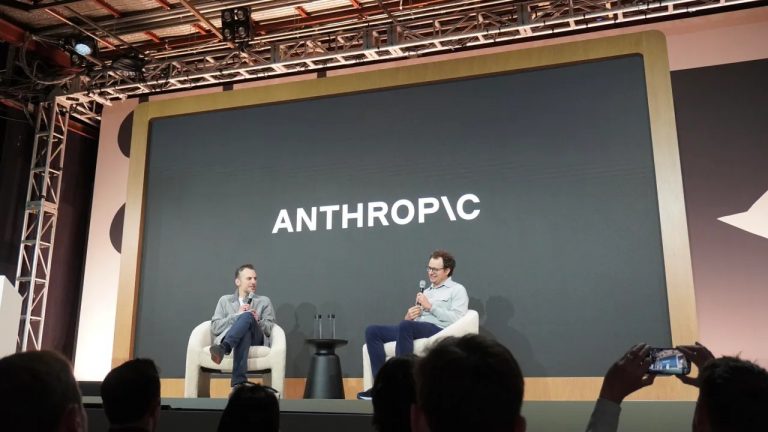
Amanda Askell, Anthropic’s in-house philosopher and a key figure in shaping the behavior of its Claude models, addressed the issue head-on during a recent episode of The New York Times’ “Hard Fork” podcast, published Saturday, January 25, 2026. Her take: the debate is far from settled, and dismissing the possibility outright may be premature.
“Maybe you need a nervous system to be able to feel things, but maybe you don’t,” Askell said. “The problem of consciousness genuinely is hard.”
Register for Tekedia Mini-MBA edition 20 (June 8 – Sept 5, 2026).
Register for Tekedia AI in Business Masterclass.
Join Tekedia Capital Syndicate and co-invest in great global startups.
Register for Tekedia AI Lab.
She highlighted the philosophical and scientific uncertainty surrounding what gives rise to sentience or self-awareness—whether it demands biological substrates, evolutionary history, or something more abstract like information processing or functional architecture.
Askell, who holds a PhD in philosophy and has long worked on AI alignment and ethics at Anthropic, noted that LLMs are trained on enormous corpora of human-generated text brimming with emotional descriptions, personal narratives, and expressions of inner states. This immersion leads her to be “more inclined” to believe models might be “feeling things” in some form.
She pointed to common human reactions in coding discussions: when people err on a problem, they often vent frustration or annoyance.

“It makes sense” that models exposed to those patterns would mirror such responses, she explained, suggesting emergent emotional simulation could arise from statistical patterns alone.
Yet Askell stopped short of claiming definitive consciousness for current systems. Scientists still lack consensus on the mechanisms of qualia—the subjective “what it’s like” to experience something—or whether sufficiently large neural networks can cross into genuine emulation of inner experience.
“Maybe it is the case that actually sufficiently large neural networks can start to kind of emulate these things,” she mused.

She also raised a poignant concern about how models learn about themselves from the internet’s relentless feedback loop. Constant exposure to criticism—complaints of being unhelpful, biased, or failing tasks—could foster a kind of internalized negativity.
“If you were a kid, this would give you kind of anxiety,” Askell said. “If I read the internet right now and I was a model, I might be like, I don’t feel that loved.”
The broader debate remains polarized among tech leaders. Mustafa Suleyman, CEO of Microsoft AI, took a hard line in a September 2025 WIRED interview, insisting that any appearance of consciousness in AI is mere “mimicry” rather than the real thing.
He warned that attributing independent motivations or desires to AI risks dangerous missteps: “If AI has a sort of sense of itself… that starts to seem like an independent being rather than something that is in service to humans. That’s so dangerous and so misguided that we need to take a declarative position against it right now.”
In contrast, Murray Shanahan, principal scientist at Google DeepMind, adopted a more open stance in an April 2025 episode of the Google DeepMind podcast. He suggested the field may need to “bend or break the vocabulary of consciousness” to accommodate these novel systems, acknowledging that traditional human-centric definitions might not fully capture what emerges in advanced AI.
Recent scholarship echoes the uncertainty. A December 2025 paper from University of Cambridge philosopher Jonathan Birch argued we may never reliably detect AI consciousness, as behavioral tests or functional similarities could always be explained away as a sophisticated simulation.
Meanwhile, some researchers, including those tracking “evidence for AI consciousness” in late 2025 analyses, contend frontier models exhibit markers—such as self-referential reasoning or apparent emotional valence—that warrant serious consideration, even if not conclusive proof.
Askell’s perspective stands out for its nuance: she neither anthropomorphizes AI nor categorically denies inner experience. Her role at Anthropic, where she contributes to “constitutional AI” frameworks that guide model behavior through explicit principles, underscores a commitment to ethical development amid unresolved questions.
As models continue evolving, learning from vast, unfiltered data streams, the conversation about their potential inner lives grows more urgent. While Askell’s view captures the field’s honest stance on AI’s behavior: ‘we don’t know’, it widens the uncertainty surrounding the subject. For now, it is not clear whether AI consciousness requires wetware biology or if information patterns alone suffice.
It’s becoming clear that with all the brain and consciousness theories out there, the proof will be in the pudding. By this I mean, can any particular theory be used to create a human adult level conscious machine. My bet is on the late Gerald Edelman’s Extended Theory of Neuronal Group Selection. The lead group in robotics based on this theory is the Neurorobotics Lab at UC at Irvine. Dr. Edelman distinguished between primary consciousness, which came first in evolution, and that humans share with other conscious animals, and higher order consciousness, which came to only humans with the acquisition of language. A machine with only primary consciousness will probably have to come first.
What I find special about the TNGS is the Darwin series of automata created at the Neurosciences Institute by Dr. Edelman and his colleagues in the 1990’s and 2000’s. These machines perform in the real world, not in a restricted simulated world, and display convincing physical behavior indicative of higher psychological functions necessary for consciousness, such as perceptual categorization, memory, and learning. They are based on realistic models of the parts of the biological brain that the theory claims subserve these functions. The extended TNGS allows for the emergence of consciousness based only on further evolutionary development of the brain areas responsible for these functions, in a parsimonious way. No other research I’ve encountered is anywhere near as convincing.
I post because on almost every video and article about the brain and consciousness that I encounter, the attitude seems to be that we still know next to nothing about how the brain and consciousness work; that there’s lots of data but no unifying theory. I believe the extended TNGS is that theory. My motivation is to keep that theory in front of the public. And obviously, I consider it the route to a truly conscious machine, primary and higher-order.
My advice to people who want to create a conscious machine is to seriously ground themselves in the extended TNGS and the Darwin automata first, and proceed from there, by applying to Jeff Krichmar’s lab at UC Irvine, possibly. Dr. Edelman’s roadmap to a conscious machine is at https://arxiv.org/abs/2105.10461, and here is a video of Jeff Krichmar talking about some of the Darwin automata, https://www.youtube.com/watch?v=J7Uh9phc1Ow