

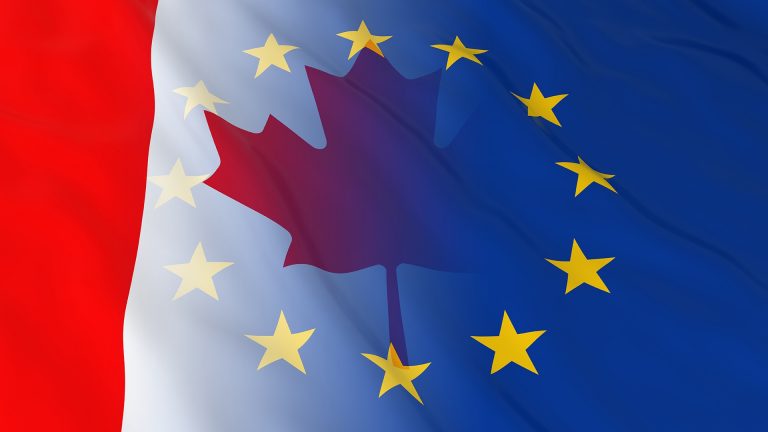
Canada and the European Union have agreed to strengthen their free trade ties and economic cooperation, primarily through the Comprehensive Economic and Trade Agreement (CETA), which has been provisionally in force since September 21, 2017. This agreement eliminates 98% of tariffs on goods, facilitates services trade, and promotes investment, benefiting businesses and consumers in both regions.
Recent developments, as noted in posts on X and official statements, highlight a renewed commitment to deepen these ties, driven by mutual interests in economic resilience, sustainable development, and countering global protectionism. For instance, CETA has boosted bilateral trade by over 65% since 2016, with Canada targeting a 50% increase in non-U.S. exports by 2025, a goal it is on track to meet.
The push for deeper cooperation also responds to external pressures, such as U.S. tariffs announced in February 2025, prompting Canada to diversify its trade partnerships. Key focus areas include critical minerals for the energy transition, support for small and medium-sized enterprises, and enhanced regulatory cooperation to lower non-tariff barriers. Both parties are also advancing environmental and labor commitments, with initiatives like the Canada-EU Green Alliance and collaboration on clean energy transitions.
Register for Tekedia Mini-MBA edition 20 (June 8 – Sept 5, 2026).
Register for Tekedia AI in Business Masterclass.
Join Tekedia Capital Syndicate and co-invest in great global startups.
Register for Tekedia AI Lab.
However, full ratification of CETA by all EU member states remains pending, with some countries like France facing domestic opposition, which could pose challenges. This strategic alignment underscores a shared commitment to a rules-based global trading system, positioning Canada and the EU as key players in fostering economic stability amid global uncertainties.
The deepened free trade ties and economic cooperation between Canada and the European Union (EU) through the Comprehensive Economic and Trade Agreement (CETA) and related initiatives carry significant implications across economic, geopolitical, environmental, and social dimensions. CETA has already increased bilateral trade by over 65% since 2016, with further deepening likely to boost exports of goods (e.g., Canadian minerals, seafood, and agricultural products; EU machinery and pharmaceuticals) and services (e.g., financial and tech services).
Enhanced investor protections and market access encourage cross-border investments, particularly in high-tech, clean energy, and critical minerals sectors vital for the EU’s energy transition and Canada’s resource economy. For Canada, stronger EU ties reduce reliance on the U.S. market, especially critical amid U.S. tariffs introduced in February 2025. The EU, Canada’s second-largest trading partner, becomes a buffer against protectionist pressures.

Benefits for Businesses and Consumers
Elimination of 98% of tariffs and streamlined regulations lower costs for businesses, particularly small and medium-sized enterprises (SMEs), which gain easier access to a combined market of over 500 million consumers. Increased competition and product variety lead to lower prices and better quality for consumers, from Canadian maple syrup in Europe to European wines in Canada.
Trade expansion supports job growth in export-driven sectors like manufacturing, agriculture, and technology, with CETA estimated to have created thousands of jobs already. Canada’s vast reserves of minerals like lithium and cobalt align with the EU’s demand for green technologies, fostering supply chain integration. Canadian exporters gain from reduced EU tariffs, though some EU farmers (e.g., in France) face competitive pressures, potentially fueling resistance to CETA’s full ratification.
Harmonized regulations and mutual recognition of professional qualifications enhance cross-border service provision, particularly in tech and finance. Strengthened Canada-EU ties promote a rules-based trading system, countering protectionist trends exemplified by U.S. policies and China’s state-driven trade practices. This partnership signals a commitment to multilateralism amid global trade tensions.

The agreement reinforces Canada and the EU as like-minded partners sharing democratic values, enabling coordinated responses to global challenges like supply chain disruptions and economic coercion. It positions both as leaders in shaping global trade norms, particularly in areas like digital trade and sustainable development. For Canada, deeper EU ties reduce strategic dependence on the U.S., enhancing negotiating leverage in North American trade discussions e.g., USMCA.
For the EU, Canada’s resources and stable political environment provide a reliable partner amid uncertainties with other global suppliers. Collaboration on critical minerals and clean energy (e.g., Canada-EU Green Alliance) supports the EU’s net-zero goals and Canada’s renewable energy ambitions, fostering innovation in green tech. CETA’s enforceable environmental provisions promote sustainable practices, though critics argue these need stronger mechanisms to ensure compliance.
CETA’s labor chapter commits both parties to uphold International Labour Organization standards, protecting workers’ rights and promoting fair wages. However, concerns persist in some EU states about job losses in agriculture and manufacturing, potentially fueling populist backlash. Critics, particularly in the EU, worry that CETA’s investment provisions could limit governments’ ability to regulate in the public interest (e.g., healthcare or environmental policies). Ongoing dialogue aims to address these concerns to maintain public trust.
Challenges and Risks
CETA’s full implementation requires ratification by all EU member states. Resistance in countries like France, driven by agricultural lobbies and anti-globalization sentiments, could delay or derail deeper integration. Political fragmentation in the EU, with rising populist movements, may complicate consensus on trade liberalization. In Canada, some sectors (e.g., dairy farmers under supply management) face increased EU competition, requiring government support to mitigate losses.
In the EU, public skepticism about trade deals, fueled by fears of lowered standards (e.g., food safety), necessitates robust communication to maintain support. U.S. tariffs and global supply chain disruptions could strain Canada-EU coordination if economic priorities diverge (e.g., Canada prioritizing North American trade stability). Competition from other trade blocs (e.g., China’s Belt and Road Initiative) may challenge the Canada-EU partnership’s global influence.
CETA’s emphasis on sustainability, labor rights, and regulatory cooperation sets a benchmark for future trade deals, influencing negotiations like the EU-Mercosur agreement. By securing supply chains for critical goods (e.g., minerals, energy), Canada and the EU enhance their resilience against global shocks, from pandemics to geopolitical conflicts.
The partnership amplifies both parties’ influence in global forums like the WTO, advocating for open markets and climate-friendly trade policies. The deepening of Canada-EU trade ties through CETA and related initiatives promises significant economic benefits, from trade growth to job creation, while enhancing geopolitical resilience against protectionism and global uncertainties. However, challenges like ratification delays, domestic opposition, and external trade pressures require careful management.
Environmentally and socially, the partnership sets a precedent for sustainable trade but must address concerns about regulatory sovereignty and equitable outcomes to sustain public support. Overall, this strengthened alliance positions Canada and the EU as pivotal players in a rapidly evolving global economic landscape.