

For Canada, geography has always imposed a peculiar kind of strategic reality. The Atlantic Ocean separates Ottawa from Europe, while the United States sits directly beneath its economy, security architecture and supply chains.
Full European Union membership is therefore neither geographically plausible nor legally available: EU treaties reserve membership for European states.
Yet amid a worsening trade relationship with Washington, Brussels has now offered Ottawa something deliberately different—a new category of association that could redefine how a major non-European country relates to the bloc.
Register for the next Tekedia Mini-MBA.
Register for Tekedia AI in Business Masterclass.
Join Tekedia Capital Syndicate and co-invest in great global startups.
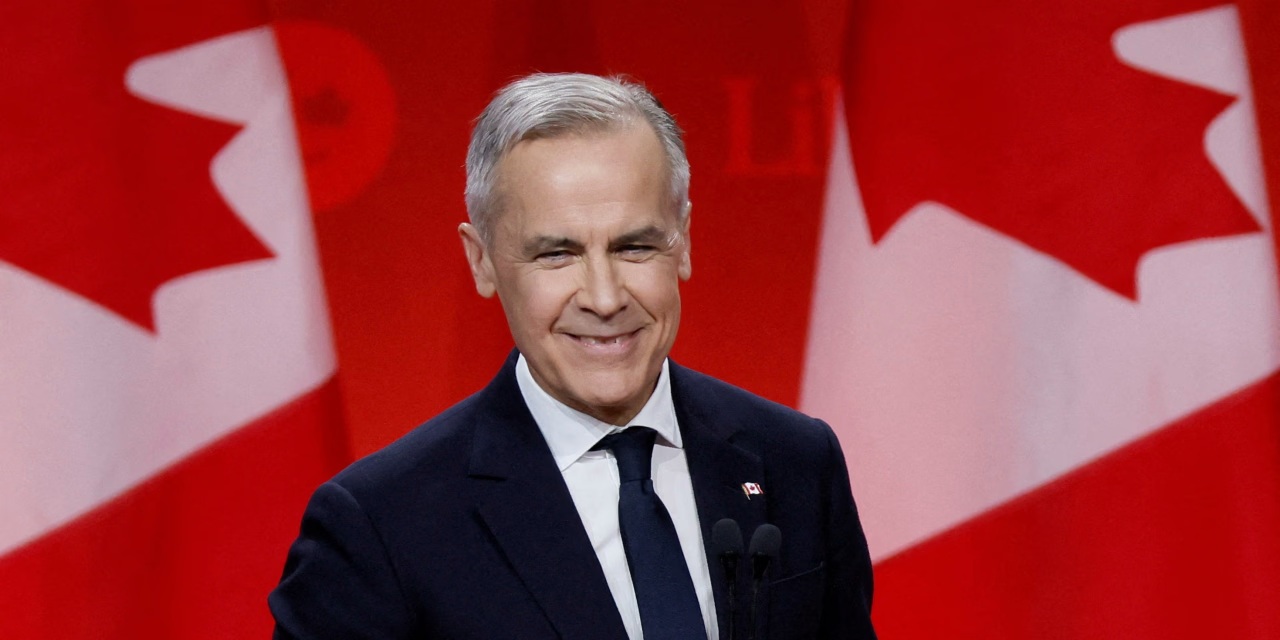
European Commission President Ursula von der Leyen made the proposal directly to Canadian Prime Minister Mark Carney during her State of the Union address. She invited Canada to become the EU’s first “associate member,” framing the idea within a broader “Alliance for the Future” focused on shared prosperity, economic security and democratic cooperation.
Carney subsequently welcomed the proposal, describing Canada and Europe as natural partners in a changing international system. The timing is impossible to ignore. Canada’s relationship with the United States has become increasingly contentious under President Donald Trump.
Whose administration has imposed tariffs while repeatedly discussing Canada in terms of becoming the “51st state.” For Ottawa, the consequence has been more than a trade dispute. It has intensified a strategic conversation about whether Canada’s extraordinary dependence on the American market has become an economic vulnerability.

Europe cannot replace the United States overnight. America remains Canada’s dominant export destination. But the European Union offers something strategically valuable: diversification combined with access to one of the world’s largest integrated markets.
Canada and the EU already have the Comprehensive Economic and Trade Agreement, provisionally operating since 2016. The proposed relationship would seek to move beyond conventional free trade toward cooperation in areas including artificial intelligence, critical minerals, energy, defense, advanced manufacturing, quantum technology and cybersecurity.
That ambition, runs into an important problem: nobody yet knows exactly what “associate membership” means. There is currently no associate-member category in EU treaties. Unlike Norway, Iceland and Liechtenstein.

Which participate in the European single market through the European Economic Area, Canada would presumably require a bespoke arrangement. Questions immediately arise over market access, regulatory alignment, financial contributions, mobility rights and Canada’s ability to influence rules it might be expected to follow.
The political challenge is equally substantial. The EU has traditionally been cautious about allowing countries to select only the advantages of integration without accepting corresponding obligations.
Even CETA remains incompletely ratified across the European Union, illustrating how difficult deeper economic integration can become once national and regional interests enter the process.
Yet the proposal matters precisely because it reflects a larger transformation. Canada is not seeking to become European. It is searching for strategic room to maneuver in a world where traditional alliances are becoming less predictable. Europe, meanwhile, is discovering that its future economic and security resilience may require partnerships extending beyond the continent.
The Atlantic still separates Canada from Europe. But distance no longer prevents strategic integration. If Brussels and Ottawa can turn an undefined label into a workable institutional framework, associate membership could become an experiment in how middle powers build economic and political resilience without surrendering sovereignty.
For now, it is only an opening proposal. But the fact that such a proposal is being discussed at all says something significant about the changing architecture of the Western alliance.