

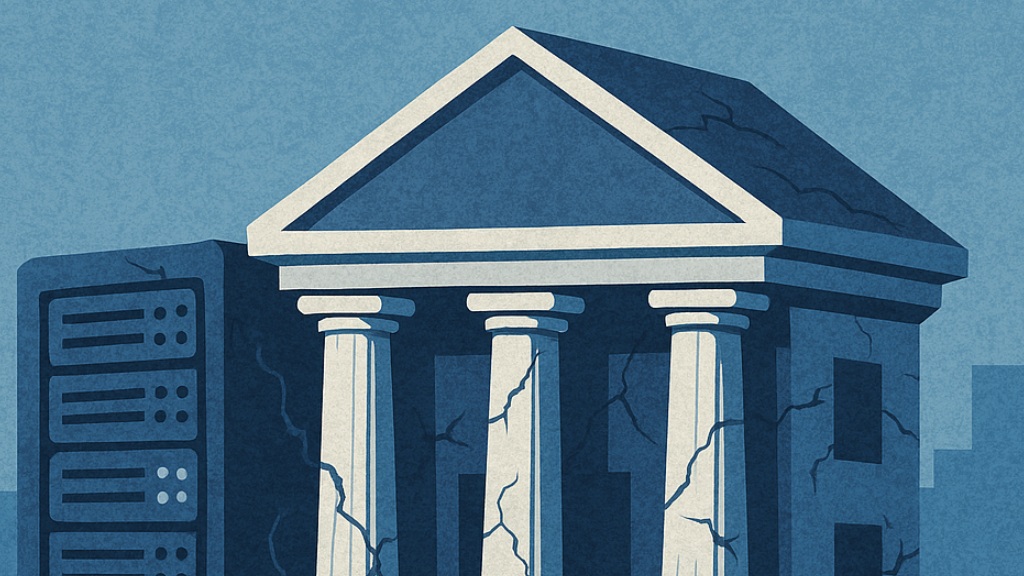
Canada’s banking sector is taking another step toward blockchain-based finance as the country’s six largest banks move to develop a joint tokenized deposits project designed to support 24/7 payments on blockchain networks.
The initiative reflects a broader shift in financial infrastructure, where traditional banks are increasingly exploring how programmable digital money can operate alongside existing payment systems.
Tokenized deposits essentially represent traditional bank deposits in digital form on a blockchain.
Register for the next Tekedia Mini-MBA.
Register for Tekedia AI in Business Masterclass.
Join Tekedia Capital Syndicate and co-invest in great global startups.
Unlike cryptocurrencies, they remain claims against regulated financial institutions and are designed to preserve the familiar relationship between customers and commercial banks.
The technology, however, can allow those deposits to move across blockchain infrastructure, potentially making settlement faster, more automated and available beyond conventional banking hours.
The participation of Canada’s largest banks is significant because it places established financial institutions directly inside the development of digital-asset infrastructure. Rather than treating blockchain as a parallel financial system.

The project suggests that banks are examining how distributed-ledger technology could become part of the banking system itself. The promise of 24/7 payments is particularly important. Traditional financial infrastructure often depends on operating windows, settlement schedules and intermediaries.
Blockchain networks, by contrast, can operate continuously. Tokenized deposits could therefore allow businesses and financial institutions to transfer value at any time, including weekends and holidays, subject to the rules and infrastructure governing the network.
For corporate finance, the implications could extend beyond simply sending money faster.

Tokenized deposits could support programmable payments in which transactions are automatically executed when predetermined conditions are met. A company could, for example, structure a payment so that funds are released when a shipment is verified.
A financial obligation is settled or a digital asset changes ownership. This creates a potential connection between payments, tokenization and capital markets. As stocks, bonds, funds and other financial assets increasingly move onto blockchain infrastructure, the ability to transfer regulated bank money on the same technological rails could become increasingly important.
The development of tokenized deposits is therefore part of a larger effort to build financial markets in which money and assets can interact programmatically. The project also highlights the competitive pressure facing banks from stablecoins and other forms of digital money.
Stablecoins have demonstrated that blockchain-based payment instruments can move value globally and continuously. Banks now face the question of whether traditional deposits can acquire similar technological capabilities without abandoning the regulatory and institutional structures that underpin commercial banking.
However, tokenized deposits will not eliminate the challenges associated with blockchain finance. Regulatory compliance, privacy, cybersecurity, interoperability and consumer protection remain critical considerations.
Banks must also determine how different blockchain networks can communicate with existing payment systems and with one another. A tokenized deposit system that cannot operate reliably across financial institutions would have limited practical value.
There is also a broader question about whether blockchain genuinely reduces costs and settlement friction at scale. Financial institutions must demonstrate that the technology provides measurable advantages over increasingly sophisticated conventional payment infrastructure.
Canada’s initiative nevertheless represents an important experiment in the evolution of banking. The involvement of the country’s biggest banks indicates that blockchain is increasingly being examined not simply as an alternative to traditional finance, but as a potential layer for modernizing it.
If tokenized deposits prove commercially viable, the consequences could reach beyond domestic payments. They could eventually support programmable corporate finance, faster securities settlement and more interconnected digital capital markets.
The most important development may therefore be less about putting bank deposits on a blockchain and more about changing what those deposits can do. A 24/7, programmable form of commercial-bank money could become a foundational component of the emerging tokenized economy.