

The Central Bank of Nigeria (CBN), in line with its mandate to ensure financial system stability and promote financial inclusion, has released new guidelines governing the operations of Agent Banking in Nigeria.
The revised framework seeks to establish minimum operating standards, enhance service delivery, and promote responsible market conduct among agent banking operators.
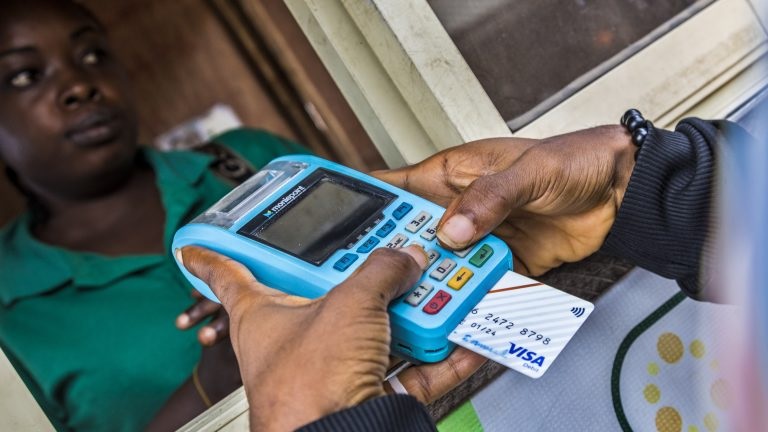
According to a circular signed by Musa I. Jimoh, Director of the Payments System Policy Department, the CBN now requires Point-of-Sale (PoS) operators to operate exclusively with one terminal. Under the new directive, a PoS operator must be appointed directly by a financial institution and is permitted to offer agent banking services solely for one principal within a specified period.
Register for Tekedia Mini-MBA edition 20 (June 8 – Sept 5, 2026).
Register for Tekedia AI in Business Masterclass.
Join Tekedia Capital Syndicate and co-invest in great global startups.
Register for Tekedia AI Lab.
This means that PoS operators currently using multiple platforms to serve customers will now be required to choose one financial partner, whether a commercial bank, non-interest bank, payment service bank, microfinance bank, mobile money operator, or super-agent.
The guidelines also detail the framework for agent banking relationships. As outlined in the circular:
- Agents must be exclusive to one principal only.
- Agents can belong to the network of only one super agent at a time.
- A super agent may contract with multiple principals but must execute separate agency agreements with each.
- Every principal or super agent must obtain approval from its Board of Directors before entering into any agent banking relationship.
In addition to operational standards, the CBN established eligibility criteria for individuals seeking to become agents. Prospective agents must demonstrate the ability to perform the permissible activities listed in the guidelines, provide mandatory information as required, and obtain authorisation from relevant authorities where applicable. Individual agents must also be at least 18 years old and of sound mind.

The guidelines disqualify certain individuals and entities from being appointed as agents, including:
- Persons or entities with non-performing loans within the past 12 months;
- Individuals declared bankrupt or companies that have filed for insolvency;
- Persons convicted of fraud, dishonesty, or related offences;
- Those whose BVN has been watch-listed or blacklisted;
- Individuals or entities who have violated CBN’s agent banking guidelines or any Nigerian law.
To allow for a smooth transition, the apex bank has granted PoS operators a compliance period until April 1, 2026, to align their operations with the new directive. The CBN emphasized that the new rules aim to strengthen Nigeria’s agent banking framework, ensure accountability, and enhance consumer trust in the expanding digital financial services ecosystem.
The new CBN rules on Agent Banking in Nigeria come at a time when Agent Banking has emerged as one of the most transformative developments in the country’s financial landscape over the past decade. It represents a crucial bridge between traditional banking institutions and millions of unbanked and underbanked Nigerians, particularly in rural and semi-urban areas where physical bank branches are scarce.

The concept of agent banking was formally introduced in Nigeria in 2013, when the CBN issued the Guidelines for the Regulation of Agent Banking and Agent Banking Relationships. Initially, adoption was slow due to infrastructural limitations, lack of awareness, and trust issues.
However, several factors have fueled its rapid growth over time. These include;
1. Fintech Innovation – Companies such as OPay, Moniepoint, Paga, and PalmPay revolutionized the space by empowering small-scale entrepreneurs to become agents.
2. Government and CBN Support – The CBN’s financial inclusion strategy aimed to bring 95% of Nigerians into the formal financial system by 2024, positioning agent banking as a key enabler.
3. COVID-19 Pandemic – During the COVID-19 pandemic, which necessitated lockdowns, agent networks became vital for cash access and digital payments, accelerating adoption.
4. Expansion of Mobile and Internet Penetration – Increased smartphone usage and data access supported the growth of digital and agent-based financial services.
Today, Nigeria boasts one of the largest agent banking networks in Africa, with over 2 million registered agents spread across urban centers and rural communities. Major fintech players dominate the ecosystem, offering not just payment services but full-fledged micro-banking capabilities.
As agent banking continues to surge across Nigeria, providing financial access to millions and driving financial inclusion, a troubling side effect has emerged: a rise in fraudulent activities. What was once hailed solely as a success story in financial innovation is now facing credibility challenges due to growing reports of fraud, cybercrime, and unethical practices within agent networks.
The Central Bank of Nigeria (CBN) and financial institutions have expressed increasing concern over this trend, recognizing that unchecked fraud could erode public trust and undermine the progress made in deepening financial inclusion.
According to NIBSS’s “Fraud in the Nigerian Financial Services” report, over 26% of total fraud incidents in 2024 were traced to PoS and agent banking transactions. The rise aligns directly with the rapid expansion of agent networks, a case of opportunity meeting vulnerability.
Industry insiders reveal that the sheer number of unregistered or poorly trained agents has worsened the situation. In many cases, fraudsters register as agents under fake identities, or genuine agents engage in dishonest practices.
To curb the rising fraud in agent banking operations in Nigeria, the CBN has continued to enforce laws and issue guidelines to mitigate these fraud cases. Through regulatory vigilance, technology-driven oversight, consumer protection, and collaboration with industry stakeholders, the apex bank continues to strike a balance between innovation and security.