

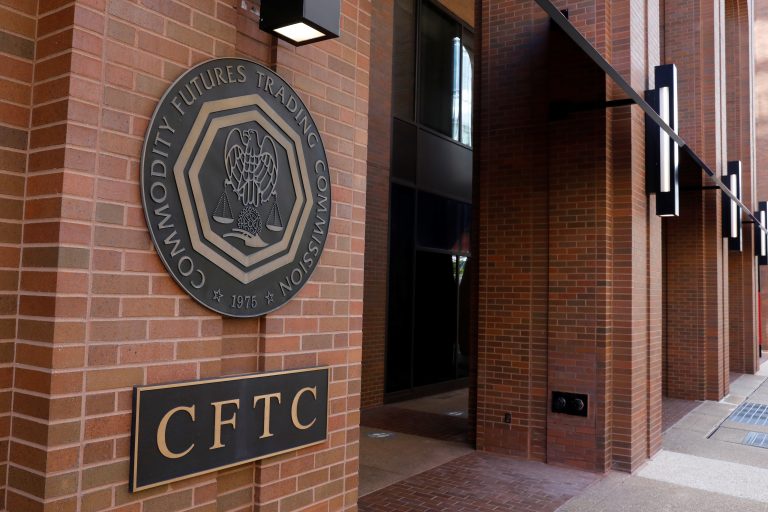
The CFTC’s Market Participants Division (MPD) and Division of Clearing and Risk (DCR) released a set of Frequently Asked Questions (FAQs) addressing registrant and registered entity activities involving crypto assets and blockchain technologies under the Commodity Exchange Act.
The FAQs clarify and expand on two prior staff letters: Staff Letter 25-39 — Tokenized Collateral Guidance. Staff Letter 26-05 — No-action position on accepting certain non-security digital assets (including Bitcoin, Ether, and qualifying payment stablecoins) as margin collateral in derivatives markets.
They were issued after market participants sought additional details following the December 2025 release of those letters. The document draws alignment with the SEC’s FAQs on crypto asset activities and distributed ledger technology, aiming to promote regulatory consistency.
The FAQs approximately 11 questions focus on practical implementation for Futures Commission Merchants (FCMs), Derivatives Clearing Organizations (DCOs), and swap dealers, particularly around using crypto as collateral, capital treatment, residual interest, and operational requirements.
Register for Tekedia Mini-MBA edition 20 (June 8 – Sept 5, 2026).
Register for Tekedia AI in Business Masterclass.
Join Tekedia Capital Syndicate and co-invest in great global startups.
Register for Tekedia AI Lab.
Highlights include: FCMs and Customer Margin/Deficits — An FCM relying on the no-action position in Staff Letter 26-05 may apply the post-haircut value of a customer’s non-security crypto assets including payment stablecoins deposited as margin in futures, foreign futures, or cleared swaps accounts to cover the customer’s debit or deficit balance. Valuation and haircuts follow the letter’s framework.
FCMs may deposit their own payment stablecoins as residual interest in customer segregated accounts, subject to at least a 2% capital charge on market value aligned with SEC treatment. FCMs may not deposit other proprietary crypto assets as residual interest—only payment stablecoins qualify. Payment stablecoins cannot be used to invest customer funds under Regulation 1.25; they are permitted only as the FCM’s own residual interest.
Crypto assets including stablecoins remain ineligible as initial or variation margin for uncleared swaps under Regulation 23.156. However, tokenized versions of otherwise eligible collateral may be accepted if they provide equivalent legal and economic rights per Staff Letter 25-39.

For an FCM’s own holdings: Minimum 20% capital charge for Bitcoin and Ether inventory positions. Minimum 2% for payment stablecoins (again, harmonized with SEC approach). DCOs may accept crypto assets including payment stablecoins as initial margin if they meet Regulation 39.13(g)(10) requirements for minimal credit, market, and liquidity risks. DCOs set and regularly review appropriate haircuts, considering stressed conditions.
File a notice via WinJammer before starting. Initial 3-month ramp-up: Limited to accepting only payment stablecoins, Bitcoin, or Ether as customer collateral; only proprietary payment stablecoins as residual interest. Weekly reporting on digital asset holdings for the first 3 months.
Prompt notice of any significant operational, system, or cybersecurity issues affecting crypto collateral use. Payment stablecoins are narrowly defined; USD-denominated, with strict reserve requirements involving cash and Treasuries, attestations, etc., and tied to the GENIUS Act framework where applicable.
These FAQs supplement existing rules and the two staff letters without creating new binding regulations or no-action relief beyond what’s already stated. They emphasize robust risk management, proper custody/segregation, liquidity, and operational resilience including for blockchain/DLT-specific risks like cybersecurity.

The release supports broader efforts to integrate crypto into regulated derivatives markets while maintaining customer protections and financial stability. CFTC Chairman remarks via related coverage highlighted the goal of clear, consistent rules across agencies.
Market participants should review the full document and consult counsel, as the FAQs represent staff views only and may be updated. This development is part of ongoing coordination between the CFTC and SEC on crypto taxonomy and activities.