

China on Thursday accused the United States of distorting Beijing’s defense policy in a bid to obstruct improving relations between China and India, pushing back against a recent Pentagon assessment that linked easing border tensions to broader U.S.-India strategic competition.
Foreign ministry spokesperson Lin Jian made the remarks at a regular press briefing in Beijing after being asked whether China might seek to exploit a recent reduction in tensions with India over disputed border areas to prevent closer ties between Washington and New Delhi.
Lin rejected the suggestion, saying China views its relationship with India from a “strategic and long-term perspective,” and stressed that the long-running border dispute is strictly a bilateral issue.
Register for Tekedia Mini-MBA edition 20 (June 8 – Sept 5, 2026).
Register for Tekedia AI in Business Masterclass.
Join Tekedia Capital Syndicate and co-invest in great global startups.
Register for Tekedia AI Lab.
“The border issue is a matter between China and India, and we object to any country passing judgment about this issue,” Lin said, adding that China opposes external interference or attempts to frame the issue through the lens of great-power rivalry.
His comments were aimed squarely at a U.S. Department of Defense report released on Tuesday, which said China “probably seeks to capitalize on decreased tension” along the disputed border to stabilize relations with India and prevent the deepening of U.S.-India ties.
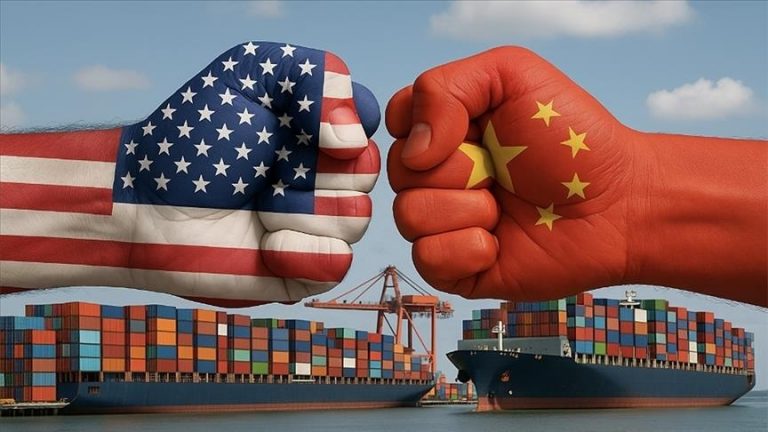
The Pentagon’s assessment reflects Washington’s broader concerns about China’s regional strategy at a time when the United States has been intensifying its political, economic, and defense engagement with India. That push has gathered pace since the second wave of President Donald Trump’s tariff war with Beijing, which has sharply escalated economic tensions between the world’s two largest economies.

As tariffs on Chinese goods widened and hardened, Washington has increasingly looked to India as both a strategic counterweight to China and a potential alternative hub in global supply chains. U.S. officials have stepped up diplomatic outreach to New Delhi, while American companies have accelerated efforts to diversify manufacturing away from China.
Major U.S. technology firms have been at the center of that shift. Apple, in particular, has repeatedly highlighted India as a key manufacturing destination, expanding iPhone assembly there and working with suppliers to deepen local production. Other U.S. tech companies have followed suit, promoting India as a long-term base for electronics manufacturing, software development, and supply-chain resilience as trade frictions with China persist.
Against that backdrop, Washington has also strengthened defense and security cooperation with India, expanding joint military exercises, deepening intelligence sharing, and advancing defense technology partnerships as part of its broader Indo-Pacific strategy. Beijing has consistently viewed these moves as an attempt to draw India more firmly into the U.S. strategic orbit.

China, for its part, has argued that recent progress in easing border tensions should not be politicized or linked to third-party relationships. China and India, Asia’s two most populous nations, have been working to stabilize ties after a deadly clash in the Himalayas in 2020 sent relations to their lowest point in decades. Since then, military commanders and diplomats from both sides have held multiple rounds of talks aimed at disengagement and confidence-building along the disputed frontier.
Lin said those efforts are driven by the interests of China and India alone and should not be mischaracterized by outside powers. He accused Washington of selectively interpreting China’s defense posture to sow distrust between Beijing and New Delhi.
India has been caught in the U.S.’ fights with its archenemies. Earlier this year, Trump threatened to impose 50% tariff on India for buying oil from Russia, which is under U.S. sanctions. Recent developments indicate that the U.S. expects India to be wary of China as much as Russia.