

China has intensified its campaign to restrict Japan’s access to dual-use technologies and critical minerals, blacklisting four key Japanese government defense research institutes and imposing stricter export controls on dozens of other entities in a move that underscores Beijing’s willingness to wield economic leverage amid deepening regional tensions.
The Ministry of Commerce added 20 entities, including the National Institute for Defense Studies and specialized research centers for ground, naval, and air systems, to its export control list. Several units under Mitsubishi Electric and Mitsubishi Heavy Industries were also targeted. Domestic exporters, as well as overseas organizations or individuals, are now prohibited from transferring Chinese-origin dual-use items to these named entities, with any ongoing activities required to stop immediately.
Separately, China placed another 20 entities, including Mitsui E&S Co., drone maker Terra Drone Corporation, nuclear fuel processors, and multiple units of OKI Electric Industry, on a watch list that requires enhanced licensing scrutiny. Both measures took effect immediately.
Register for the next Tekedia Mini-MBA.
Register for Tekedia AI in Business Masterclass.
Join Tekedia Capital Syndicate and co-invest in great global startups.
The ministry stated it would apply stricter end-user and end-use reviews to watch-listed entities, and that exports involving Japanese military users, military applications, or any end-use that could strengthen Japan’s defense capabilities would not be approved.
This latest escalation builds on actions launched in January, when Beijing banned dual-use exports to Japan, including rare earth elements, permanent magnets, and other critical minerals essential for defense technologies. In February, China had already added 20 entities, including subsidiaries of Mitsubishi Heavy Industries, IHI Corp., and Kawasaki Heavy Industries, to its export control list, and placed another 20 firms, including Subaru Corp., TDK Corp., and FUJI Aerospace Technology, on the watch list.
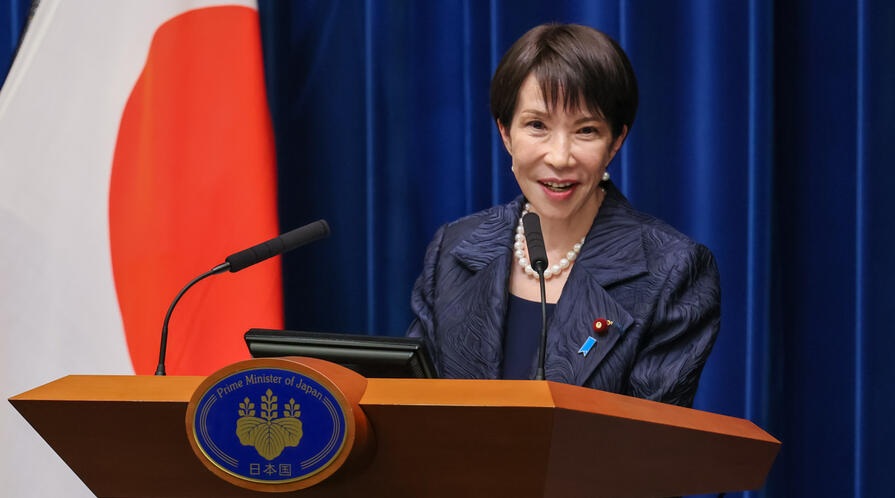
The pressure appears directly linked to comments by Japanese Prime Minister Sanae Takaichi in November suggesting that a hypothetical Chinese attack on Taiwan could prompt a military response from Tokyo — remarks that drew sharp criticism from Beijing.

In a statement on Monday, a spokesperson for China’s commerce ministry said Japan had shown no remorse since the February listings and had instead “accelerated” its push toward what Beijing characterizes as “new-style militarism,” including deploying offensive weapons and launching missiles overseas.
Beijing urged Japan to “turn back from the wrong path,” while insisting the measures would not affect normal bilateral economic and trade activities and that “law-abiding Japanese firms have no reasons to worry.”
Market reactions to the announcement were mixed. Mitsubishi Electric and Howa Machinery, one of the companies on the surveillance list, declined around 1.4% and 4.6%, respectively, while Mitsubishi Heavy Industries and Terra Drone Corp gained 4.9% and 1.7%. China’s strategy reflects a calculated use of its dominance over critical mineral supply chains as a tool of deterrence, according to Gracelin Baskaran, director of the critical minerals security program at the Center for Strategic and International Studies. In a report published in January, she noted that countries expressing support for Taiwan remain particularly exposed to such measures.

Japan has worked since 2010 to reduce its dependence on China for rare earths through domestic refining and processing investments. However, it remains deeply entangled in supply chains that rely on China and Vietnam, from mining through to permanent magnet manufacturing.
Koki Akimoto, an economist at Daiwa Institute of Research, estimated in December that a one-year cutoff of Chinese rare earth imports and sustained component supply constraints would reduce Japan’s real GDP by about 1.3%, or roughly 7 trillion yen ($43.3 billion).
The latest restrictions highlight the growing intersection of economic policy and national security in the Asia-Pacific region. As tensions over Taiwan and regional influence persist, Beijing appears prepared to use its leverage over critical materials to shape the behavior of neighbors it views as aligning too closely with U.S. interests.
For Japanese companies, the measures add another layer of complexity to supply chain planning. Many have already begun diversifying sources and increasing stockpiles, but full decoupling remains challenging given China’s dominant position in processing and refining.
The episode also raises questions about the effectiveness of such targeted economic actions. While they send a clear political signal, they risk disrupting broader bilateral trade relationships that both countries have long benefited from. Beijing’s insistence that normal economic activities will not be affected suggests it is attempting to calibrate pressure without triggering a wider economic rupture.
However, as the situation evolves, analysts expect Japanese firms and policymakers to accelerate efforts to build more resilient supply chains, while Beijing continues to use its mineral dominance as a strategic card in its broader competition for regional influence.