

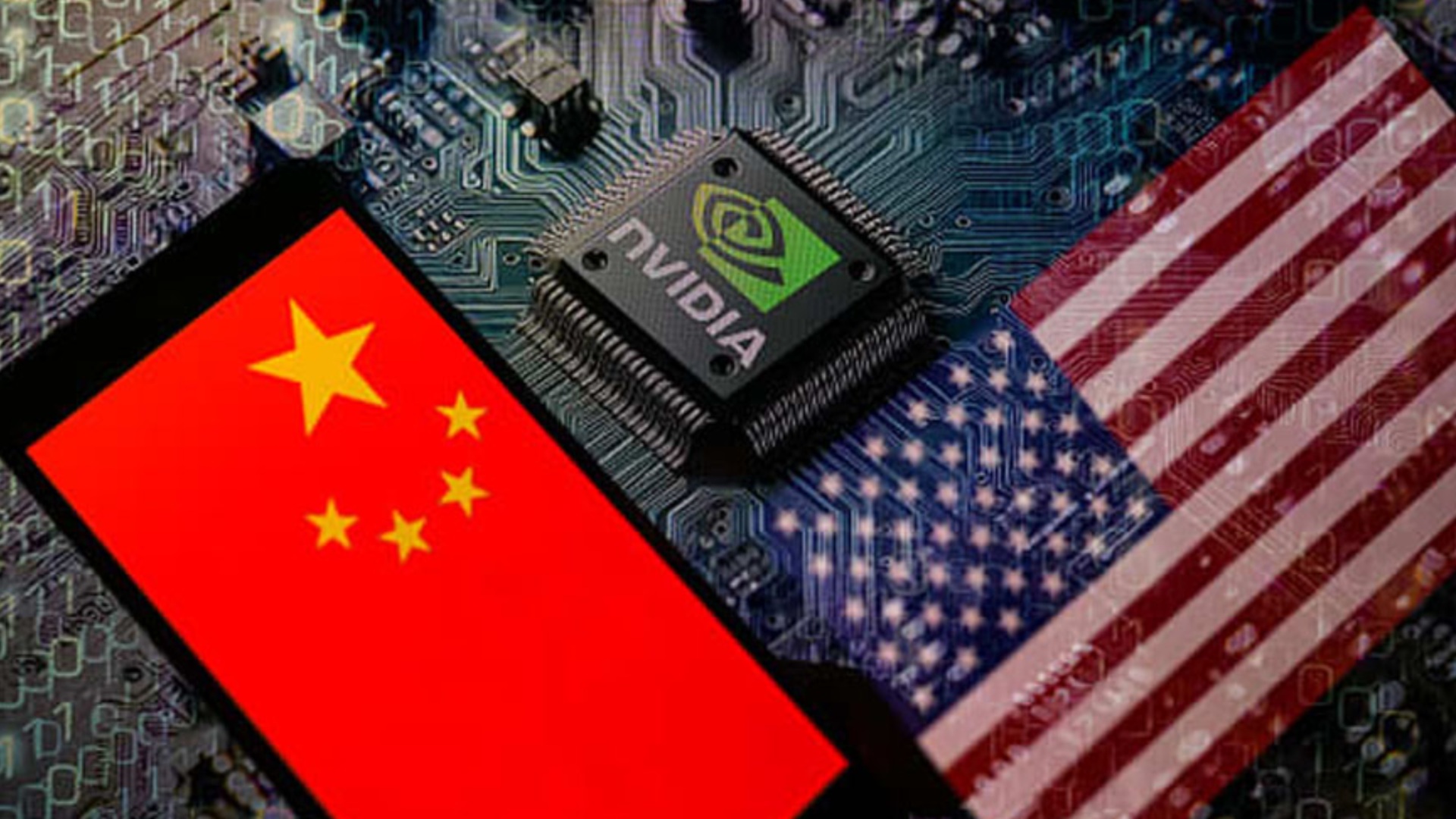
China has sharpened its challenge to Washington’s semiconductor restrictions, announcing on Saturday two new investigations into U.S. trade practices: one into alleged discrimination in chip policy, and another into suspected dumping of analog chips, just as both sides prepare for another round of trade talks in Spain.
The Ministry of Commerce said the first probe will examine whether Washington’s policies discriminate against Chinese companies in the trade of chips. The second will scrutinize imports of certain U.S. analog chips, such as those used in hearing aids, Wi-Fi routers, and temperature sensors, to determine whether dumping practices have harmed China’s domestic industry.
According to the ministry, the United States has in recent years imposed a series of restrictions on China’s access to advanced semiconductors, including export controls and trade discrimination inquiries. These “protectionist” practices, it argued, are designed to “curb and suppress China’s development of high-tech industries such as advanced computing chips and artificial intelligence.”
Talks to Start in Madrid
Chinese Vice Premier He Lifeng is set to lead a delegation to Madrid from September 14 to 17 for another round of economic dialogue with Washington. Beijing said discussions will focus on tariffs, the “abuse” of export controls, and the contentious issue of TikTok.
In a statement released Saturday, the ministry questioned Washington’s strategy, saying: “What is the U.S.’s intention in imposing sanctions on Chinese companies at this time? China urges the U.S. to immediately correct its erroneous practices and cease its unwarranted suppression of Chinese companies. China will take necessary measures to resolutely safeguard the legitimate rights and interests of Chinese companies.”
Only a day earlier, the U.S. Commerce Department had added 32 entities to its restricted trade list, 23 of them Chinese. That list included two firms accused of acquiring U.S. chipmaking tools for Semiconductor Manufacturing International Corp (SMIC), China’s leading contract chipmaker.
The Madrid talks will mark the fourth major in-person meeting this year between the two economic powers, part of a fragile trade truce that has seen both sides reduce retaliatory tariffs and restore U.S. access to Chinese rare earth minerals. After meetings in Geneva and London, negotiators in Stockholm agreed in late July to extend a tariff pause by another 90 days. President Donald Trump formally approved the extension on August 12, setting a new deadline of November 10.
TikTok remains a flashpoint. The short-video app, owned by China’s ByteDance, faces a looming U.S. ban unless it moves into American ownership. Trump has extended TikTok’s divestment deadline to September 17. U.S. lawmakers argue the platform could expose American user data to Beijing’s control.
China’s official People’s Daily sought to counter that claim in a weekend editorial, declaring: “The Chinese government attaches great importance to data privacy and security and has never and will never require companies or individuals to collect or provide data located in foreign countries for the Chinese government in violation of local laws.”
The paper warned that Beijing will “take necessary measures to safeguard national interests and the rights of Chinese companies” if Washington proceeds with further restrictions.
The Semiconductor Frontline
The flare-up highlights how semiconductors have become the frontline in a broader struggle for technological dominance. U.S. restrictions aim to choke off China’s access to high-end chips critical for artificial intelligence and advanced computing, while Beijing responds with counter-investigations to challenge the legitimacy of Washington’s rules.
What makes this standoff particularly sharp is its resemblance to earlier disputes with other major economies. Europe has also been pressing Washington over export restrictions, wary that American policies might unfairly tilt supply chains. But China’s move is more aggressive: by invoking “anti-discrimination” rules and dumping probes simultaneously, it signals that Beijing is ready to use WTO-style mechanisms to challenge U.S. dominance in chip infrastructure.
Backstory: Echoes of Past WTO Battles
China’s latest actions fit a familiar pattern in its trade confrontations with Washington. In 2012, Beijing lodged a WTO complaint accusing the U.S. of discriminatory tariffs on Chinese steel pipes and solar panels. That same year, the U.S. filed a counter-complaint alleging that China had unfairly subsidized its rare earth industry. Both cases dragged on for years and underscored how the world’s two largest economies used the WTO’s anti-dumping and anti-discrimination mechanisms to press their case.
Similarly, in 2016, the U.S. imposed duties on Chinese cold-rolled steel, alleging dumping at below-market rates. China retaliated with its own probe into American broiler chicken exports, eventually winning a WTO ruling in its favor. These battles revealed a tit-for-tat dynamic: when Washington targeted Chinese industrial exports, Beijing often countered by focusing on U.S. agriculture or technology products.
Thus, China is effectively reviving this playbook by opening fresh probes into American chips just before the Madrid meetings. The difference this time is scale: unlike steel or poultry, semiconductors are now the backbone of both economies’ technological ambitions. The dispute is no longer about commodity goods but about who controls the building blocks of artificial intelligence, cloud computing, and next-generation defense systems.
The backdrop of earlier WTO disputes shows why Beijing is doubling down. For years, it used WTO rulings to push back against what it saw as U.S. protectionism, with mixed success. But now, with Washington taking steps outside WTO structures—through export controls and entity lists—China is blending WTO-style investigations with political pressure to push back harder.