

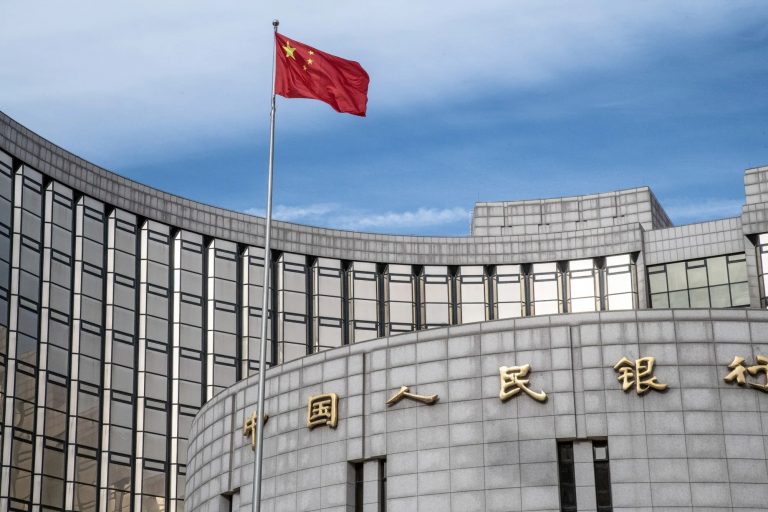
Banks across China are accelerating a major shift in credit allocation toward artificial intelligence, advanced manufacturing, and other strategic technologies as Beijing pushes the financial system to support a sweeping transformation of the country’s economic model.
Bankers say the redirection of loans toward innovation-driven sectors is already underway and is expected to intensify following policy directives announced during the annual session of the National People’s Congress, where senior leaders pledged stronger financial backing for emerging technologies over the next five years.
The move is a deliberate effort by Beijing to reposition the world’s second-largest economy around technological innovation, as policymakers seek to reduce reliance on the property sector while strengthening China’s ability to compete globally in fields such as artificial intelligence and semiconductors.
Register for Tekedia Mini-MBA edition 20 (June 8 – Sept 5, 2026).
Register for Tekedia AI in Business Masterclass.
Join Tekedia Capital Syndicate and co-invest in great global startups.
Register for Tekedia AI Lab.
Banks Pivot As Property Lending Fades
Executives at several Chinese lenders say technology financing has become a top priority for new loan issuance in 2026. An official at a large state-owned bank told Reuters that the lender was stepping up funding for sectors including artificial intelligence, biotechnology, and advanced manufacturing, areas that have been identified by policymakers as critical to the country’s long-term competitiveness.
The bank is also considering specialized credit products with lower interest rates designed for small and micro-sized technology startups, the official said.
The shift comes as Chinese lenders continue to deal with the aftermath of a deepening crisis in the property market, which for decades served as the backbone of bank lending and local government revenue. Outstanding real estate loans fell 1.6% to 51.95 trillion yuan at the end of 2025, according to central bank data, reflecting a steady contraction in financing to the sector as developers struggle with high debt and weak housing demand.

At the same time, loans to small- and medium-sized technology companies surged.
Credit extended to such firms reached 3.63 trillion yuan ($528 billion) by the end of last year, marking annual growth of nearly 20% and outpacing overall loan expansion by more than 13 percentage points.
Bankers say the pivot toward technology lending is being reinforced by government pressure as regulators link bank performance assessments to their support for strategic industries.

A loan officer at a mid-sized bank in Shanghai said the lender had introduced a fast-track approval system for advanced technology companies to accelerate access to financing.
“This has become a political mandate,” the officer said. “If you don’t perform well in this area, it affects the performance assessments of the bank president and the branches below.”
Major lenders, including China Construction Bank and Bank of China, have also issued public statements pledging to support national technology strategies and expand financing to innovation-driven sectors.
The country’s banking regulator, the National Financial Regulatory Administration, has been encouraging banks to expand what policymakers call “technology finance,” including loans backed by intellectual property and venture-style lending to startups.
Internal targets at many banks are now being revised upward. A corporate lending manager at a joint-stock bank in eastern China’s Jiangsu province said the institution aims to increase new loans to high-tech and innovation companies by about 30% in 2026, up from roughly 20% growth the previous year.
Such goals highlight the scale of the financial resources Beijing is mobilizing to support technological development. Analysts say the push also pinpoints a broader strategic calculation: the country must build domestic capacity in critical technologies as geopolitical tensions reshape global supply chains.
Technology Competition With The United States
China’s emphasis on artificial intelligence and advanced manufacturing is closely linked to its strategic rivalry with the United States.
Washington has imposed a series of export restrictions aimed at limiting Chinese access to advanced semiconductors and chipmaking equipment, moves designed to slow China’s technological progress. In response, Beijing has intensified efforts to cultivate domestic technology champions capable of replacing foreign suppliers and driving innovation within China’s industrial ecosystem.
The government’s policy agenda, therefore, seeks to ensure that promising startups and research-driven firms have access to financing even if international investors become more cautious.
Global financial institutions have grown increasingly wary about lending to some Chinese technology firms because of geopolitical tensions and regulatory uncertainties. As a result, domestic banks — which dominate China’s financial system — are expected to become the primary source of capital for many emerging technology companies.
Another factor behind the technology push is China’s changing demographics. The country faces a rapidly ageing population and a shrinking workforce, trends that threaten to slow long-term economic growth.
Policymakers see automation, artificial intelligence, and advanced manufacturing as critical tools for maintaining productivity as labor supply declines. Investments in robotics, digital infrastructure, and high-value manufacturing could allow China to sustain industrial output even with fewer workers.
Risks From Lending to Early-stage Firms
While the policy push offers banks new opportunities for loan growth, analysts warn that financing young technology companies carries significant risks. Unlike traditional industries such as property or infrastructure, many technology startups lack tangible collateral and may operate for years without positive cash flow.
“Compared with traditional sectors, many tech startups are in the early stages with negative operating cash flows, higher failure rates and collateral that is often intellectual property,” said Gary Ng, senior economist at Natixis.
“These make it hard for banks to assess their prospects and evaluate potential recovery rates.”
Ming Tan, a director at S&P Global Ratings, said some loans could eventually become problematic, particularly in industries where rapid government-driven investment leads to excess capacity.
Technology Lending Still A Small Share
Despite the rapid growth, technology loans still represent a relatively small portion of China’s banking system. Credit to high-tech and innovation companies accounted for about 8% of total bank lending last year, compared with roughly 19% for the real estate sector.
However, analysts expect that balance to continue shifting as policymakers push banks to prioritize strategic industries.
Overall, the lending shift signals a deeper transformation in China’s growth model. For decades, property development and infrastructure spending drove economic expansion, supported by massive flows of credit from state-controlled banks.
Now policymakers are attempting to redirect that financial firepower toward innovation and industrial upgrading. The strategy is expected to reshape China’s financial system and industrial structure, positioning technology and artificial intelligence as the central engines of economic growth in the decades ahead.