

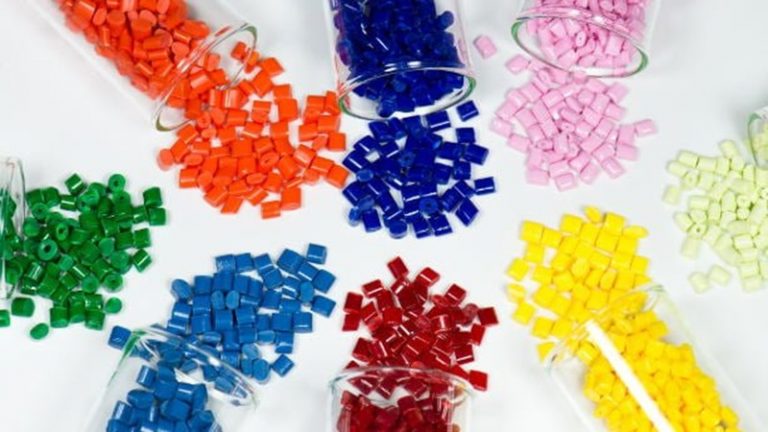
China has imposed sweeping anti-dumping duties on imports of polyformaldehyde (POM) copolymers—a high-performance engineering plastic—from the United States, the European Union, Japan, and Taiwan, concluding a trade investigation that further intensifies global economic friction.
The Chinese Ministry of Commerce announced the tariffs on Sunday, May 19, saying it had found that producers from the four regions had dumped POM copolymers into the Chinese market, harming domestic manufacturers. The duties, effective immediately, range from 3.8% to as high as 74.9%, depending on the country and company involved.
U.S. Hit Hardest, Taiwan Firms Get Leniency
Among the countries targeted, the United States faces the steepest duties, up to 74.9%, on its exports of POM copolymers to China. European firms will be subject to 34.5% tariffs, while Japanese exporters will face 35.5%, although Asahi Kasei Corp was granted a reduced rate of 24.5%.
Register for Tekedia Mini-MBA edition 20 (June 8 – Sept 5, 2026).
Register for Tekedia AI in Business Masterclass.
Join Tekedia Capital Syndicate and co-invest in great global startups.
Register for Tekedia AI Lab.
Taiwan’s overall duty rate was set at 32.6%, but two major Taiwanese manufacturers—Formosa Plastics and Polyplastics Taiwan—received significantly lower duties of 4% and 3.8%, respectively.
The ministry said the move follows the conclusion of an anti-dumping probe launched in May 2024, shortly after the Biden administration imposed sharp tariff hikes on Chinese electric vehicles, semiconductors, solar equipment, and other goods. The U.S. tariffs, which escalated tensions between Washington and Beijing, are widely seen as a trigger for China’s retaliatory investigation.
What Are POM Copolymers and Why Do They Matter?
POM copolymers, also known as acetal plastics, are widely used in industries ranging from automotive manufacturing to consumer electronics and medical devices. These plastics can partially replace metal components such as copper and zinc due to their high strength, rigidity, and resistance to wear and solvents. Their growing use in vehicle parts, precision instruments, and gear assemblies underscores their industrial importance.

In its statement, the Ministry of Commerce said: “The dumping of imported POM copolymers has caused substantial damage to the domestic industry, and the imposition of anti-dumping duties is in accordance with Chinese law and WTO regulations.”
The move is meant to protect domestic producers, several of whom had petitioned Beijing to investigate what they alleged were unfairly priced imports flooding the market.
Amid 90-Day Tariff Break
While the anti-dumping measures are framed as a domestic market protection strategy, the timing of the investigation and its conclusion align closely with rising trade hostilities between China and the United States.

The probe was initiated just days after the U.S. announced fresh tariffs on Chinese-made goods, reigniting a tit-for-tat tariff spiral. Beijing’s response now adds pressure on American chemical and plastic manufacturers at a time when the two countries are attempting to stabilize trade relations.
The announcement also comes mere days after Washington and Beijing agreed to a 90-day truce, aimed at reducing some of the punitive tariffs on each other’s goods. That ceasefire now appears fragile, with analysts warning that this latest move could provoke new retaliatory measures.
The tariffs on POM copolymers underscore China’s increasingly assertive use of trade defense instruments to counter what it views as politically motivated protectionism by the U.S. and its allies. The Ministry’s decision, though legally framed, carries strategic weight.
The Chinese statement emphasized that the investigation was conducted “in line with WTO principles,” and that duties would remain until further notice to “restore fair market conditions.” Six major Chinese companies from the plastic and chemical sectors were involved in the petition that triggered the probe.
China’s trade authorities said the investigation had been conducted with “fairness, transparency and adherence to international trade norms.”
Analysts suggest that the inclusion of multiple trading partners—especially U.S. allies like the EU and Japan—reflects Beijing’s effort to broaden its defensive posture amid growing Western coordination on China-related trade policy.
With duties of up to 74.9%, the new tariffs will significantly curtail the economic viability of shipping POM copolymers into China for many foreign producers. For U.S. exporters, in particular, the measure may represent an effective market block.
Beijing’s move is also likely to be read as a signal that China will not hesitate to retaliate with tariffs of its own, especially in sectors where its domestic supply base is considered strong or strategic.
Although the 90-day truce between the U.S. and China remains officially in place, this latest development shows that trade hostilities are far from resolved.