

China has warned that European restrictions on exports of advanced semiconductor manufacturing equipment are straining relations with the European Union and could prompt Beijing to limit access to its own technology, adding pressure to trade negotiations between the two sides.
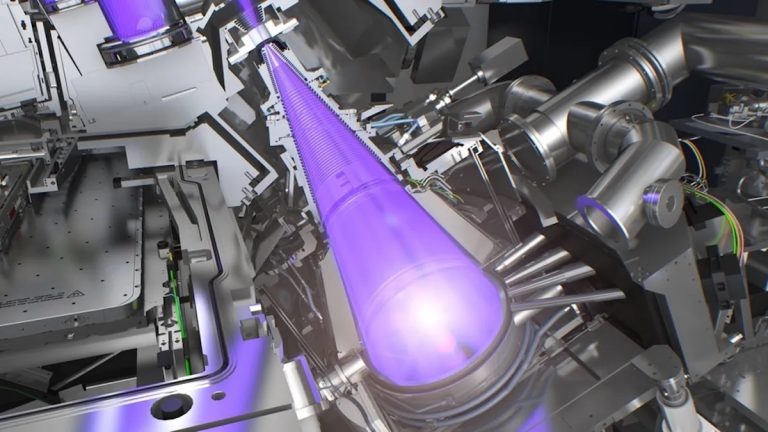
Qu Xun, China’s minister-counsellor in Madrid, told Reuters that Beijing wants the EU to make independent decisions on trade and technology rather than follow Washington’s export-control policy. He argued that restrictions imposed on equipment produced by Dutch semiconductor giant ASML were preventing Chinese manufacturers from accessing technology needed to advance domestic chip production.
“We want the European Union to make its own decisions and not follow the instructions of others,” Qu said in an interview.
Register for the next Tekedia Mini-MBA.
Register for Tekedia AI in Business Masterclass.
Join Tekedia Capital Syndicate and co-invest in great global startups.
“We want to import ASML goods,” he added, without specifying which machines China wanted to purchase.
He said the equipment available to Chinese buyers was generations behind the technology supplied to other markets.
“Europe is forbidding it because it is afraid China will rob its technology,” Qu said. “If Europe thinks that way, China will too.”

The Dutch government has restricted exports of advanced chipmaking equipment produced by ASML to China since 2019. The United States is now pressing for broader restrictions that could extend to less advanced machines, limiting China’s ability to manufacture sophisticated semiconductors.
The dispute is becoming a big issue in EU-China industrial relations as Washington seeks to tighten controls on technology that could strengthen China’s semiconductor and artificial intelligence capabilities. US lawmakers have also shown growing support for tougher restrictions following the controversy surrounding Nvidia and its former chief executive, Jensen Huang, who resigned on November 12 amid reports of a relationship with a woman suspected by US authorities of having links to Chinese espionage.
It remains unclear whether Congress will adopt additional restrictions on semiconductor manufacturing equipment. Any broader controls could affect ASML as well as Japanese equipment manufacturer Tokyo Electron, whose tools are used in semiconductor production.

The disagreement over chipmaking equipment comes as Brussels and Beijing prepare to resume broader trade discussions.
EU trade commissioner Maros Sefcovic and China’s commerce minister, Wang Wentao, are expected to continue negotiations next year following an October agreement to establish a quota system for Chinese hybrid car exports. Both sides described that agreement as a positive development.
However, tensions remain over European proposals that would require foreign investors in certain industries to meet local-content requirements, transfer technology or accept limits on asset ownership.
The proposals affect sectors including electric vehicles, batteries and automotive manufacturing, where Chinese companies have established substantial market positions.
Qu described technology transfer as a central pillar of China’s foreign direct investment strategy but argued that European businesses should expect similar openness when operating in China.
“China is not looking to eat up the European market. We are seeking a fair, non-discriminatory position, based on equality and reciprocity,” he said.
He added that China was “fully capable” of withstanding a deterioration in relations if Beijing concluded that Chinese companies were being treated unfairly.
“Both sides need to approach each other with goodwill,” Qu said.
The dispute exposes a wider disagreement over the terms of economic cooperation. European governments want to protect sensitive technologies and strengthen domestic industrial capacity, while China is pushing for continued access to European equipment, investment opportunities and technology.
For the semiconductor industry, the consequences could extend beyond restrictions on individual products. ASML is a critical supplier of chipmaking equipment, and limitations on its exports affect the technology available to Chinese manufacturers seeking to improve production capabilities.
A broader deterioration in relations could also complicate European efforts to attract Chinese investment while maintaining safeguards around strategic industries.
Qu’s comments came as Chinese companies continue to expand their presence in Spain, where the value of Chinese investment stock has tripled over the past decade to €12 billion ($13.2 billion).
However, he said companies were taking a cautious approach to further commitments, with investors waiting two to three years to assess the performance of existing projects before deciding on additional investments.
Chinese automotive and battery companies have established operations in the country, either independently or through partnerships with European businesses. They include carmakers SAIC and Chery, alongside battery producers CATL and AESC.
Spanish regions have been competing to attract more Chinese manufacturers as the country seeks investment in its automotive and battery industries.
Qu said the Chinese government did not expect Spain’s forthcoming election to significantly alter bilateral relations. He described political parties in the country as having a “sensible” approach towards China.
He also rejected the People’s Party’s description of China as a “systemic rival”, a term used by the European Union but avoided by Socialist Prime Minister Pedro Sanchez.
Qu said Beijing assessed political leaders by their actions rather than their public statements.
“Spain has many advantages… We aren’t coming here for half a year. We are coming for the next 20, 30, 50 years,” he said. “We are betting on Spain 100%.”
The comments indicate that Beijing continues to view Spain as a long-term destination for investment even as trade and technology disagreements complicate its wider relationship with Europe.