

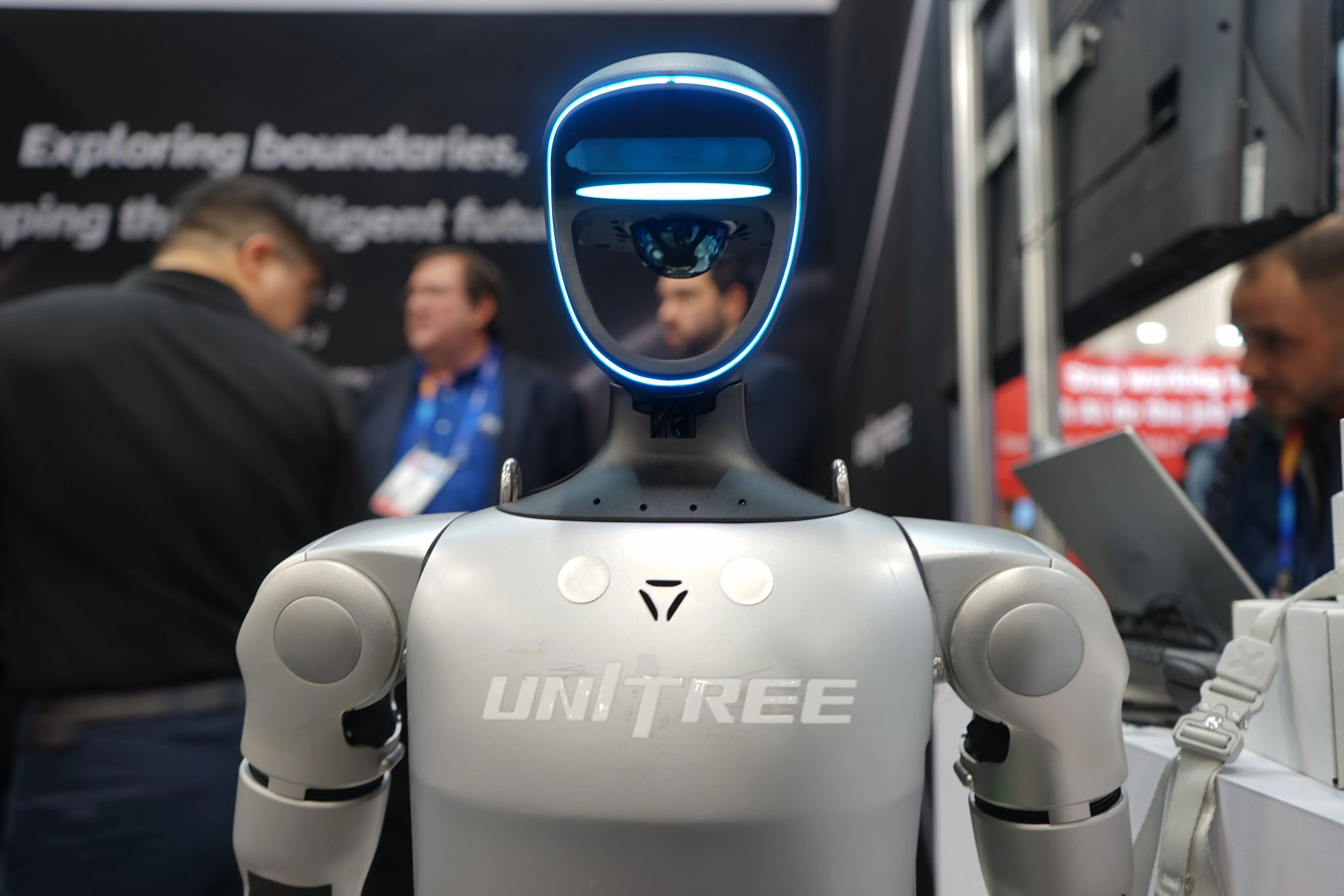
China’s robotics sector is preparing for another defining moment as Unitree Robotics, one of the country’s most high-profile startups, advances plans for an initial public offering (IPO) that could value the company at as much as 50 billion yuan ($7 billion), according to people familiar with the matter who spoke to Reuters.
If realized, the listing would mark one of the largest onshore technology offerings in years, underscoring Beijing’s growing reliance on domestic champions to drive innovation and maintain competitiveness in the global tech race.
The Hangzhou-based company first captivated the public imagination when it released a series of viral videos showcasing robots with startlingly human-like abilities—walking, climbing, and carrying loads. Those displays turned Unitree into a household name, but the company’s ambitions extend far beyond internet fame. Under founder Wang Xingxing, Unitree has rapidly positioned itself at the center of China’s robotics push, gaining recognition not only from the public but also from policymakers.
Register for Tekedia Mini-MBA edition 20 (June 8 – Sept 5, 2026).
Register for Tekedia AI in Business Masterclass.
Join Tekedia Capital Syndicate and co-invest in great global startups.
Register for Tekedia AI Lab.
In February, Wang was among a select group of executives—including leaders from AI startup DeepSeek—who met with President Xi Jinping in a rare high-level meeting seen as a signal of the government’s recalibrated approach to the technology sector.
That meeting came against the backdrop of China’s multibillion-dollar drive into robotics, semiconductors, and artificial intelligence—an investment surge aimed at countering the effects of an aging population while maintaining parity with the United States in advanced technologies. Beijing has been keen to ensure that startups like Unitree and DeepSeek are not only funded but also able to tap domestic capital markets.
Unitree confirmed last week on its official X account that it was actively preparing for an IPO and expected to submit application documents in the fourth quarter of this year. The company did not disclose a timeline or fundraising target. However, sources noted that in China, a company with a valuation of around 50 billion yuan is typically expected to float at least 10% of its shares, suggesting a significant offering. Still, the IPO process remains in its early stages, and the final size and valuation will depend heavily on market conditions.

For China’s markets, the deal would be a milestone. Domestic IPO activity is slowly recovering after nearly two years of regulatory crackdowns and stock market volatility. So far this year, onshore IPO proceeds have totaled $7 billion, up 40% year-on-year, but still well below the tens of billions seen between 2020 and 2023, according to LSEG data. Analysts argue that a high-profile offering from Unitree could inject much-needed momentum into a cautious market, while also bolstering China’s self-sufficiency drive by keeping “unicorns” valued at over $1 billion listed at home.
However, despite the excitement around the reported valuation, Unitree has pushed back. “The reported $7 billion IPO valuation is untrue,” a company spokesperson said on Tuesday, without elaborating further.
Even so, investor appetite appears strong. Unitree has attracted more than 30 investors, according to Chinese corporate registry filings. In June, it secured fresh backing from some of the country’s biggest names, including Alibaba, Tencent, and automaker Geely Holding Group. While Geely confirmed its participation in that round, it declined to comment on IPO plans. Alibaba and Tencent did not respond to requests for comment.

Some in the industry believe that if Unitree does list on Shanghai’s STAR Market, as sources suggest, it would serve as an important litmus test of investor sentiment toward humanoid robotics—a frontier industry that Beijing is heavily promoting through subsidies and favorable policies. Unitree, already profitable, is seen as a frontrunner thanks to China’s self-sufficient manufacturing supply chains and robust government support. One source noted that the company’s proposed valuation represents a steep jump from its last fundraising round in July, when it was valued at 12 billion yuan.
Founded in 2016, Unitree has grown into the country’s top robotics player by both production and sales, supplying universities with research equipment and turning its machines into familiar sights at entertainment and sporting events. After the June fundraising, Wang revealed that annual revenue had already surpassed 1 billion yuan, underscoring the commercial viability of its business model.
To prepare for its offering, Unitree entered the so-called IPO tutoring process in July, working with CITIC Securities as its guiding institution—a standard requirement for companies aiming to debut on China’s STAR Market.
The company’s journey from viral sensation to market heavyweight reflects more than just corporate ambition. Many believe it illustrates Beijing’s new approach to technology as it seeks to support homegrown champions, keep capital flows onshore, and resist U.S. pressure in the intensifying trade and tech wars.