

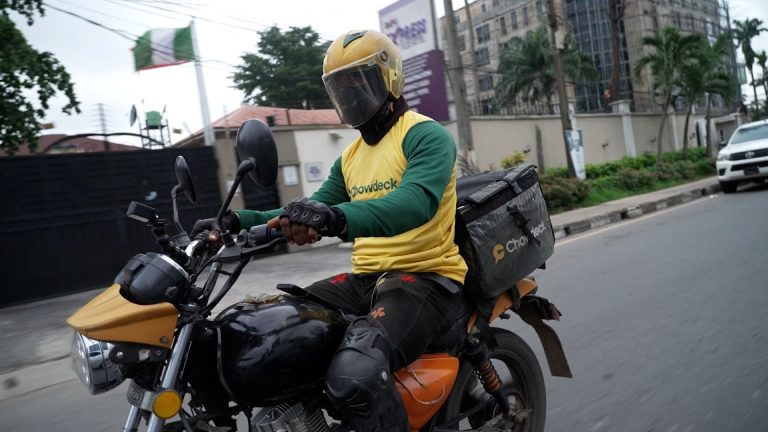
Chowdeck, a Lagos-based food delivery startup that connects users to restaurants, has secured $9M in Series A funding to launch its quick commerce strategy and expand operations in Nigeria and Ghana.
Novastar Ventures led the equity round, which included participation from Y Combinator, AAIC Investment, Rebel Fund, GFR Fund, Kaleo, HoaQ, and others.
Speaking on the funds raised, CEO and Co-founder Femi Aluko said,
Register for Tekedia Mini-MBA edition 20 (June 8 – Sept 5, 2026).
Register for Tekedia AI in Business Masterclass.
Join Tekedia Capital Syndicate and co-invest in great global startups.
Register for Tekedia AI Lab.
“We’re thrilled about this round as it brings us closer to our vision of becoming Africa’s number one super app. This funding will supercharge our growth plans, enabling us to expand into more cities, reduce delivery times, scale our grocery footprint, and attract the best talent to drive innovation and customer satisfaction.”
Lead investor Novastar Ventures described Chowdeck as “building the future of logistics for African cities” with a sustainability-first approach and strong execution”.
The new funding will fuel Chowdeck’s rollout of quick commerce and ultra-fast delivery supported by a network of stores and hubs. The company plans to open 40 dark stores by year-end and 500 by 2026, launching two to three stores weekly.

Founded in October 2021 by Femi Aluko, Olumide Ojo, and Lanre Yusuf, Chowdeck connects consumers with restaurants, grocery stores, and pharmacies, offering fast delivery of food, groceries, and essentials in Nigeria and Ghana.
Operating in 11 cities, including Lagos, Abuja, and Accra, the food delivery startup serves over 1.5 million customers with a network of 20,000+ riders, averaging 30-minute delivery times. It partners with brands like KFC, Burger King, and local vendors, providing diverse cuisines such as African, Asian, and healthy options.
The YC-backed company has reportedly remained profitable since inception, with an average order delivery time of 30 minutes, and more than half of orders are in dense areas. Chowdeck’s remarkable growth is evident, especially in a competitive market where, at its launch, major players like Jumia Food and Bolt Food already had a strong foothold with thousands of customers.

Interestingly, by the end of 2023, Jumia Food and Bolt Food had exited the Nigerian market citing various business reasons, leaving Glovo as Chowdeck’s main competition. Both exits are reported to have partly contributed to Chowdeck’s significant user growth.
In 2023, Chowdeck’s annual gross merchandise value (GMV) across these verticals stood at over N7 billion ($5.8 million). That October, it hit a milestone, crossing the N1 billion ($830,000) mark for the first time. By March 2024, it had doubled that figure, reaching N2.4 billion ($2 million). Lagos generates 80% of Chowdeck’s volumes, while the remaining 20% comes from other cities: Abuja, Port Harcourt, Ibadan, Benin City, Ilorin, Abeokuta, and Asaba.
Recall that last three months, the food delivery startup expanded to Ghana marking its first expansion outside of Nigeria, which signified a pivotal step towards a larger regional vision. Recently, the company announced a significant milestone of hitting 1,000 daily orders in Ghana, in just three months. For context, this same milestone took 11 months in Nigeria to achieve. This rapid growth is a testament to the strength of the team, the clarity of their vision, and the market they have been building for.
CEO Aluko stresses that Chowdeck’s appeal lies in its convenience. While not necessarily the most cost-effective option, he added that Chowdeck targets customers who prioritize time and are willing to pay for fast deliveries.
The startup’s delivery system relies on factors such as geotagging, offering diverse vehicle options from bicycles to motorbikes, and enforcing strict regulations on vendors and riders. (For example, vendors must accept orders within a five-minute window; failure to do so leads to order cancellation and decreased priority for the vendor.)
Similarly, Chowdeck employs automated processes to streamline customer-rider connections, utilizing in-house data for daily demand forecasting and required supply assessment.
With the recent funds raised to fuel expansion, Chowdeck isn’t just delivering food to customers, they are building an infrastructure that supports vendors, empowers riders, and delivers convenience to users.