

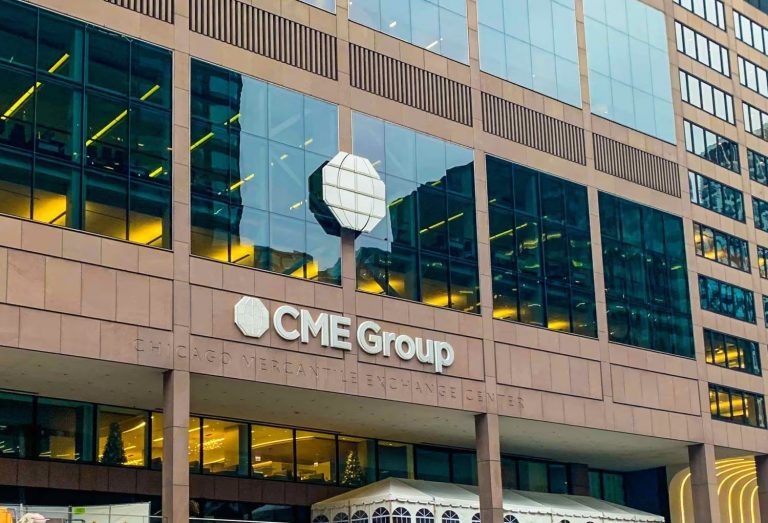
The institutionalization of crypto markets is entering another phase as traditional derivatives infrastructure and stablecoin networks continue to expand. Two developments illustrate the direction clearly: CME Group is preparing to launch Bitcoin Cash and Uniswap futures.
While Binance is investing $100 million in Circle and extending its USDC partnership for another five years across emerging markets. The moves show how cryptocurrencies are increasingly being connected to conventional financial markets and global payment infrastructure.
CME Group’s planned launch of Bitcoin Cash and Uniswap futures on October 19 adds two more digital assets to one of the world’s most important regulated derivatives venues.
Register for the next Tekedia Mini-MBA.
Register for Tekedia AI in Business Masterclass.
Join Tekedia Capital Syndicate and co-invest in great global startups.
Futures contracts allow traders to gain or hedge exposure to an asset without directly holding the underlying cryptocurrency. For institutional investors, this can make participation easier because futures can be integrated into existing risk-management, trading and portfolio systems.
Bitcoin Cash, created as a fork of Bitcoin, has maintained a distinct market following, while Uniswap represents a different part of the crypto economy. UNI is closely associated with Uniswap, one of the largest decentralized-exchange protocols.
Bringing futures tied to both assets onto CME therefore expands the range of crypto exposures available through regulated derivatives markets. The significance extends beyond the individual tokens.

CME’s expansion suggests that demand for crypto derivatives remains broad enough for market infrastructure providers to continue adding products. Futures can also contribute to price discovery by bringing together participants with different expectations about future prices.
At the same time, derivatives introduce leverage, meaning traders can amplify both gains and losses. The growth of these markets therefore does not eliminate crypto volatility; it creates more sophisticated instruments for managing and expressing it.
Meanwhile, Binance’s $100 million investment in Circle connects exchange infrastructure with the rapidly developing stablecoin economy. Circle is the issuer of USDC, a dollar-denominated stablecoin designed to maintain a value close to one U.S. dollar.

Binance’s investment, alongside the extension of their USDC partnership for five years, places stablecoins at the center of a broader strategy focused on emerging markets. The emerging-market dimension is particularly important.
Traditional international payments can involve multiple intermediaries, banking restrictions, currency conversion costs and delays. Dollar-linked stablecoins offer another mechanism for moving digital representations of dollars across blockchain networks.
For businesses and individuals operating in countries with weaker local currencies or limited access to global financial infrastructure, this can create new options for dollar exposure and cross-border settlement.
For Binance, deeper cooperation with Circle can strengthen USDC liquidity and availability across its ecosystem. For Circle, a long-term relationship with one of the world’s largest cryptocurrency exchanges can expand distribution and potential usage.
Yet adoption will still depend on regulation, liquidity, local banking relationships and user trust. The two developments reveal two complementary sides of crypto’s maturation.
CME is building bridges between digital assets and institutional derivatives markets, while Binance and Circle are expanding the infrastructure around digital dollars. One focuses on trading and risk management; the other focuses on settlement, liquidity and payments.
The larger story is that crypto infrastructure is becoming increasingly segmented and specialized. Bitcoin Cash and UNI futures give professional traders additional regulated tools, while USDC partnerships seek to make blockchain-based dollars more accessible.
As these systems develop, the key question will increasingly shift from whether crypto can enter mainstream finance to how deeply its infrastructure can integrate with global markets.