

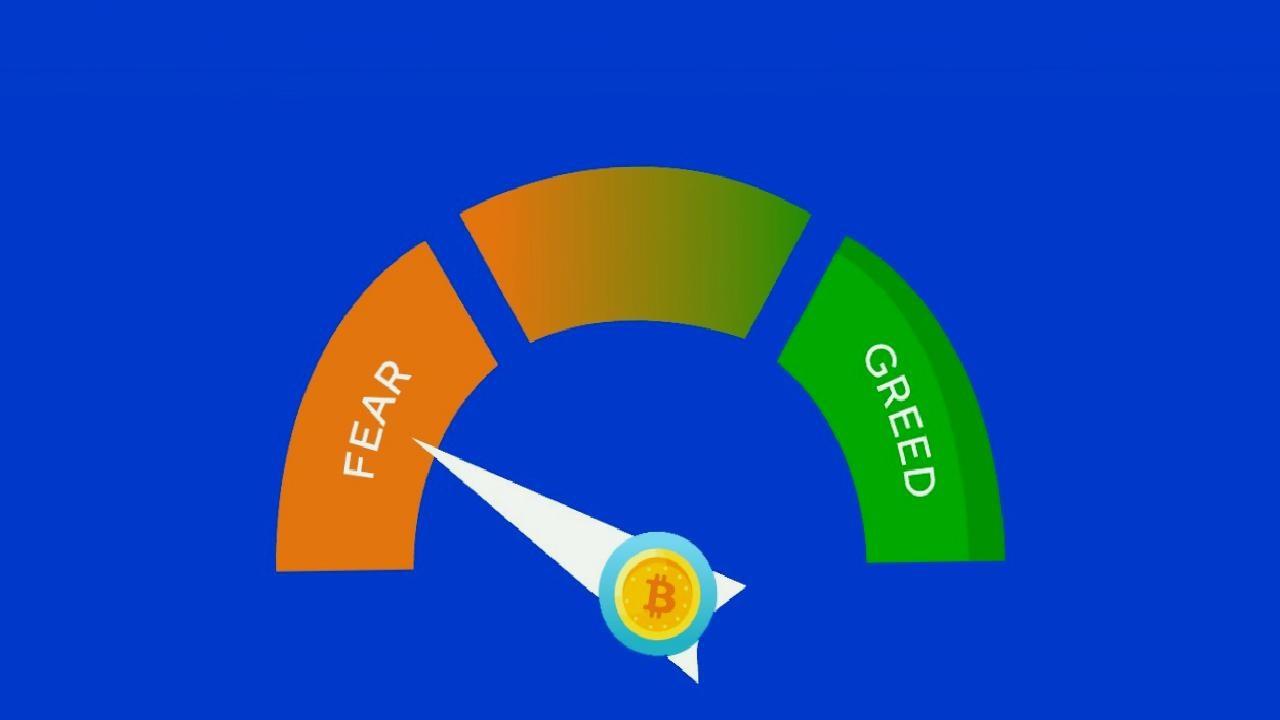
As of the most recent data, the CNN Fear & Greed Index stands at 20, which falls squarely in the Extreme Fear category. The index ranges from 0 to 100:0–24: Extreme Fear, 25–44: Fear 45–55: Neutral, 56–75: Greed, 76–100: Extreme Greed.
At 20, the market is already deep into Extreme Fear, not merely “on the verge” of entering it. This sentiment gauge, maintained by CNN, aggregates seven equally weighted indicators of investor psychology and market conditions: Stock price momentum. Stock price strength (new highs/lows). Stock price breadth (advancing/declining volume). Put/call ratio.
The low reading reflects broad pessimism, likely driven by recent market declines. For context, the S&P 500 closed at 6,632.19 on March 13 down ~0.61% that day, following a drop from 6,672.62 the prior session and higher levels earlier in the week.
The index had been higher recently—around 21 the day before, 25 a week prior, and 37 a month ago—indicating a sharp slide into deeper fear territory over the past couple of weeks. Extreme Fear readings historically suggest capitulation or oversold conditions, where stocks may be undervalued due to panic selling (contrarian investors sometimes view it as a potential buying opportunity).
Register for Tekedia Mini-MBA edition 20 (June 8 – Sept 5, 2026).
Register for Tekedia AI in Business Masterclass.
Join Tekedia Capital Syndicate and co-invest in great global startups.
Register for Tekedia AI Lab.
However, it can also signal ongoing downward pressure if fundamentals or external factors continue weighing on sentiment. The VIX (volatility index) was recently around 27, elevated but not at panic extremes. Market conditions can shift quickly, so this reflects the snapshot as of mid-March 2026.
The VIX, officially known as the CBOE Volatility Index (ticker: ^VIX), is a real-time market index created and maintained by the Chicago Board Options Exchange (CBOE). It measures the market’s expectation of 30-day forward-looking volatility in the S&P 500 Index (SPX), derived from the prices of SPX options.
Often called the “fear gauge” or “fear index”, it reflects investor sentiment and perceived risk in the U.S. stock market—higher VIX levels indicate greater expected turbulence (fear/panic), while lower levels suggest calm and complacency. Introduced in 1993 by the CBOE. Originally based on at-the-money options on the S&P 100 Index (OEX).

In 2003, updated to use a broader range of out-of-the-money and in-the-money SPX options for a more accurate, model-independent measure of implied volatility. Since then, it has become the world’s premier benchmark for equity market volatility. Related products launched later: VIX futures (2004), VIX options, mini-VIX futures, and various volatility ETPs/ETFs (e.g., VXX, UVXY).
The VIX does not track historical volatility of past stock movements. Instead, it captures implied volatility — the volatility level “implied” by current option prices. In simple terms: Option prices rise when traders expect bigger future swings. The VIX aggregates these option prices into a single number representing the expected annualized standard deviation of the S&P 500 over the next 30 calendar days.
A VIX of 20 means the market expects the S&P 500 to move up or down by about 20% annualized, or roughly ±1.15% per trading day (20% ÷ ?252 trading days ? 1.26%, but commonly approximated as ~1.15–1.2% daily for rough math). The VIX expresses volatility in percentage terms (not points).
The current methodology (post-2003) is model-free and uses a wide range of SPX options:It focuses on options expiring in the near term (weighted to target exactly 30 days to expiration). Uses both weekly and monthly SPX options. Includes out-of-the-money puts and calls not just at-the-money.

The calculation interpolates between two expiration cycles to achieve a constant 30-day horizon. The core idea is a variance swap replication formula, simplified as:?² ? (2/T) × ? [ (?K / K²) × e^(rT) × Q(K) ] – (1/T) × [ (F/K? – 1)² ]Where:? = VIX / 100 (volatility as decimal) T = time to expiration (in years) K = strike price ?K = interval between strikes Q(K) = mid-quote price of the option at strike K F = forward index level derived from options r = risk-free rate K? = first strike below the forward level.
The result is then annualized and square-rooted to get volatility in percent. In practice, you don’t need to compute it manually—CBOE publishes the real-time VIX value during market hours. Below 15–20: Low volatility / complacency often seen in bull markets; e.g., long periods in 2017 or mid-2020s.
Historical average: Around 19–20 since inception, but it tends to spend more time low and spike sharply during stress. The VIX exhibits strong mean reversion — spikes are usually temporary, and volatility tends to fall back over time. Contrarians view very high VIX and very low VIX (<12–15) as warning signs of complacency.
Buy VIX futures/options/ETFs when expecting volatility spikes (inverse to stock market direction in most cases). Speculate on whether implied volatility is too high/low relative to expected realized volatility (volatility risk premium often makes VIX futures contango, benefiting short-vol strategies in calm periods).
As of the most recent close, the VIX settled at 27.19 down slightly from prior levels, with intraday range of 24.67–28.47. This places it in an elevated zone, consistent with recent market uncertainty and the Fear & Greed Index dipping into Extreme Fear territory.