

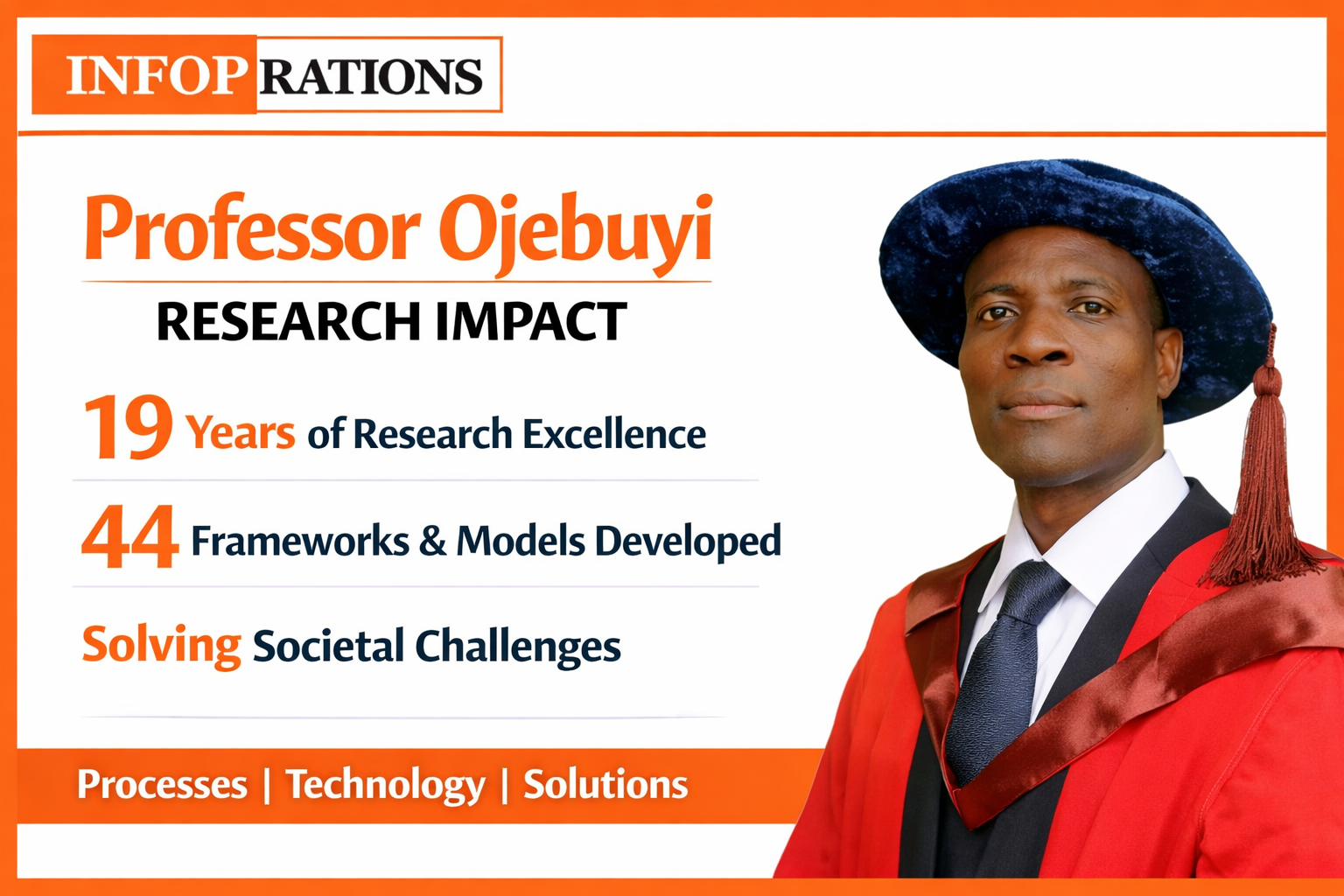
Economic development is often discussed through the lens of finance, infrastructure, and policy. Yet one critical driver of prosperity frequently remains communication, which is often underappreciated. While traditional finance scholarship tends to focus on corporate systems, markets, and investment structures, the work of Professor Babatunde Ojebuyi offers a distinctly developmental perspective. His research demonstrates that livelihoods improve, economic opportunity expands, and socio-economic development accelerates when communication systems function effectively.
Across employment, agriculture, migration, post-crisis recovery, and rural inclusion, consistent findings show that outcomes are deeply shaped by how people access information, interpret opportunities, and engage with institutions. In this regard, our analysis notes that communication is not peripheral to development but rather foundational to it.
Employment Communication Framework
Register for the next Tekedia Mini-MBA.
Register for Tekedia AI in Business Masterclass.
Join Tekedia Capital Syndicate and co-invest in great global startups.
Youth unemployment remains one of the most pressing socio-economic challenges despite repeated interventions. Too often, employment initiatives fail because policymakers misunderstand young people’s realities, aspirations, and labour-market experiences.
Prof. Ojebuyi’s research identifies three critical disconnects between policy assumptions, labour-market realities, and youth expectations. Many employment interventions underperform not because opportunities are absent, but because communication between institutions and beneficiaries is weak, fragmented, or non-existent.
Young people frequently struggle with uncertainty about career pathways, limited access to labour-market information, and mismatched expectations about available opportunities. Yet the research also reveals resilience among youth despite socio-economic pressure.

The practical implication is that job programmes become more effective when beneficiaries are actively engaged in communication. Youth-centred employment communication, participatory programme design, and stronger feedback systems between policymakers and young people can significantly improve programme outcomes. Employment agencies, development institutions, and governments benefit when communication becomes part of programme architecture rather than an afterthought.
Livelihood Resilience Communication Model
Economic hardship does not affect individuals uniformly. Young people often face barriers that extend beyond financial constraints, including limited institutional support and unclear opportunity pathways. Professor Ojebuyi’s findings suggest that resilience is not simply an individual trait but partly a product of communication systems. Economic confidence improves when institutions communicate pathways clearly, provide reliable information, and create support networks that enable informed decision-making.

This insight became especially relevant during periods of uncertainty when many young people struggled to navigate changing economic conditions. Stronger career communication, youth-focused development messaging, and awareness programmes around skills and opportunities can help young people transition from uncertainty to agency.
Educational institutions, labour agencies, and policymakers stand to benefit from communication systems that reduce confusion and increase opportunity awareness.
Post-Crisis Economic Resilience Communication Framework
The COVID-19 crisis exposed vulnerabilities in economic systems worldwide, particularly among youth populations. Ojebuyi’s research highlights how economic disruptions affected young men and women differently, with resilience often depending on access to information and social support systems.
Communication proved central to adaptation. Individuals who accessed clearer information about opportunities, coping mechanisms, and institutional support often demonstrated stronger recovery pathways. This finding challenges narrow approaches to economic recovery that focus solely on financial interventions. Recovery frameworks must also address communication gaps. Gender-sensitive employment communication, inclusive recovery programmes, and resilience-building systems can strengthen communities during periods of economic disruption.
Governments, NGOs, and development agencies can leverage communication as a resilience-building instrument rather than viewing it merely as an information channel.
Digital Agribusiness Communication Model
Agriculture remains a major source of livelihood, yet many farmers continue to experience low productivity because of poor access to market information and agricultural knowledge. One of Professor Ojebuyi’s most practical findings is the transformative role of mobile communication technologies in farming systems. Farmers increasingly use mobile phones to access market updates, coordinate with customers, obtain pricing information, and receive agricultural support.
Communication technology, therefore, becomes more than a convenience. it is a productivity tool. The research recommends wider digital access, agricultural communication programmes, and stronger ICT literacy among farming populations. For farmers, agribusinesses, rural communities, and agricultural extension agencies, strengthening communication infrastructure can improve productivity and market participation.
Economic Decision Communication Framework
Economic decisions are often shaped by narratives rather than realities. Professor Ojebuyi’s work demonstrates how media representations can contribute to exaggerated expectations about opportunities abroad, influencing migration aspirations, livelihood planning, and financial decision-making. When communication systems fail to provide balanced information, individuals may make life-changing economic decisions based on unrealistic assumptions.
The implication is that communication reduces poor economic choices driven by misinformation. Stronger career messaging, realistic opportunity narratives, and informed decision-making campaigns can help young professionals and families make better economic choices. Media literacy and evidence-based communication become critical safeguards against distorted expectations.
Migration Communication Governance Model
Migration remains an important economic pathway for many people, but migration decisions are often shaped by distorted information ecosystems.
His research points out how media narratives influence labour mobility, economic aspirations, and perceptions of opportunities abroad. Migration itself is not inherently problematic, but poorly informed migration can create economic and social risks. The research advocates responsible migration communication, balanced narratives, and stronger governance mechanisms that prioritise informed mobility. Governments, labour agencies, and potential migrants all benefit when communication systems encourage evidence-based choices rather than unrealistic optimism.
Inclusive Development Communication Framework
Economic development efforts frequently overlook rural populations because communication systems tend to prioritise urban interests. Professor Ojebuyi’s findings show that poor media representation weakens awareness of rural needs and limits visibility for economic opportunities outside urban centres. Inclusive development becomes difficult when communities remain unheard.
The solution lies in development-sensitive journalism, stronger rural representation, and communication systems that intentionally include marginalised voices. Economic growth becomes more inclusive when communication reflects the realities of all populations.
Development Communication Model for Socio-economic Growth
Perhaps the most far-reaching insight from Professor Ojebuyi’s work is that communication itself is an engine of development. The research establishes that media and communication contribute significantly to public awareness, economic participation, social mobilisation, and long-term progress. Socio-economic transformation does not happen through policy alone. It requires communication systems capable of informing, engaging, and empowering citizens. Public education campaigns, development-focused media partnerships, and strategic communication frameworks are therefore essential ingredients of sustainable growth.