

For years, the impact of academic research on society has been a topic of discourse in various forums. Many have argued that academics only conduct research and publish findings on platforms relevant to their field, making such outcomes inaccessible to the majority of non-academic people. In this regard, academic research is often perceived as not being useful to society and unable to provide solutions to numerous problems.
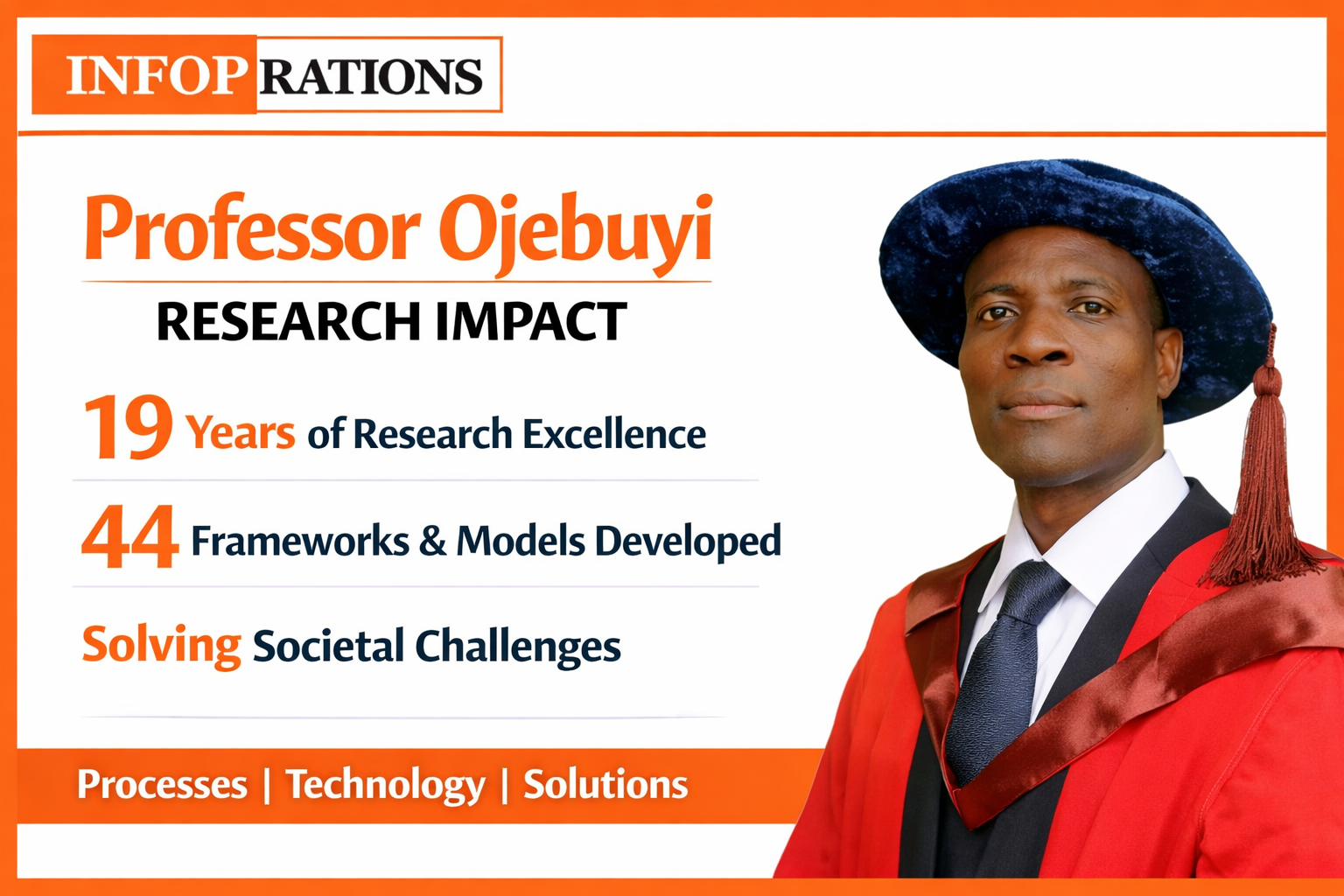
Meanwhile, in this piece, our analyst offers preliminary insights into a five-part article series that explores 19 years of communication- and development-focused studies by Professor Babatunde Raphael Ojebuyi to establish the practical solutions his research has proffered to Nigeria’s problems and the needs of individuals and businesses. Professor Ojebuyi, who earned all his academic degrees from the Department of Communication and Language Arts at the University of Ibadan, is a renowned communication scholar, community builder, and societal problem-solver.
Analysis of his over 80 publications, published between 2007 and 2026, reveals a communication-centred, problem-solving orientation rather than an approach that treats communication as mere description. Within the academic community, his publications have attracted over 500 citations and achieved significant indexing success. Our analysis also reveals that 32 articles are published in Scopus-indexed outlets, with 150 citations across 130 publications. His first article, “Reading as an Approach to De-stigmatising People Living Positively: An Experiment Among Students of the International School, University of Ibadan,” addressed misconceptions about people living with certain health challenges.
Register for the next Tekedia Mini-MBA.
Register for Tekedia AI in Business Masterclass.
Join Tekedia Capital Syndicate and co-invest in great global startups.
After this publication, Professor Ojebuyi’s aggressiveness in research steadily increased from 2008 to 2013, a period during which he produced 9 publications, with a foundational focus on HIV/AIDS communication, media ethics, and theory. Coincidentally, this period aligns with Professor Ayobami Ojebode’s, Professor Ojebuyi’s PhD thesis supervisor, drive to attain a professorial position in 2013 through aggressive research and publication between 2008 and 2013. Meanwhile, with 12 publications, 2023 marked Professor Ojebuyi’s highest level of productivity, with an emphasis on contemporary debates surrounding youth resilience, media trust, and global communication theory.
From the data, another surprise that emerged was the surge in interdisciplinary work, with 33 publications produced over five years, covering digital citizenship, AI and fake news governance, and neurobiobanking ethics. His highest-citation year, based on the number of publications, was 2016, with 108 citations, driven by the landmark study, “Mobile Phone Use for Agribusiness by Farmers in Southwest Nigeria.”
As noted earlier, subsequent articles will reveal the benefits of his research work over the years to individuals, businesses, and governments. These benefits are derived from findings and recommendations that target the people, process, product/service, technology, and finance components of our society, covering individuals, businesses, and governments.

To establish these benefits, Infoprations deployed its Impact Discovery Tool to critically examine his publications. This examination led to the discovery of 44 frameworks and models that emerged from over 19 years of his research into issues, needs, and challenges related to communication and development in Nigeria. His frameworks primarily guide stakeholders to take appropriate action or execute effectively, while his models propose possible future outcomes in addressing issues related to the people, process, product/service, technology, and finance components of society.
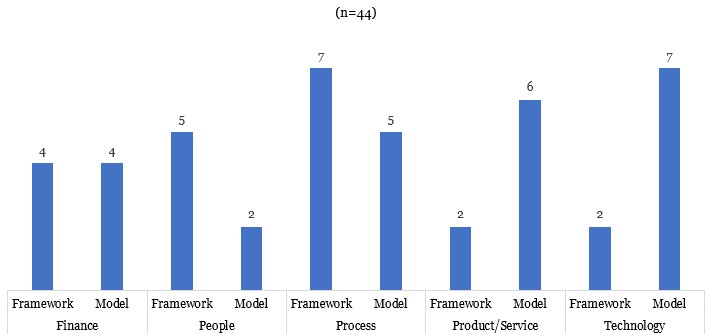
Our analyst further notes that, across the five societal components, Professor Ojebuyi’s frameworks (20) generally represent structured approaches for guiding stakeholders towards appropriate actions or implementation, while the models (24), which slightly outnumber the frameworks, indicate a stronger emphasis on anticipating future developments and outcomes. In line with this, our analyst observes that Professor Ojebuyi’s research not only diagnoses present challenges but also seeks to forecast pathways for addressing persistent societal problems.
Therefore, his scholarship offers both practical guidance for immediate decision-making and conceptual tools for anticipating future societal needs, making the research relevant to individuals, businesses, and governments alike.
