

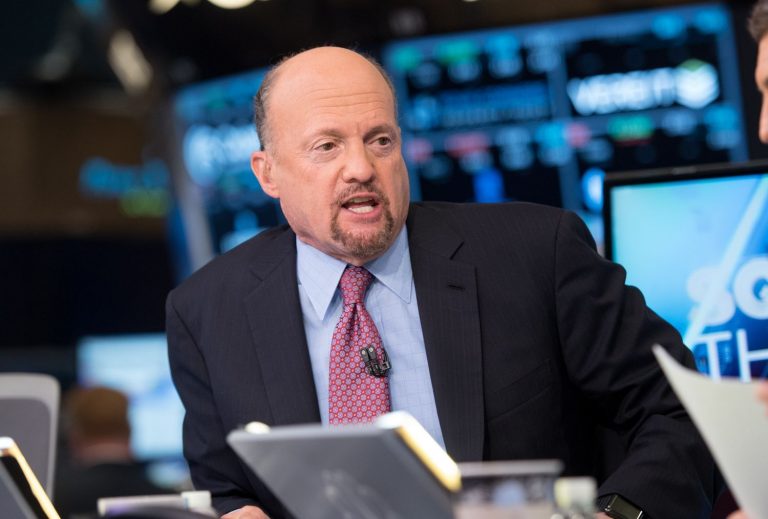
A shift in investor demand may be creating a new group of technology stock leaders, with semiconductor, networking and cloud infrastructure companies gaining attention as some of the industry’s biggest names struggle to sustain their rallies, CNBC’s Jim Cramer said Tuesday.
Broadcom and Micron helped support the major US stock market averages during Tuesday’s session, signaling that investors may be looking beyond the technology companies that dominated market performance over the past several years. Nvidia, Microsoft, Alphabet and Meta have struggled to maintain consistent upward momentum in recent weeks, creating room for other companies to attract capital.
“Tech’s trying to make a stand here. It’s just not the tech that’s led us for the last few years,” Cramer, host of CNBC’s Mad Money, said.
Register for the next Tekedia Mini-MBA.
Register for Tekedia AI in Business Masterclass.
Join Tekedia Capital Syndicate and co-invest in great global startups.
The changing market leadership comes as investors reassess where the next phase of technology growth will emerge. The earlier rally was heavily concentrated in a handful of mega-cap companies that benefited from the expansion of artificial intelligence, cloud computing and digital advertising. However, concerns about high valuations, massive infrastructure spending and the time required to generate returns have made investors more selective.
Cramer pointed to Advanced Micro Devices and Arista Networks as potential beneficiaries of this shift after both companies reported strong quarterly results following Tuesday’s market close. Oracle also attracted attention, with its shares gaining nearly 6% during the session.
The companies represent different parts of the technology supply chain. AMD competes in processors and accelerators used in computing systems, Arista supplies networking equipment needed to connect data centers, while Oracle operates cloud infrastructure and enterprise software businesses. Their performance suggests that investors may be broadening their exposure to companies supplying the infrastructure and services required to support AI adoption.

“I want to believe that non-magnificent tech can lead us,” Cramer said. “But I also know that there are concerns we must be aware of before we get too cocky about one session’s set of positives.”
His caution points to the difference between a short-term recovery and a durable change in market leadership.
Data Center Opposition Creates New Risks for Technology Expansion
One of the major risks Cramer identified is growing opposition to data center development. Local communities have raised concerns about the facilities’ electricity requirements, potential increases in power costs, and their consumption of water.

The resistance creates uncertainty for companies whose growth plans rely on building or securing large amounts of computing infrastructure. Data centers require substantial electricity to operate servers and cooling systems, while access to water and reliable grid connections can influence where facilities are developed.
These constraints could become more significant as technology companies expand their AI infrastructure. A project that encounters opposition or faces delays in obtaining power and water approvals may take longer to become operational, affecting the timing of expected revenue and increasing development costs.
Cramer said smaller data center developers such as Iren, Nebius and CoreWeave could be particularly exposed if projects are cancelled or forced to relocate. Their ability to absorb delays and additional capital requirements may be more limited than that of larger technology companies.
Amazon, by comparison, has greater financial and operational resources to secure alternative locations and adjust its infrastructure plans. The difference reveals an essential consideration for investors: companies exposed to the same AI infrastructure demand can face very different levels of execution risk.
But project concentration can create additional vulnerability for smaller operators. If a major development encounters regulatory resistance, electricity shortages, or community opposition, the financial consequences could be substantial. Relocating a project may also require new land, infrastructure agreements and additional investment, potentially delaying the point at which capacity generates revenue.
The growing debate over data center development also challenges the assumption that strong demand for AI computing will automatically translate into rapid infrastructure expansion. Capital availability and customer commitments are important, but physical resources and local approval processes can determine how quickly new capacity reaches the market.
This means a more complicated investment outlook for companies building the infrastructure behind artificial intelligence. Investors must assess not only demand for computing services but also the ability of developers to complete projects on schedule and manage the associated costs.
Iran War and Oil Prices Remain Market Uncertainties
The conflict involving Iran is another factor shaping investor confidence. Oil prices moved lower on Tuesday amid hopes of progress in negotiations between Washington and Tehran, offering some relief to markets concerned about the inflationary consequences of a prolonged conflict.
Higher oil prices can increase transportation and operating costs, push up consumer inflation and complicate the outlook for interest rates. For technology companies, the effects can extend through higher energy expenses for data centers and greater pressure on household and corporate spending.
Cramer cautioned that investors have repeatedly underestimated the risk of further escalation in the conflict. The latest decline in oil prices therefore does not necessarily remove the threat to financial markets.
The energy market remains an important variable because renewed disruption could reverse the improvement in inflation expectations and put pressure on equities. Technology stocks, particularly those valued on expectations of earnings growth several years into the future, can be sensitive to changes in interest rates and broader risk appetite.
The combination of infrastructure constraints and geopolitical uncertainty makes it difficult to conclude that technology shares have entered a sustained recovery. Even companies reporting strong earnings may face pressure if their expansion plans become more expensive or the broader market environment deteriorates.
Cramer said he was not yet ready to commit heavily to the sector after several unsuccessful attempts at recovery.
“I would like to wait for the crescendo before I commit too much money back into tech,” he said.
His position captures the uncertainty surrounding the latest market rotation. Broadcom, Micron, AMD, Arista Networks and Oracle may be gaining investor attention, but one strong trading session and positive earnings reports do not establish a lasting change in market leadership.