

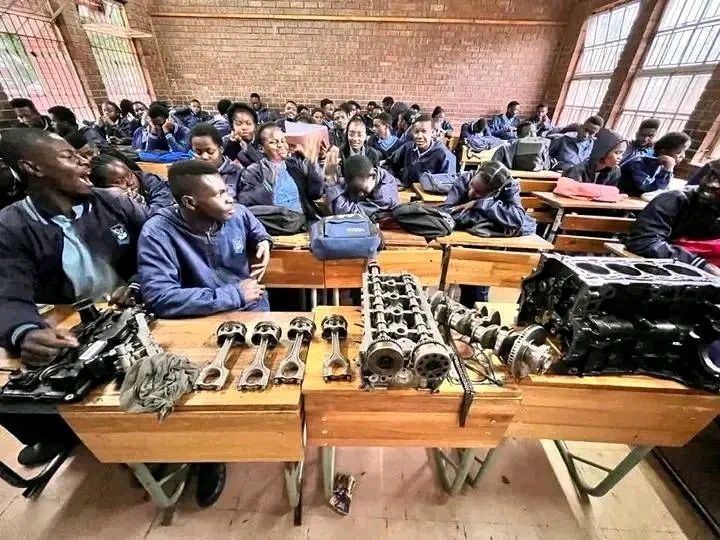
Nigeria’s ambitious overhaul of its secondary school curriculum marks a decisive effort to equip young learners with the skills needed for a rapidly changing world. Designed to marry academic foundations with digital fluency, vocational skills, and entrepreneurial thinking, this reform holds promise to better prepare the country’s youth for the complexities of the 21st century. Yet, as public reaction reveals, the success of any curriculum reform depends not just on content but on the realities of implementation, resources, and cultural context.
At its core, the curriculum expands traditional subjects like Mathematics, Science, and English to include digital literacy, coding, and vocational trades such as solar photovoltaic installation. The inclusion of Digital Literacy and Coding in junior secondary education introduces learners to foundational technologies, including Python programming, robotics, and safe internet use. Trade subjects offer practical skills in areas ranging from fashion design to computer hardware repairs. This expanded spectrum is a welcome development that aligns schooling with economic empowerment and addresses Nigeria’s persistent youth unemployment challenge.
One observer applauded these changes enthusiastically, stating, “This is a welcome development. At last, Nigeria is moving towards equipping students with real 21st-century skills — digital literacy, AI, and entrepreneurship.” Another noted “This is awesome. Renewed Hope.” Such optimism reflects recognition that curriculum reform is often the first step toward national renewal when it matches global trends and local aspirations.
Register for Tekedia Mini-MBA edition 20 (June 8 – Sept 5, 2026).
Register for Tekedia AI in Business Masterclass.
Join Tekedia Capital Syndicate and co-invest in great global startups.
Register for Tekedia AI Lab.
However, many Nigerians expressed deep skepticism about the operational realities. A common concern relates to the availability of technological tools essential for the success of digital literacy. “Did the government provide computers for the digital library?” encapsulates the anxiety around limited access to devices and high costs. Another commenter highlighted the challenge of compelling students to master digital skills absent affordable technology at home: “Compulsory digital literacy for students who can’t afford laptops at home? Lol.” These concerns underscore the risk of widening inequality if digital literacy becomes a theoretical requirement without corresponding infrastructure and resource support.
Additionally, essential educational resources for new vocational subjects remain uncertain. Schools strained by inadequate funding face difficulty providing materials needed for trades like solar photovoltaic installation or computer hardware repair. “Nice curriculum but it should also be followed with equipment… without equipment to back it up, all these added subjects are useless,” wrote a concerned observer. Another urged, “Way to Go, now give them the necessary tools to carry out the assignment.” These voices remind policymakers that curriculum innovation must be coupled with sustained investment in learning environments and teacher capacity.
Teacher readiness surfaced in discussions about salaries and training. “With these new subjects introduced, the salaries of the teachers who will be handling them should be increased. The government needs to do the right thing,” a comment read. The implementation will hinge on skilled educators who can confidently deliver complex content. Without incentives and professional development, teacher motivation risks significant decline, undermining educational quality.

The curriculum’s civic and cultural provisions also sparked debate, particularly around History. While Nigerian History is included, some reactions indicated dissatisfaction with its positioning. “Jesus! So HISTORY is a joke to them,” one comment lamented. Another voiced, “As long as it includes African history,” emphasizing the importance of indigenous knowledge. A strong call for compulsory History reflected concerns that eroding historical knowledge threatens national identity and societal values. As one respondent stated, “FG should also make History compulsory. Cos we need some serious reeducation of our core values so we don’t end up with criminals who think that’s how the society is.” The balance between modern skills and traditional civic education remains an unresolved tension.
Some critique addressed curriculum coherence or scope. For example, a user questioned, “How is Basic Entrepreneurship different from Commerce?” and another suggested, “The choice of solar installation could have been expanded to renewable energy…. Focusing on only solar isn’t good enough; there’s wind/turbine that’s unpopular as yet.” These insights call for refinement to ensure relevance and comprehensive coverage of emerging fields.
An overarching theme in public commentary concerns execution versus design. “This is wonderful but please let the execution be great too. A lot of policies get lost at execution,” reads one sobering reminder about Nigeria’s history with education reforms. The success of this sweeping curriculum will indeed be determined long after its launch, contingent upon infrastructure provision, teacher training, community involvement, and continuous monitoring.
