

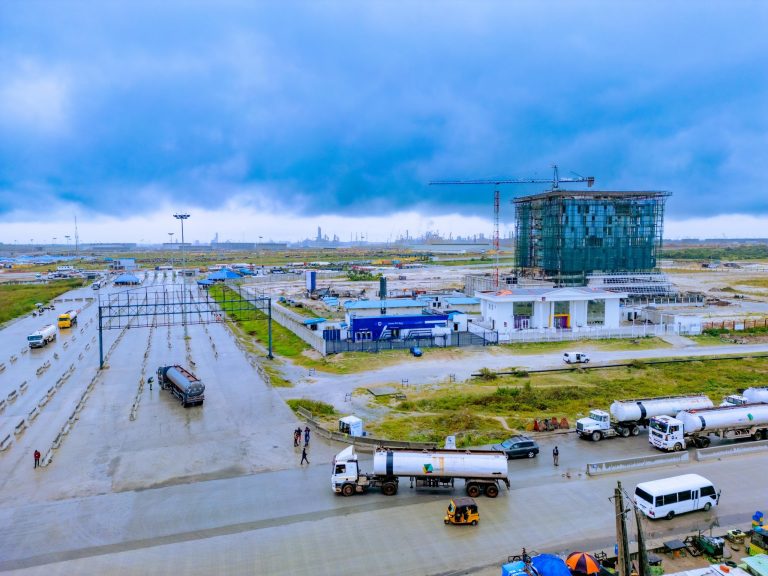
Dangote Refinery’s decision to absorb the cost of transporting petrol to selected states landed as both relief and provocation. For years, Nigerians have endured a volatile downstream market shaped by import dependence, subsidy collapses and layers of rent-seeking. The announcement that fuel would be delivered to outlets in Lagos, Ogun, Oyo, Ekiti, Osun, Rivers, Edo and Abuja without transport charges was greeted with cheers in some quarters.
The company deployed more than 1,000 compressed natural gas trucks for the operation, describing it as a way of demonstrating efficiency and commitment to easing household pressures. In parts of the South West, prices quickly fell to around ?841 a litre compared with ?865 a few days earlier. In Abuja and parts of the Niger Delta the average price dropped closer to ?851, with a gantry price set at ?820. Consumers began to sense that indigenous refining could finally influence the market after decades of reliance on imports.
Online responses reflected the mixture of relief and nationalist pride. “Imagine what ten indigenous companies like this would have done for the country. God bless Dangote Group,” wrote one user. Others cast the refinery as a “master driver” of the oil sector, while voices in the diaspora framed the move as a blow to “corrupt and greedy marketers” who had long extracted rents from the supply chain.
Register for Tekedia Mini-MBA edition 20 (June 8 – Sept 5, 2026).
Register for Tekedia AI in Business Masterclass.
Join Tekedia Capital Syndicate and co-invest in great global startups.
Register for Tekedia AI Lab.
Associations bristle at disruption
The optimism was not universal. Unions and associations tied to petroleum logistics reacted with unease. The National Association of Road Transport Owners, whose members traditionally move products from depots to retail outlets, said the plan undermined existing contracts. Leaders warned that thousands of jobs were at risk if the refinery bypassed their services and operated a parallel delivery system.
Independent marketers were split. The national leadership of IPMAN encouraged members to register with Dangote’s online platform to qualify for allocation, emphasising that several stations in Lagos, Ogun and Ondo had already benefited. Yet within the association some questioned the sustainability of free haulage and cautioned against allowing a single company to dictate distribution practices.
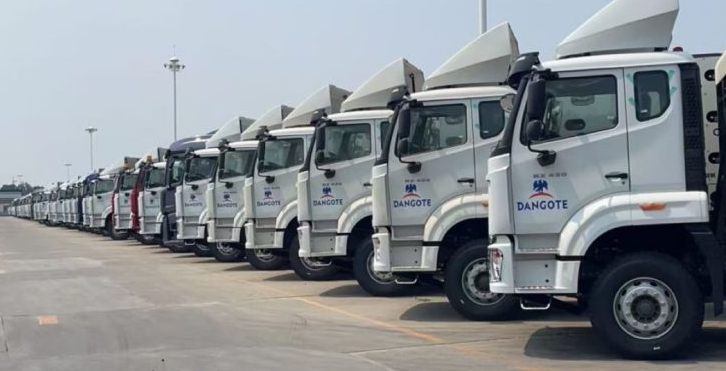
Behind these tensions lies the refinery’s direct challenge to a business model that has historically enriched middlemen. By reducing the role of transport unions and depot operators, Dangote threatens entrenched interests that have survived every round of subsidy reform. To supporters, this represents long-overdue disruption. To critics, it risks handing disproportionate leverage to one industrial empire.

Exclusions fuel regional resentment
The initial roll-out excluded most Northern and South Eastern states. Abuja was covered, but Kano, a city central to Dangote’s corporate identity, was not. The omission stung. “As someone from Kano, I always believed Dangote Industries would treat Kano and the North with respect,” one resident wrote, voicing a sense of betrayal.
In the South East the anger was sharper. Commentators complained that once again their region had been overlooked, with insecurity cited as an excuse for bypassing deliveries. “Not even one southeastern state? Damn!” was a typical reaction. Others accused the company of hypocrisy, arguing that it could leapfrog South Eastern states to serve Rivers.
The controversy illustrates how fuel distribution has become a stage on which broader grievances about belonging and fairness are performed. A scheme intended as a symbol of relief instead reinforced perceptions of regional inequality.

A battle for legitimacy in the oil economy
What is unfolding is more than a logistical adjustment. It is a struggle over legitimacy in Nigeria’s oil economy. Pump prices in the South West and parts of the Niger Delta have fallen, while competitors such as MRS have quietly lowered their prices to remain relevant. Yet consumers remain sceptical. Reports surfaced that some stations, even after receiving cheaper supply, still sold at ?870, fuelling suspicion that old habits die hard.
The refinery has nevertheless forced a recalibration. For ordinary Nigerians, the clash pits an indigenous company presenting itself as a patriotic alternative against entrenched unions seen as profiteers. For investors, it signals the risks of concentrated market power. For politicians, it highlights how quickly corporate gestures can feed into narratives of exclusion.
What began as a free delivery scheme has become a national conversation about trust, power and fairness. Dangote has positioned itself as both disruptor and unifier, but it now faces the delicate task of expanding distribution without reinforcing old regional wounds or sliding into monopoly. The refinery is not just a plant on the Lekki coast. It is symbolic infrastructure, where the price of petrol carries with it the weight of national legitimacy.