

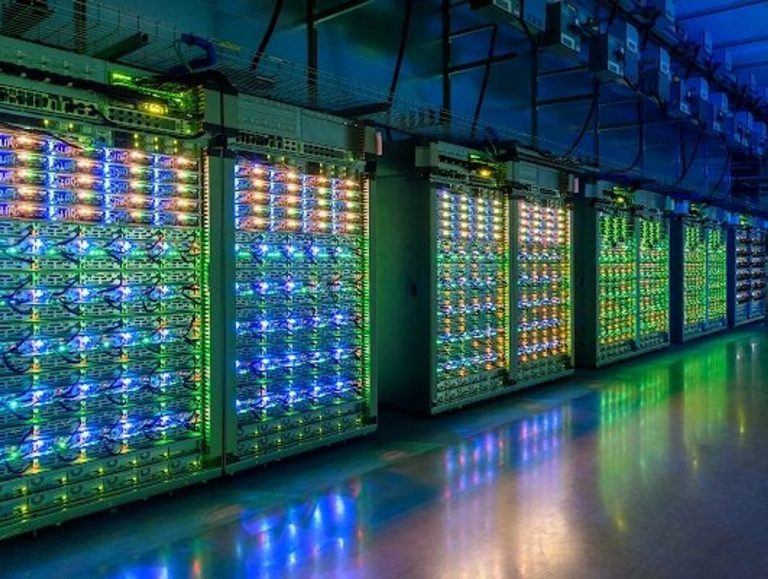
Wall Street is now treating data-center politics as a risk to the artificial intelligence investment boom, with several closely contested U.S. House and Senate races being watched for their potential impact on projects planned by technology companies and hyperscalers.
The issue has gained prominence as Microsoft, Alphabet, Amazon, Meta and other technology companies commit hundreds of billions of dollars to AI infrastructure, including massive data centers that require enormous amounts of electricity, water and land.
Those investments are encountering growing resistance from local communities concerned about power consumption, water use, tax incentives, land use and the cost of expanding infrastructure to support facilities that can take years to build and operate.
Register for the next Tekedia Mini-MBA.
Register for Tekedia AI in Business Masterclass.
Join Tekedia Capital Syndicate and co-invest in great global startups.
Morgan Stanley said in a note last week that it is monitoring several races in November whose outcomes could influence the regulatory environment for data centers.
“We’ve been flagging this as the key wedge issue into the 2026 election since it began to percolate last fall,” strategist Ariana Salvatore said. “That being said, we still see this as a state and local policy risk rather than a federal one for the time being.”
Analysts have noted that the immediate threat to the AI infrastructure boom is less likely to come from Washington imposing a nationwide restriction than from individual states, counties and municipalities slowing permits, changing zoning rules, withdrawing tax incentives or imposing new requirements on developers.

For Wall Street, that creates a potentially significant bottleneck in an AI investment cycle that depends on rapidly adding computing capacity.
Data Centers Become an AI Bottleneck
The extraordinary growth in generative AI has created a capital-spending race among technology companies and cloud providers.
AI models require large clusters of GPUs and specialized networking equipment. Those systems, in turn, require data centers capable of supplying enormous amounts of electricity and sophisticated cooling infrastructure.

The result is a shift in the economics of the AI trade.
Investors have spent much of the past several years focusing on companies that manufacture GPUs, networking equipment, memory chips, and other components. Increasingly, however, the constraint is becoming physical infrastructure.
A company can have access to the latest AI accelerators and billions of dollars available for investment, but still be unable to deploy those systems if it cannot obtain land, electricity, water, permits and grid connections.
That has made local politics an important variable in forecasts for AI infrastructure spending.
Morgan Stanley has previously identified opposition to data centers as a potential bottleneck for the AI trade. The bank now expects the political risk to become more significant over time, particularly as communities experience the consequences of rapid development.
President Donald Trump has also weighed in, using posts on Truth Social to support data-center construction and portraying the projects as potential economic engines for rural communities.
The political argument in favor of data centers hangs on jobs, investment, tax revenue and the opportunity for communities outside major technology hubs to participate in the AI economy.
The opposition focuses on a different set of costs.
Large facilities can consume substantial amounts of electricity and, depending on their cooling systems and location, significant quantities of water. They can also require new transmission infrastructure and upgrades to local power grids. In areas where utilities pass infrastructure costs on to customers, residents may worry that households and smaller businesses will ultimately help finance the infrastructure required by large technology companies.
Tax incentives have become another flashpoint. State and local governments often offer tax breaks to attract data-center investment, creating a political debate over whether the economic benefits justify the lost revenue.
Pennsylvania Race Highlights Local-Control Debate
In Pennsylvania’s 8th Congressional District, Republican Rob Bresnahan Jr. is facing Democrat Paige Cognetti in a contest Morgan Stanley is monitoring.
Bresnahan introduced legislation in June that would make it more difficult for technology companies to sue municipalities over zoning disputes.
His proposed Local Control Protection Act would limit developers’ ability to challenge local governments that oppose data-center projects. The bill has not attracted a cosponsor and has not advanced out of committee.
Cognetti has made opposition to data-center development part of her campaign, although Morgan Stanley noted that her position has focused more on the issue itself than on a specific legislative mechanism.
The race underlines a central feature of the debate: local communities often have the most immediate authority over whether a facility can be built, while the companies financing the projects operate on a national or global scale.
Michigan Emerges as Another Battleground
Michigan’s 7th District is another race attracting attention. Democrat William Lawrence has expressed support for a moratorium on data-center construction, while Republican Tom Barrett has introduced legislation intended to strengthen protections against what he views as excessive development.
Lawrence supports the federal AI Data Center Moratorium Act introduced by Senators Bernie Sanders and Representative Alexandria Ocasio-Cortez.
Barrett introduced the Protecting Local Control of Data Centers Act and the No Data Centers NDAs Act on August 20.
The competing positions show that data-center policy is becoming part of a broader debate over whether communities should have greater control over projects that can fundamentally alter local power and water demand.
Morgan Stanley noted that the candidates themselves would not be able to impose a statewide pause without federal or state legislative action.
Texas Faces a High-Stakes Data Center Debate
Texas may be an even more consequential battleground because of the state’s enormous role in the U.S. data-center industry.
Republican Ken Paxton and Democrat James Talarico are competing in the Senate race, with data-center regulation emerging as an important campaign issue.
Talarico has made the sector a central part of his platform through a proposal called the Hold Data Centers Accountable Plan.
His proposal would eliminate the state sales-tax exemption for data-center equipment, establish federal minimum standards and require closed-loop water systems.
Paxton has been slower to make data centers a central campaign issue but has recently proposed measures intended to address potential negative effects from the industry’s expansion.
His approach includes repealing the tax exemption, imposing restrictions on rural siting, and banning certain Chinese technology from data-center operations.
Texas is notable because the state has attracted massive amounts of data-center investment while simultaneously confronting questions about electricity supply and grid reliability.
The political debate therefore extends beyond individual projects. Now, it involves whether the state can accommodate rapidly increasing AI electricity demand without shifting high costs or reliability risks onto households and other businesses.
Michigan Senate Race Adds Pressure
In Michigan’s Senate contest, Republican Mike Rogers has called for a one-year moratorium on data-center construction, although he has said he does not support an outright federal ban.
Democrat Abdul El-Sayed has called for stricter regulation, including comprehensive zoning guidelines, local veto authority and community-benefit agreements.
Again, Morgan Stanley noted that neither candidate would have the unilateral authority to impose the proposed pause at the state level. The significance for investors is the direction of policy rather than the immediate ability of a candidate to implement a specific proposal.
A growing number of elected officials are now questioning whether data-center development should proceed under the same regulatory framework used before AI dramatically increased the industry’s electricity and computing requirements.
Ohio Debate Centers on Tax Incentives
Ohio’s Senate contest between Republican Jon Husted and Democrat Sherrod Brown presents another version of the debate.
Neither candidate has explicitly called for a data-center moratorium.
Husted has noted that siting decisions are primarily local matters, while Brown has focused on tax incentives associated with data-center development.
Brown has also described Husted as “the face of data centers” in Ohio, making the industry part of the broader political debate over the state’s economic-development strategy.
The Ohio contest indicates why data-center politics may not necessarily produce a simple partisan divide. Candidates can support AI investment while disagreeing over tax subsidies, zoning authority, infrastructure costs, or the appropriate role of local governments.
Why Wall Street Is Paying Attention
For investors, the political risk is ultimately an issue of timing and returns. The AI industry is committing enormous amounts of capital on the assumption that additional computing capacity can be brought online quickly enough to meet demand.
If permitting takes longer, projects are challenged in court, tax incentives are withdrawn, or electricity connections are delayed, companies may have to push back construction schedules or redirect capital to other locations. That could affect a broad chain of businesses, from GPU manufacturers and semiconductor suppliers to utilities, construction companies, data-center operators and real-estate developers.
It could also change the geographic distribution of AI investment. States that can provide reliable electricity, faster permitting, and predictable tax policies may attract projects that would otherwise have gone to jurisdictions where community opposition is stronger.
This creates a new competitive dynamic between states. Data-center development is no longer simply a question of whether a community wants a facility. States and local governments are increasingly competing over the economic benefits while negotiating who bears the infrastructure and environmental costs.
However, the political backlash does not necessarily mean the AI infrastructure boom is coming to an end. It does, however, introduce a constraint that has received less attention than the availability of GPUs and capital.
AI infrastructure ultimately has to exist somewhere.
Every new computing cluster requires electricity, cooling, transmission capacity, land, and a regulatory approval process. As the scale of those facilities increases, the political consequences become harder to separate from the economics.
That is why Morgan Stanley’s focus on state and local elections matters for Wall Street.