

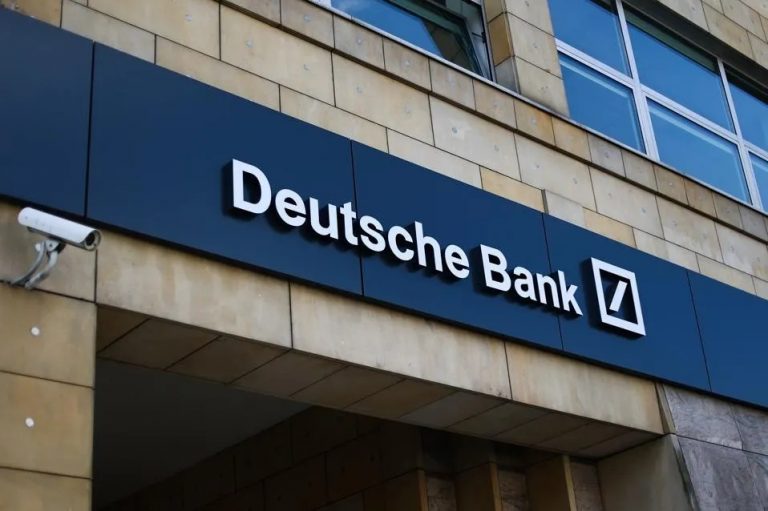
Deutsche Bank’s chief executive has warned that the growing electoral strength of Germany’s far-right and far-left parties could deter foreign investors, raising concerns that political uncertainty could complicate efforts to revive Europe’s largest economy.
Christian Sewing, head of Germany’s largest bank, said the recent state election victories by the Alternative for Germany (AfD) and the Left Party could damage the country’s investment appeal because international businesses may view the results as a reflection of Germany’s broader political direction rather than isolated developments in individual states.
“This poses a significant risk to Germany, and it should not be played down,” Sewing told the Bild daily in an interview, referring to the rise of political extremes.
Register for the next Tekedia Mini-MBA.
Register for Tekedia AI in Business Masterclass.
Join Tekedia Capital Syndicate and co-invest in great global startups.
“You can’t expect a foreign investor to immediately draw a distinction between a state government and Germany as a whole,” he said. “It’s seen as Germany as a whole and I think that from an investor’s point of view, that’s understandable.”
As Chancellor Friedrich Merz’s government seeks to revive growth through reforms, the increasing support for parties advocating sharply different approaches to immigration and property ownership is adding another source of uncertainty for companies assessing investment opportunities in the country.
The AfD, which advocates restricting immigration and sending asylum seekers home, recorded some of its strongest electoral performances in eastern Germany last month. In Saxony-Anhalt, the party narrowly missed securing an absolute majority in the state parliament before finishing first in Mecklenburg-Western Pomerania two weeks later.

The AfD has been classified by security services as extremist in some regions. Its electoral gains have also prompted concern among economists who argue that its positions could make Germany less attractive to skilled foreign workers and international investors.
For businesses considering long-term commitments, immigration policy can influence the availability of labor, particularly in an economy facing demand for qualified workers. Uncertainty over Germany’s future approach to immigration could therefore affect decisions about where companies establish operations, expand production or recruit employees.
Sewing’s warning centers partly on how international investors interpret political developments. Companies evaluating a potential investment may consider not only the policies of the national government but also the political direction of individual states, where local authorities can influence aspects of the business environment. Strong electoral performances by parties associated with restrictive immigration policies could consequently affect perceptions of Germany even when their influence over national policy remains limited.

The Left Party’s gains in Berlin have raised a different set of concerns, especially over property rights and the housing market. The party pledged to tackle the capital’s rising housing costs by expropriating holdings owned by residential property companies. That proposal could create uncertainty for property investors and companies with substantial exposure to Berlin’s housing market. The prospect of expropriation introduces questions about ownership rights, future returns and the regulatory environment for residential real estate.
Sewing linked the two developments to the wider question of Germany’s attractiveness to investors.
“And whether it’s Saxony-Anhalt with the AfD or what’s happening here in Berlin, it’s anything but conducive to economic growth. And it’s anything but investment-friendly,” he said.
Although the AfD and the Left Party have different ideological positions and policy objectives, Sewing argued that their electoral gains could create a common problem for the country: uncertainty about the direction of economic policy and the conditions under which businesses can invest.
Sewing urged Merz’s government to continue implementing reforms intended to revive the German economy, describing them as the appropriate response to the rise of political extremes.
“That is the only response we have to the far-right and far-left extremists in this country,” he said.
The comments place economic performance at the center of the government’s challenge. Reforms that improve the conditions for investment, strengthen growth and support business activity could help address some of the economic concerns shaping voter behavior. At the same time, the government must contend with political pressure from parties proposing more restrictive immigration policies or substantial changes to property ownership.
For investors, the issue extends beyond election results. Political developments can affect expectations about future regulation, access to labor, the security of assets, and the stability of the business environment. These considerations are relevant to investments that require substantial upfront spending and years to generate returns.
Germany’s reputation as a major industrial economy also means that political perceptions can have consequences beyond individual states. Foreign companies deciding where to build factories, establish research operations or expand existing businesses typically assess a range of factors, including workforce availability, infrastructure, regulation and expected demand. A perception of increasing political instability could become an additional consideration in those decisions.
However, the election results alone do not establish that foreign investment will decline. The extent of any effect will depend on how political gains translate into policy, the ability of state and federal governments to implement their agendas, and the broader economic conditions facing investors.