

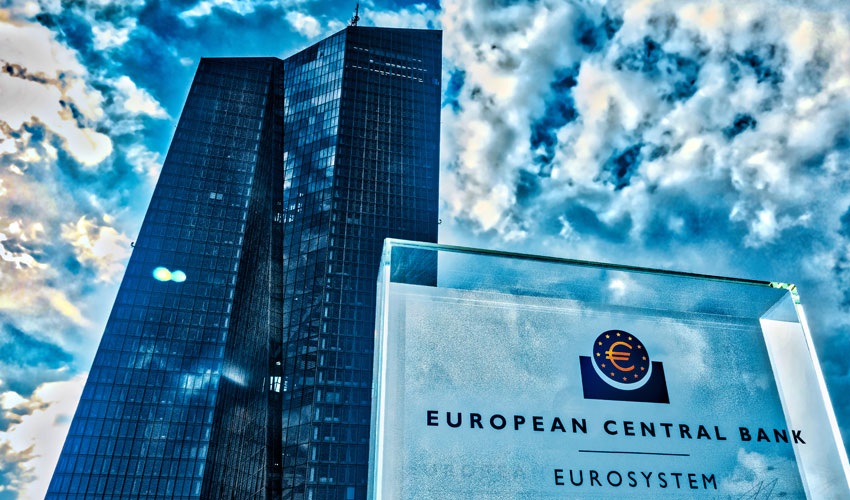
European Central Bank (ECB) President Christine Lagarde has warned that Europe risks losing control of its rapidly expanding tokenized asset market if regulators and policymakers fail to establish a comprehensive framework to govern the emerging financial ecosystem.
Her remarks underscore growing concerns among European financial authorities about the rapid transformation of traditional financial instruments into blockchain-based assets and the increasing role of private technology providers in financial infrastructure.
Tokenization refers to the process of representing traditional assets, including bonds, equities, money market instruments and real estate, as digital tokens on blockchain networks.
Register for the next Tekedia Mini-MBA.
Register for Tekedia AI in Business Masterclass.
Join Tekedia Capital Syndicate and co-invest in great global startups.
The technology promises faster settlements, reduced intermediaries, improved transparency and greater accessibility to financial markets. However, Lagarde believes that the expanding market could create regulatory, monetary and financial stability risks if Europe fails to maintain sufficient oversight.
The ECB has increasingly focused on the potential implications of tokenization for Europe’s financial system, particularly as banks, asset managers and financial technology companies explore blockchain-based settlement systems.
While the technology could improve efficiency and reduce operational costs, its development outside established regulatory structures could weaken the influence of central banks and public institutions over financial infrastructure.

Lagarde’s warning reflects concerns that tokenized markets could increasingly operate through private platforms, digital wallets and blockchain networks that are not fully integrated into Europe’s traditional financial architecture.
If these systems become widely adopted without appropriate safeguards, authorities could face challenges monitoring liquidity, managing systemic risks and ensuring that financial transactions remain compliant with existing rules.
Stablecoins have become an important part of the debate surrounding tokenized assets. Digital tokens pegged to fiat currencies are increasingly used to facilitate blockchain transactions, settlements and payments.

Their expanding role could potentially shift portions of financial activity away from conventional banking infrastructure, particularly if tokenized securities and other assets begin trading continuously across decentralized or privately operated networks.
European regulators have been attentive to the implications of stablecoins and digital asset infrastructure following the introduction of the Markets in Crypto-Assets Regulation, known as MiCA.
The framework established rules for crypto-asset issuers and service providers across the European Union, although the evolving tokenization landscape continues to raise questions about how existing legislation will accommodate new financial products and technologies.
The ECB has been exploring central bank digital currency initiatives and wholesale settlement solutions to preserve the role of public money in increasingly digital financial markets.
Such efforts could provide a foundation for tokenized transactions while maintaining access to central bank-backed settlement infrastructure.
Europe faces competition from financial institutions and technology companies in the United States, Asia and other jurisdictions developing blockchain-based capital markets.
If regulatory uncertainty or fragmented policies slow European innovation, financial businesses could increasingly move their tokenization activities elsewhere reducing Europe’s influence over global financial standards.
Lagarde’s warning highlights the delicate balance between encouraging technological innovation and preserving financial stability. Tokenization could reshape how capital markets operate.
But European policymakers are increasingly determined to ensure that the transformation does not undermine regulatory oversight, monetary sovereignty or the continent’s financial competitiveness.
As blockchain-based financial infrastructure continues expanding, Europe must decide how to integrate tokenization into its financial system without surrendering control over the rules governing markets, payments and the movement of capital.
Unicoin’s $19 Billion Vision Was Crushed by the SEC’s Crypto War, but a New Strategy Emerges
Unicoin was positioned as one of the ambitious projects seeking to bridge traditional investment opportunities with the evolving cryptocurrency market.
With a unique business model, an expansive investment vision and growing investor interest, the company believed it could establish itself in a favorable market environment.
Potentially reaching a valuation of $19 billion and eventually surpassing $100 billion. However, regulatory pressure from the US Securities and Exchange Commission (SEC) dramatically disrupted that trajectory.
Forcing the company to rethink its approach and develop a new strategy for rebuilding its value. The rise of Unicoin was built around investor expectations.
Its distinctive positioning and the broader enthusiasm surrounding digital assets and alternative investments. Before the SEC’s intervention in spring 2024, investors were purchasing pre-token-generation-event unicoins at approximately $0.75 per token.
With an anticipated supply of 25 billion coins, that price implied a valuation of roughly $19 billion, reflecting the ambitious expectations surrounding the project’s future.
The valuation was not simply a reflection of immediate market activity but also of the company’s long-term vision.
Unicoin sought to differentiate itself from conventional cryptocurrency projects by presenting an investment-oriented model connected to real-world opportunities.
Its positioning was designed to attract investors looking for exposure to an emerging digital asset ecosystem while potentially benefiting from the broader transformation of financial markets through blockchain technology.
At the time, the cryptocurrency industry was experiencing renewed interest in innovative business models, tokenized assets and alternative investment structures.
Projects that could establish a distinctive identity and demonstrate credible growth potential were increasingly attracting attention from investors.
Unicoin believed its strategy placed it in a particularly favorable position to capitalize on these trends, creating the foundation for its ambitious $100 billion valuation target.
However, the regulatory environment became a significant obstacle. The SEC’s increasingly aggressive approach toward cryptocurrency businesses.
Particularly during the period leading into spring 2024, created uncertainty for companies operating within the digital asset sector. Unicoin argues that the regulatory interference significantly undermined its progress, damaging investor confidence and eroding the value it had sought to build.
The broader regulatory climate also contributed to uncertainty across the cryptocurrency industry, with businesses facing questions about compliance requirements, operational restrictions and the future of digital asset offerings in the United States.
For Unicoin, the consequences were particularly consequential because its growth ambitions depended on maintaining investor momentum and expanding its market positioning.
The destruction of the valuation that the company believed it was building has now created a different challenge: rebuilding credibility, attracting investors and establishing a renewed growth trajectory.
Rather than relying on the strategy that originally drove its ambitions, Unicoin has developed and initiated a new approach designed to restore momentum and reposition the company for future expansion.
The journey from a projected $19 billion valuation toward the possibility of exceeding $100 billion remains ambitious.
Unicoin’s experience highlights how regulatory developments can dramatically reshape the fortunes of cryptocurrency businesses, even those with substantial growth aspirations.
Its next chapter will depend on execution, investor confidence, market conditions and the ability to translate its renewed strategy into sustainable value.