

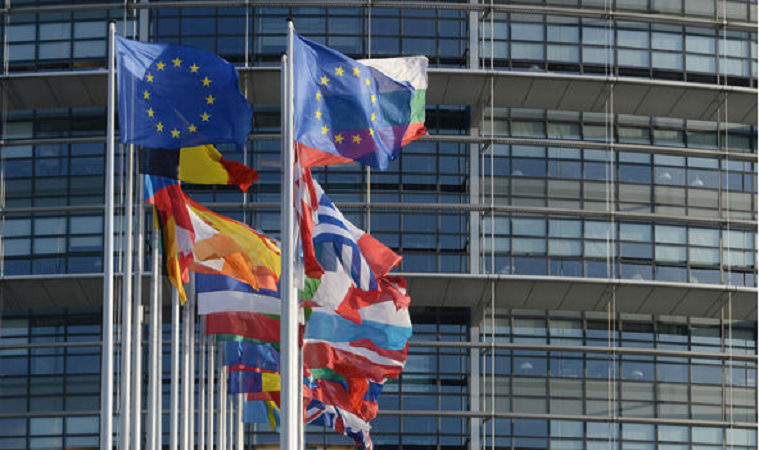
A dramatic confrontation between European Commission President Ursula von der Leyen and Elon Musk over the European Union’s Digital Services Act.
Artificial intelligence and satellite infrastructure would capture the growing tension between governments and powerful technology companies.
The alleged exchange, featuring threats of fines, platform bans and disruptions to satellite services, paints a picture of a Europe struggling to balance regulatory authority with technological dependence.
Register for the next Tekedia Mini-MBA.
Register for Tekedia AI in Business Masterclass.
Join Tekedia Capital Syndicate and co-invest in great global startups.
However, the dialogue presented should not be treated as a verified event or an authentic transcript without reliable reporting confirming that it occurred.
At the heart of the scenario is the Digital Services Act (DSA), the EU’s regulatory framework designed to hold large online platforms accountable for illegal content, systemic risks, transparency and consumer protection.
Elon Musk’s X has faced regulatory scrutiny over its content moderation, transparency and compliance obligations. The European Commission has sought to ensure that digital platforms operating within the bloc comply with European rules, regardless of where their owners are headquartered.

The narrative imagines Brussels demanding payment of a €120 million fine and access to Grok’s training records and recommendation algorithms.
It also depicts the Commission threatening penalties amounting to six percent of global revenue and a potential ban across the 27 member states.
Although the DSA contains substantial enforcement powers, these specific demands and threats, as portrayed in the dialogue, require independent verification. Regulatory enforcement is not ordinarily conducted through theatrical televised ultimatums.

Yet the confrontation becomes more complicated when the discussion shifts from social media regulation to space infrastructure.
Musk’s SpaceX operates Starlink, a satellite internet network that has become important for connectivity in remote locations, emergency communications and certain aviation and maritime applications.
The scenario suggests that Europe could face serious disruption if Musk retaliated against regulatory enforcement by withdrawing services. Such a threat would expose a broader vulnerability:
Governments increasingly depend on privately operated infrastructure for services that have strategic, commercial and security implications. Satellite communications, cloud computing, artificial intelligence and launch capabilities are no longer merely commercial products.
They are becoming components of national and regional resilience. The reference to Galileo, Europe’s satellite-navigation system, is particularly interesting.
Galileo is independently owned and funded by the European Union, and it does not depend on SpaceX for its operation. However, Europe has used Falcon 9 rockets to launch Galileo satellites.
Two separate Falcon 9 missions in April and September 2024 each carried two Galileo satellites, demonstrating Europe’s temporary reliance on American launch capacity during delays in its own launch programme.
That reliance, however, does not mean Musk controls Galileo or could switch off the navigation system. Galileo satellites are operated under European institutions, and launch contracts do not grant SpaceX authority over satellites once they are deployed.
The underlying issue is therefore not whether Musk could instantly cripple Europe, but whether technological dependence gives private companies greater negotiating leverage over governments.
Europe has invested heavily in digital sovereignty, including its own satellite programmes, AI ambitions, cybersecurity capabilities and digital infrastructure.
Developing alternatives to established American technology providers takes considerable time, capital and coordination. Regulatory authorities also face a difficult balancing act.
Enforcing laws against powerful corporations is essential to protecting consumers, competition, privacy and democratic accountability.
Yet governments must consider whether aggressive enforcement could expose weaknesses in critical infrastructure or encourage companies to threaten service withdrawals.
The imagined exchange highlights the growing struggle between political authority and technological power. Europe wants to establish rules governing the digital economy, while companies such as SpaceX and xAI operate technologies that governments increasingly depend upon.
Neither regulatory power nor technological dominance guarantees complete independence. Europe’s laws cannot manufacture rockets overnight, and Musk’s infrastructure cannot exempt his companies from legitimate legal obligations.
The future of digital sovereignty will depend on building alternatives, enforcing rules consistently and ensuring that critical services remain resilient even when governments and technology executives disagree.
António Costa Proposes €204 Billion Cut to EU Budget for 2028–2034
European Council President António Costa has proposed a compromise for the European Union’s next long-term budget, seeking to reduce spending plans for 2028 to 2034 by approximately €204 billion ($220 billion) compared with the European Commission’s original proposal.
The adjustment highlights the growing political and economic pressures confronting the bloc as it attempts to balance ambitious strategic priorities with the fiscal realities facing member states.
The proposal could reshape negotiations over how Europe finances defence, economic competitiveness, infrastructure, agriculture and regional development over the next seven years.
The EU’s long-term budget, known as the Multiannual Financial Framework (MFF), determines how the bloc allocates resources across major policy priorities.
It serves as the financial foundation for EU programmes, supporting everything from agricultural subsidies and cohesion funding to research, climate initiatives and cross-border infrastructure.
Negotiations over the 2028–2034 framework are particularly complicated because Europe faces mounting demands for additional funding while several member states remain reluctant to significantly increase their contributions.
Costa’s compromise attempts to narrow the gap between the European Commission’s spending ambitions and the concerns of governments wary of higher financial commitments.
By proposing a reduction of roughly €204 billion, the Council president is signalling that the original budget proposal may be politically difficult to secure in its current form.
The adjustment could provide a negotiating pathway for countries seeking greater fiscal discipline without completely abandoning the EU’s broader investment agenda.
However, budget reductions inevitably create difficult choices about which programmes should receive priority.
European leaders face pressure to strengthen defence capabilities, support Ukraine, improve industrial competitiveness, accelerate technological development and address energy security.
Agriculture and regional development remain politically sensitive areas because they directly affect farmers, businesses and communities across the continent. The challenge is that these priorities increasingly compete for limited financial resources.
Europe’s governments must determine whether additional spending should come through higher national contributions, borrowing, new EU revenue sources or reductions in existing programmes.
Each option carries political consequences, particularly for countries struggling with public debt, budget deficits and domestic spending pressures.
The proposed reduction could influence financial markets and investors’ expectations about Europe’s economic direction. A smaller budget may reduce the scale of certain public investment programmes.
Potentially affecting industries dependent on EU funding, including infrastructure, renewable energy, technology, agriculture and research. A more politically sustainable budget could provide greater certainty for businesses and governments if negotiations conclude without prolonged institutional disagreements.
Costa’s proposal is therefore less about simply cutting expenditure than about finding a workable compromise among competing national interests.
The European Commission may favour substantial resources to support strategic transformation, while some member states insist that spending must remain manageable and contributions proportionate to national economic capacity.
The 2028–2034 EU budget negotiations will test Europe’s ability to translate political ambitions into financial commitments. The proposed €204 billion reduction could become an important starting point for negotiations rather than a final spending decision.
As governments debate the balance between fiscal restraint and strategic investment, the outcome will determine how effectively the European Union responds to economic uncertainty, geopolitical instability and intensifying global competition in the years ahead.