

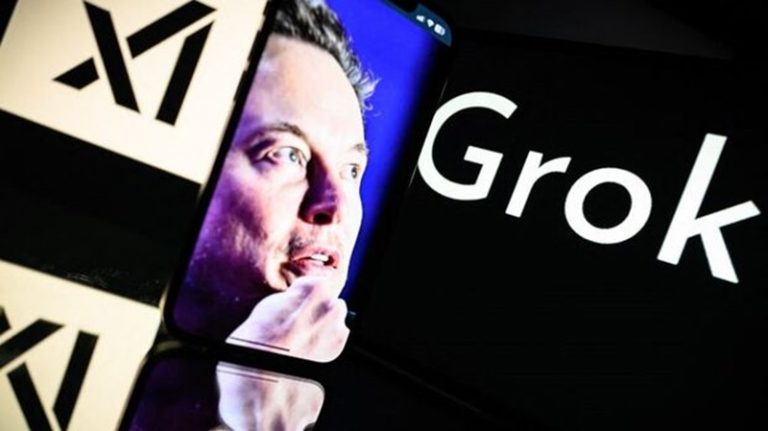
Elon Musk has acknowledged that the cost of running SpaceX’s AI agent Grok Bot is outpacing the revenue it generates, exposing a financial challenge for the company as demand for AI-powered services grows and competition intensifies across the industry.
The SpaceX chief executive said on Sunday that the cost of serving the agent was “unsustainably high relative to revenue”, after users complained that their weekly usage allowances were being exhausted faster than expected. Musk defended the decision to reduce allowances, describing the move as a sensible response to rising operating expenses.
The admission highlights a central problem facing companies commercializing advanced AI tools: attracting users does not automatically translate into profitable growth. AI agents can consume substantial computing resources because they perform multiple tasks, interact with software and external services, and make repeated model calls to complete a single request. The more frequently customers use them, the higher the infrastructure bill can become.
Register for the next Tekedia Mini-MBA.
Register for Tekedia AI in Business Masterclass.
Join Tekedia Capital Syndicate and co-invest in great global startups.
Grok Bot was launched by SpaceX in August as an AI agent capable of using a virtual computer to perform tasks on behalf of users, including shopping. Its subscription structure ranges from a free tier to a plan costing $200 a month, with each package carrying weekly usage limits that reset periodically.
Those limits are designed to control computing expenses and prevent heavy users from generating costs that exceed their subscription payments. Similar restrictions are used by other AI services, including Meta’s Muse, as developers attempt to balance access, demand, and the cost of running sophisticated models.
However, complaints over the weekend suggest that some Grok Bot users noticed a reduction in the amount of work they could complete before reaching their limits. Their concerns prompted Musk to respond publicly on X.

“Upgrade to higher usage plan cost increase is too high?” he wrote in response to one user. In another reply, he defended the decision to reduce allowances and communicate the changes, describing it as “just being sensible.”
The comments indicate that SpaceX is adjusting access to Grok Bot in response to the economics of operating the service. They also raise questions about how the company will price usage as it tries to expand adoption without allowing computing costs to grow faster than revenue.
SpaceX reported 800,000 paid weekly users for Grok Bot in its earnings update last month, with Musk describing its expansion as “the fastest growth of a product that I’ve ever seen in my life.”

That level of adoption gives the company a substantial customer base, but it also creates a potentially expensive operating commitment. Musk told investors that Grok Bot could eventually consume most of the company’s “Super Intelligence compute”, suggesting that the agent may become one of the largest users of its AI infrastructure.
The statement points to the scale of computing resources required to support the product. Unlike a conventional chatbot that primarily responds to individual prompts, an AI agent can execute a sequence of actions, use digital tools, and revisit tasks until it reaches an outcome. Each stage can require additional processing, particularly when the agent relies on powerful models to reason, interpret information, and make decisions.
This has created a difficult pricing equation. Subscription fees provide recurring revenue, but fixed monthly or weekly plans can expose operators to heavy users whose computing requirements are substantially higher than those of average customers. Usage limits offer a way to manage that exposure, although frequent reductions can frustrate customers and weaken the appeal of a service marketed around convenience and automation.
SpaceX has also been adjusting its subscription strategy. The company recently announced plans to incorporate Grok Bot into a new $8-a-month X subscription, which also includes X Premium and Cursor, the AI coding platform it acquired earlier this year.
Bundling the agent with other services could broaden distribution and make the subscription more attractive to users who already pay for access to X’s premium features. It could also help SpaceX generate recurring revenue from a wider customer base. However, a lower-priced package could place additional pressure on margins if it includes substantial access to a computing-intensive service.
Musk said in October that Grok Bot would also use AI models developed by companies other than xAI, including Claude Opus 5.5, MidJourney and Suno. Access to multiple models could expand the agent’s capabilities, but it also introduces another cost consideration: SpaceX may have to pay external providers for access to their systems, in addition to financing its own computing infrastructure.
The broader model raises questions about how SpaceX will allocate tasks between its own AI systems and third-party providers, and how those costs will be incorporated into subscription pricing.
Grok Bot’s cost problem is not unique. AI agents have become one of the technology industry’s most closely watched product categories, with companies promoting systems that can complete tasks rather than simply generate text or answer questions. Yet the commercial model remains unproven for many providers.
Meta’s Muse, which has attracted more than 10 million users, also illustrates the challenge. The company has not disclosed how much it costs to operate the agent, but Chief Executive Mark Zuckerberg told investors last month that the product was “very compute-intensive” and was not yet profitable.
The comparison comes from a wider tension in the AI industry. Companies are racing to attract users and establish positions in a market that could become a major source of software revenue. But the economics of agentic AI are more complicated than conventional subscription software, where serving an additional customer often carries relatively low incremental costs.
AI agents can require repeated model inference, access to external tools, and substantial computing capacity. As users delegate more complex tasks, the resources consumed by each interaction can rise. Providers must therefore find ways to price services according to usage, improve computing efficiency or reduce the cost of the underlying models.
SpaceX’s challenge is notable because Musk has presented Grok Bot as a product with the potential to become a major consumer of the company’s AI computing resources. Strong adoption could establish the service as a significant business, but the current cost structure suggests that user growth alone is not sufficient evidence of commercial success.
The episode also creates a tension with Musk’s public vision of an approaching age of AI abundance, in which advances in automation and artificial intelligence could make goods and services far more accessible. For now, the infrastructure required to deliver that vision remains expensive, and companies are having to ration access when usage costs exceed what customers pay.
Some X users responded to Musk’s comments by pointing to his earlier remarks that saving money would become pointless in an era of AI abundance. The contrast captured the gap between the long-term promise of cheaper, more capable AI and the immediate economics of running the technology.