

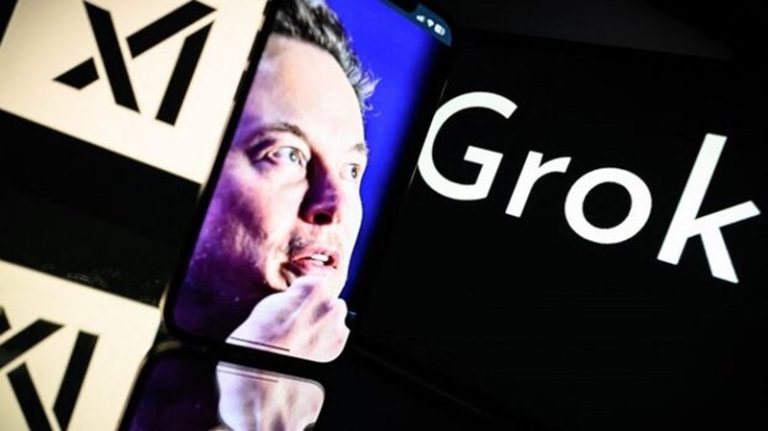
Elon Musk is once again raising the stakes in the artificial intelligence race, claiming that xAI’s next major model, Grok 4.7, could be released within 10 days and outperform every AI model currently available.
The prediction reflects Musk’s increasingly aggressive push to position Grok alongside, and potentially ahead of, the leading systems developed by OpenAI and Anthropic.
The reported upgrade is significant in both scale and ambition. Grok 4.7 is expected to expand from approximately 1.5 trillion parameters to 2.1 trillion, representing a substantial increase in model capacity.
While parameter count alone does not determine an AI system’s intelligence, the expansion signals xAI’s willingness to continue competing through massive computational resources, increasingly sophisticated training techniques and access to specialized data.
Register for the next Tekedia Mini-MBA.
Register for Tekedia AI in Business Masterclass.
Join Tekedia Capital Syndicate and co-invest in great global startups.
Perhaps more important than the additional parameters is the reported use of proprietary SpaceX data. Musk argues that information generated through SpaceX’s engineering and technological operations could give Grok an advantage on real-world technical problems.
Such data could potentially expose the model to highly specialized engineering knowledge, systems analysis and problem-solving scenarios that are difficult to obtain through conventional internet-scale training.
That strategy could distinguish Grok from competitors whose training datasets are primarily composed of publicly available information, licensed material and synthetic data.
If successfully integrated, proprietary industrial data could make AI models more useful for advanced engineering, scientific research and technical decision-making.

However, the quality, relevance and deployment of the data will matter more than simply possessing a larger dataset. Musk has also identified Anthropic as Grok’s closest competitor, while acknowledging the company’s ability to develop increasingly capable models.
That assessment highlights how competitive the frontier AI market has become. OpenAI, Anthropic and xAI are no longer simply competing over chatbot quality. They are racing across coding, reasoning, autonomous agents, scientific discovery, computer use and enterprise applications.
Grok’s existing benchmark performance illustrates why Grok 4.7 faces a difficult test. Grok 4.6 reportedly matched GPT-5.6 Sol Max on the AA Intelligence Index but remained behind Claude Fable 5 Max. Its reported 26% score on Terminal-Bench also trailed GPT’s 34.6%.

These results suggest that although Grok is firmly among the leading AI systems, there remains a measurable gap in certain forms of complex reasoning and agentic computer-based work. That makes Grok 4.7’s promised improvement particularly significant.
If the new model genuinely delivers a major leap in coding, reasoning and technical problem-solving, xAI could challenge the established hierarchy of frontier models. Conversely, if benchmark improvements are modest, Musk’s claim that Grok will outperform every available model could prove overly ambitious.
The distinction between marketing claims and demonstrated capability will therefore be crucial. Frontier AI development has become increasingly competitive, and companies routinely make bold predictions before independent evaluations become available.
Objective benchmarks, real-world testing and user experience will ultimately determine whether Grok 4.7 represents a genuine technological breakthrough.
For xAI, the strategy is clear: combine enormous model scale with proprietary technical data and Musk’s broader technology ecosystem. The coming release could provide an important test of whether access to unique engineering information can translate into superior artificial intelligence.
When independent results arrive, the industry will have a clearer answer to the central question: can Grok 4.7 turn Musk’s boldest AI prediction into measurable performance?