

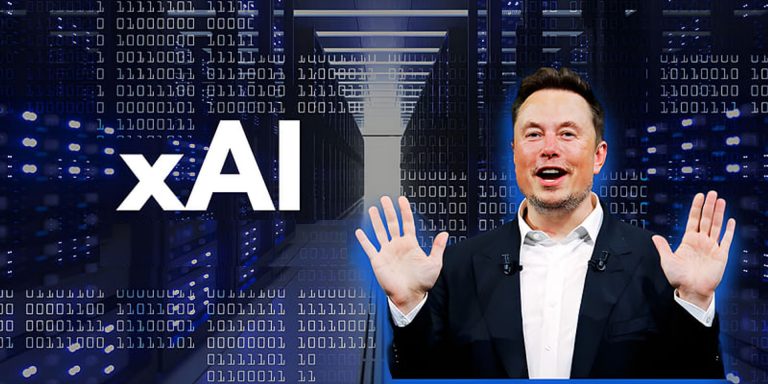
Elon Musk’s artificial intelligence company, xAI, is reportedly preparing to raise new funds in a deal that could catapult its valuation to as high as $200 billion, according to the Financial Times, citing sources close to the matter.
The potential raise underscores growing investor confidence in Musk’s AI ambitions, coming just months after xAI’s multibillion-dollar infrastructure expansion and a recent $10bn raise to supercharge the AI race with a massive data center.
While Musk publicly denied the need for new capital, writing on X that “xAI is not seeking funding right now. We have plenty of capital,” insiders suggest otherwise. The FT report reveals that Saudi Arabia’s Public Investment Fund (PIF) is expected to play a significant role in the upcoming round through its indirect stake via Kingdom Holdings, which already has an $800 million investment in xAI.
Register for Tekedia Mini-MBA edition 20 (June 8 – Sept 5, 2026).
Register for Tekedia AI in Business Masterclass.
Join Tekedia Capital Syndicate and co-invest in great global startups.
Register for Tekedia AI Lab.
The valuation target — between $170 billion and $200 billion — would make xAI one of the most highly valued AI startups globally, only rivaled by OpenAI, which is also preparing a fundraising round at a projected $300 billion valuation. Notably, xAI was valued at $80 billion in March following its all-stock acquisition of X.
The fresh talks come on the heels of a major $10 billion capital infusion facilitated by Morgan Stanley in June, split equally between debt and strategic equity. The package included floating-rate loans and bonds with interest rates as high as 12%, reflecting both investor appetite and cautious optimism over xAI’s future earnings.
According to Morgan Stanley’s projections, xAI is expected to generate over $1 billion in gross revenue by the end of 2025, and more than $13 billion in annual earnings by 2029, powered by the rollout of its Grok AI model and massive infrastructure investments.

The company has pledged to invest $18 billion in data centers as part of its expansion into AI infrastructure. Central to this push is its Colossus supercomputer, located in Memphis, Tennessee — powered by natural gas turbines and now home to hundreds of thousands of GPUs. Musk’s goal is to scale Colossus to 1 million GPUs, positioning it as a cornerstone of xAI’s computing backbone.
On Wednesday, the company launched Grok-4, the latest iteration of its chatbot model, claiming benchmark-topping performance in reasoning and code generation. This positions Grok in direct competition with OpenAI’s GPT-4, Anthropic’s Claude, and Google’s Gemini.
Strategic Acquisition of X and Platform Synergies
In March, xAI acquired social media platform X in an all-stock transaction that valued the combined entity at $113 billion — $80 billion for xAI and $33 billion for X. This merger gives xAI a direct distribution platform for Grok and potentially unlocks significant synergies between conversational AI, content recommendation, and advertising infrastructure.

The strategy mimics Musk’s multi-pronged approach to scaling: combining product ownership (X), infrastructure (Colossus), capital leverage (Morgan Stanley’s syndicate), and a relentless focus on vertical integration.
The expected involvement of the Saudi PIF highlights growing geopolitical interest in controlling AI infrastructure and capabilities. PIF’s backing — via Kingdom Holdings — signals confidence in xAI’s potential to be a global AI leader. Given the U.S.–China rivalry and tightening chip export restrictions, Musk’s control over critical AI supply chains is viewed by some analysts as a strategic advantage.
Earlier this year, the U.S. government tightened export rules on Nvidia’s AI chips to China, blocking sales of even downgraded processors like the H20. Nvidia CEO Jensen Huang described the move as effectively shutting off a $50 billion China market for U.S. chipmakers. In that context, xAI’s domestic infrastructure ambitions — from energy sourcing to compute deployment — could help to expand the U.S. domestic AI market.
However, xAI’s ambitions place it in a fierce AI arms race alongside OpenAI, Microsoft, Google, and Anthropic. Microsoft has committed $80 billion toward AI infrastructure in 2025, and OpenAI is scouting for another $40 billion to maintain its lead. Meanwhile, Google is absorbing top AI talent, including from Windsurf and other startups, to bolster its Gemini platform.
But with a sprawling infrastructure buildout, an integrated consumer platform, and now–growing financial backing, Musk’s xAI is rapidly evolving from a startup challenger into a full-stack AI conglomerate.