

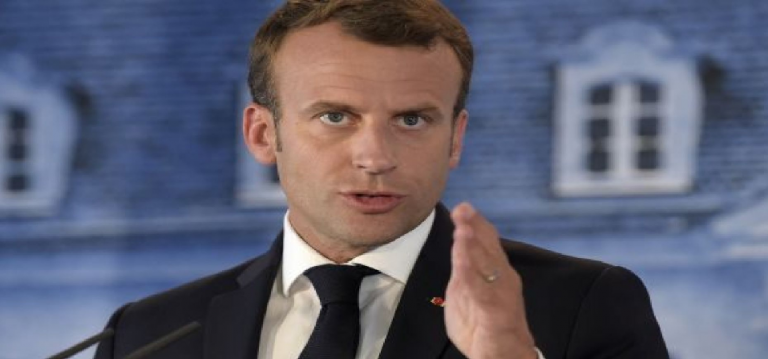
French President Emmanuel Macron is scheduled to deliver a special address at Paris Blockchain Week 2026, holding April 15–16 at the Carrousel du Louvre in Paris.
This marks the first time a sitting G7 head of state will speak at an institutional conference dedicated to digital assets, blockchain, and crypto. The event expects around 10,000 attendees from over 100 countries.
Macron’s speech will focus on European digital sovereignty, including: Development of euro-denominated stablecoins. The introduction of a digital euro. Regulatory frameworks to position Europe more centrally in the global digital economy.
Several senior French officials involved in digital asset regulation and policy are also slated to participate. Other notable speakers include Ethereum co-founder Vitalik Buterin and Binance CEO Changpeng Zhao (CZ).
Register for Tekedia Mini-MBA edition 20 (June 8 – Sept 5, 2026).
Register for Tekedia AI in Business Masterclass.
Join Tekedia Capital Syndicate and co-invest in great global startups.
Register for Tekedia AI Lab.
France has positioned itself as relatively crypto-friendly within the EU with the MiCA regulation framework already in place, and Macron’s appearance reinforces efforts to attract innovation and investment to Paris as a European tech and finance hub. It’s a notable development in the ongoing shift toward institutional and political acceptance of crypto.
EU digital sovereignty refers to Europe’s strategic goal of achieving greater independence and control over its digital infrastructure, data flows, technologies, and standards—while remaining open to global collaboration. It emphasizes reducing over-reliance on non-EU providers primarily US hyperscalers like Amazon, Google, and Microsoft, or Chinese firms in areas like cloud computing, semiconductors, AI, and data processing.
The concept evolved from post-Snowden data concerns and the 2015 Digital Single Market strategy into a core pillar of “open strategic autonomy,” balancing regulation, investment, and innovation under European values. This agenda is not isolationist but aims for resilience in a geopolitically tense world, as seen in responses to supply chain risks, trade tensions, and foreign tech dominance.

It underpins the EU’s Digital Decade 2030 policy program, which sets measurable targets for digital skills, infrastructure, business and government transformation, and technological sovereignty. Recent reviews stress incorporating sovereignty metrics to track progress and close gaps in areas like 5G deployment and AI adoption.
European Chips Act: Funds semiconductor manufacturing to cut dependency on Asia. Linked to Critical Raw Materials Act and Net Zero Industry Act for broader tech autonomy. NIS2 Directive and Cyber Resilience Act: Mandate risk management for critical infrastructure and digital products. Supporting initiatives include Gaia-X, EuroStack; catalog of EU-controlled IT solutions for public/private procurement, and Digital Commons projects for open-source alternatives.
Digital sovereignty extends to finance, directly relevant to recent high-profile events like Macron’s upcoming address; MiCA: Fully operational EU-wide framework for crypto-assets. It provides legal certainty, consumer protections, licensing for issuers/exchanges, and strict rules on stablecoins to safeguard monetary stability and prevent fragmentation. Aims to position Europe as a competitive yet regulated hub.
Digital Euro (ECB project): A central bank digital currency (CBDC) in advanced preparation phase. It ensures public money remains accessible in a digital economy, countering private stablecoins and foreign payment dominance. Key 2026 milestones include technical standards, Pontes DLT settlement solution (Q3), and estimated €4–6 billion implementation costs for banks over four years. It promotes payments sovereignty and resilience.

These tie into euro-denominated stablecoins and regulatory frameworks Macron is expected to highlight, reinforcing Europe’s push for leadership in digital finance without ceding control. France and Germany advancing joint projects like sovereign AI with firms such as Mistral and SAP.
Commission emphasizing full implementation of existing laws alongside new funding for infrastructure. Progress is uneven. The Digital Decade highlights gaps in connectivity, skills, and tech adoption. Critics argue heavy regulation risks stifling innovation or burdening SMEs, while internal differences persist.
Geopolitical realities—like US tariffs or China dependencies—add urgency but complicate execution. Sovereignty is framed as resilience through rights-based governance, not protectionism. EU digital sovereignty policies represent a deliberate “European Way”: regulating first to shape markets, then investing to build capacity.
It has already influenced global norms and positions Europe to compete in AI, cloud, and crypto while protecting citizens. In the context of Macron’s Paris Blockchain Week appearance, it underscores a proactive stance—using events like this to signal policy direction and attract investment.