

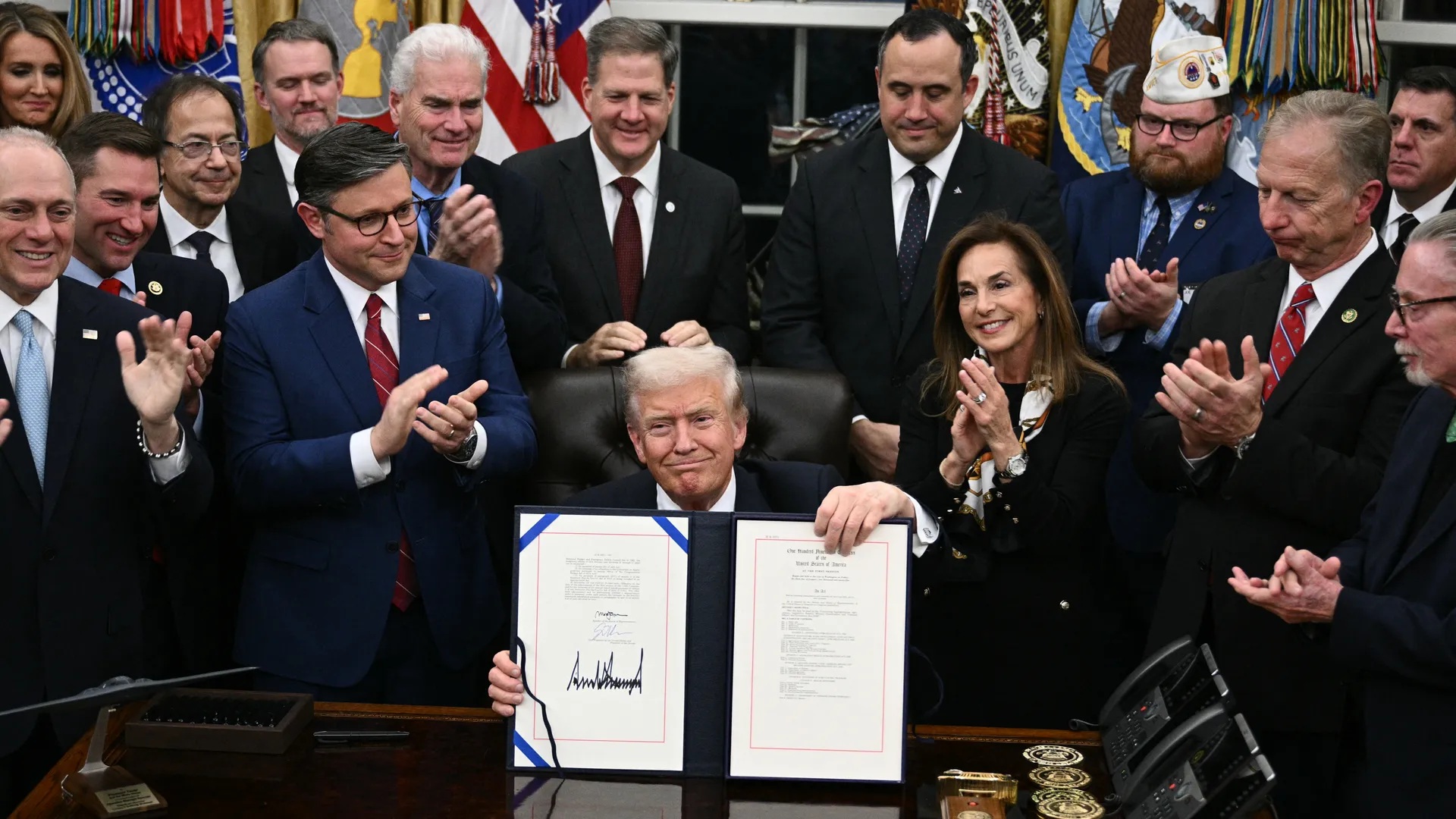
President Donald Trump signed a bipartisan funding bill into law, officially ending the 43-day government shutdown—the longest in U.S. history.
The shutdown began on September 30, 2025, when Congress failed to pass funding legislation before the fiscal year’s end, largely due to a standoff over Democratic demands to extend enhanced Affordable Care Act (ACA) subsidies set to expire at the end of 2025.
The US Treasury built up its TGA to around $1 trillion during the shutdown, absorbing ~$700 billion from broader markets. This reduced available capital for risk assets like crypto, as funds were funneled into government coffers instead of banks, money markets, or stablecoins. Bitcoin (BTC) and Ethereum (ETH) saw heightened volatility, with BTC dropping ~18% from its early October all-time high of ~$125,000 to ~$103,000 by November 13.
Register for Tekedia Mini-MBA edition 20 (June 8 – Sept 5, 2026).
Register for Tekedia AI in Business Masterclass.
Join Tekedia Capital Syndicate and co-invest in great global startups.
Register for Tekedia AI Lab.
Shutdowns halt releases of critical reports (e.g., jobs, inflation), complicating Federal Reserve decisions. This fueled market jitters, as investors couldn’t gauge rate cut probabilities accurately.
Despite a 99% chance of an October rate cut per CME FedWatch, the lack of data prolonged uncertainty. Crypto’s high correlation with dollar liquidity 0.85 for BTC in 2025 exacerbated downside pressure.
Regulatory Stagnation: Agencies like the SEC and CFTC operated on skeleton crews, delaying ETF approvals (e.g., spot Solana and XRP products launched automatically but without full oversight), enforcement actions, and market structure bills.

The House’s Digital Asset Market Clarity Act missed a key October 20 markup deadline, pushing potential progress to late 2025 or 2026. This created a “regulatory vacuum,” deterring institutional inflows into altcoins while Bitcoin ETFs saw cautious gains.
Key Details of the Bill
The legislation, passed by the Senate on November 10 60-40 vote, with eight Democrats crossing the aisle and the House on November 12 222-209 vote, with six Democrats joining Republicans, provides: Short-term funding extension.
Most federal agencies funded at current levels through January 30, 2026, averting another immediate cliff. For the Department of Agriculture, military construction, and legislative branch agencies. Food assistance continuity.

Full funding for the Supplemental Nutrition Assistance Program (SNAP, or food stamps) through September 2026, benefiting over 40 million low-income Americans who faced disruptions during the shutdown.
Worker protections: Back pay for furloughed or unpaid federal employees estimated at 800,000 workers, reinstatement of laid-off staff, and a temporary halt to further reductions in force (RIFs) through January.
No ACA subsidy extension: A major Democratic concession; Republicans agreed to a Senate vote on the subsidies in December, but House passage remains uncertain. The bill’s passage came after weekend negotiations between moderate Senate Democrats and Republicans, breaking a filibuster.
Trump signed it in a late-evening Oval Office ceremony, criticizing Democrats for using the shutdown as “political leverage” and vowing, “We can never let this happen again.”
Impacts of the Shutdown
The impasse caused widespread disruptions: Economic toll: Estimated GDP loss of 0.1-0.2 percentage points per week, or about $10-20 billion total, though much is recoverable. Federal debt continued rising at ~$1.8 trillion annually.
Affected services: Halts to air traffic control leading to flight cuts, Smithsonian museums and National Zoo closures, delayed IRS tax refunds, and SNAP payment interruptions that left some families without food aid.
Hundreds of thousands of federal workers (e.g., TSA agents, park rangers) went unpaid; some resorted to food banks or loans. The Trump administration’s court battles over SNAP funding highlighted the strain.
Democrats, reeling from 2024 election losses, used the shutdown to spotlight healthcare access, tying it to ACA subsidies aiding 20 million Americans. Republicans, controlling Congress, resisted, viewing it as a “hostage” tactic.
The compromise sets up future battles: Trump has pushed to eliminate the Senate filibuster for budget bills, and the ACA issue looms large in December. Polls showed Trump’s approval dipping during the crisis, but the quick resolution may blunt long-term damage.
Federal operations are resuming as early as November 13, with full back pay processing expected within weeks.