

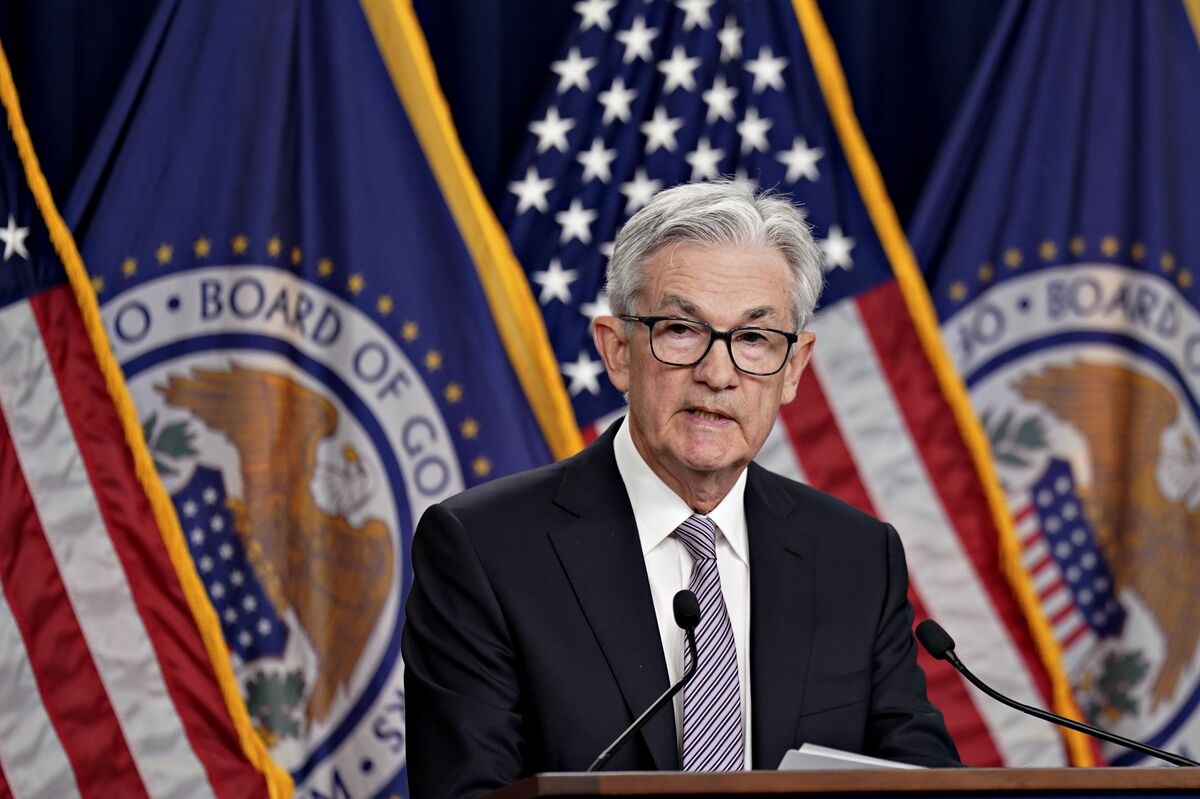
Officials at the Federal Reserve are confronting a policy dilemma that economists have long warned about, but policymakers hoped to avoid: a slowing labor market colliding with a fresh wave of inflation pressure driven by geopolitical shocks.
New data released Friday showed the U.S. job market unexpectedly weakened in February, even as energy prices surged in the wake of the escalating U.S.–Israeli conflict with Iran. The conflicting signals are forcing central bank officials to weigh whether to keep interest rates elevated to restrain inflation or cut borrowing costs to support a labor market that may be losing momentum.
For now, policymakers appear inclined to wait.
Register for Tekedia Mini-MBA edition 20 (June 8 – Sept 5, 2026).
Register for Tekedia AI in Business Masterclass.
Join Tekedia Capital Syndicate and co-invest in great global startups.
Register for Tekedia AI Lab.
At the center of the debate is the possibility that the United States could drift toward stagflation — a rare and difficult economic environment marked by sluggish growth, rising unemployment, and persistent inflation.
“We need to keep our eye on both,” Mary Daly said in an interview with CNBC, referring to the central bank’s dual mandate of stable prices and maximum employment. “Both of our goals are risks now.”
A labor market that may be turning
The February employment report provided the first clear sign this year that the U.S. labor market could be losing strength. Employers unexpectedly cut jobs during the month, and the unemployment rate climbed to 4.4%, according to the Labor Department. While a single report rarely changes the Fed’s policy outlook, the broader trend is raising concerns.

Private-sector employers have added fewer than 300,000 workers across all of 2025 so far. Excluding the economic collapse during the COVID-19 pandemic in 2020, that would make this the weakest year for job growth since 2009, when the U.S. economy was still emerging from the global financial crisis.
Part of the decline reflects temporary factors. Labor strikes in the healthcare sector disrupted hiring, while the federal government continues to shrink its workforce through spending cuts and restructuring. Yet even when January’s stronger report is averaged with February’s weaker one, job growth appears to be running below the pace required to keep unemployment stable.
Daly estimates the U.S. economy needs roughly 30,000 new jobs per month simply to hold the unemployment rate steady. The latest figures suggest hiring is falling short of that threshold.

War-driven oil surge complicates inflation fight
At the same time, the inflation battle that has dominated Fed policy for years is far from over.
Energy markets have been rattled by the expanding conflict between the United States, Israel, and Iran. Oil prices climbed close to $90 per barrel this week, raising fears that the conflict could disrupt supplies across the Middle East.
The impact on consumers has been immediate. Average gasoline prices in the United States jumped from roughly $3 per gallon to $3.32 within a week. Such spikes often ripple through the broader economy. Higher energy costs increase transportation and manufacturing expenses and can push up the price of goods ranging from food to airline tickets.
The Fed’s preferred inflation measure was running at 2.9% in December, and economists expect the next report to show little improvement. That remains significantly above the central bank’s 2% target — a goal the Fed has failed to achieve consistently for five years.
Fed Governor Christopher Waller said the oil spike might ultimately prove temporary if geopolitical tensions ease.
“If it’s unwound in a couple of weeks or even two months, it’s not going to be a big factor down the road,” Waller said in an interview with Bloomberg Television.
But he acknowledged the risks if the conflict drags on.
“If it becomes more permanent, then it’ll start bleeding through to other parts of the economy.”
Policy crossroads inside the Fed
The diverging economic signals are intensifying debate within the central bank.
Some officials believe the weakening labor market will ultimately require lower interest rates to support economic growth. Others argue that easing policy too quickly could reignite inflation, especially if oil prices remain elevated.
Stephen Miran, who has advocated rate cuts since joining the central bank last year, said rising energy prices could strengthen the case for easing.
Higher fuel costs act like a tax on households, forcing consumers to divert spending away from other parts of the economy.
“It pulls demand out of the economy as people have to spend more on energy products,” Miran said in an interview with CNBC. “If anything, it biases me toward even more dovish policy.”
Yet other policymakers remain wary of declaring victory over inflation too soon.
Beth Hammack said she believes policy should remain unchanged until inflation clearly moves closer to the Fed’s target.
“Under my base case, I think policy should be on hold for quite some time as we see evidence that inflation is coming down and the labor market stabilizes further,” she said.
Susan Collins similarly urged patience, calling for a “deliberate approach” as policymakers navigate a highly uncertain environment.
Markets betting on rate cuts
Financial markets, however, are increasingly betting that the Fed will soon be forced to ease policy.
After the weak jobs data, traders raised the probability of a rate cut in June to roughly 51%. Another reduction is widely expected by the end of the year.
The timing could coincide with a leadership change at the central bank.
President Donald Trump has nominated former Fed governor Kevin Warsh to replace current chair Jerome Powell. Warsh is expected to assume the role in June if confirmed. The transition could shape the next phase of monetary policy, particularly if economic conditions deteriorate further.
For Fed officials, the current moment carries echoes of past economic crises.
Periods when inflation rises while growth slows are among the most challenging environments for central banks. Tightening policy risks deepening the slowdown, while easing policy could fuel additional price increases.
For now, policymakers appear likely to hold interest rates steady at their upcoming March 17–18 meeting while they gather more data. But with hiring weakening, oil prices climbing, and geopolitical tensions rising, the Fed may soon face a difficult decision: whether to prioritize the fight against inflation or move quickly to prevent the labor market from slipping into a broader downturn.