

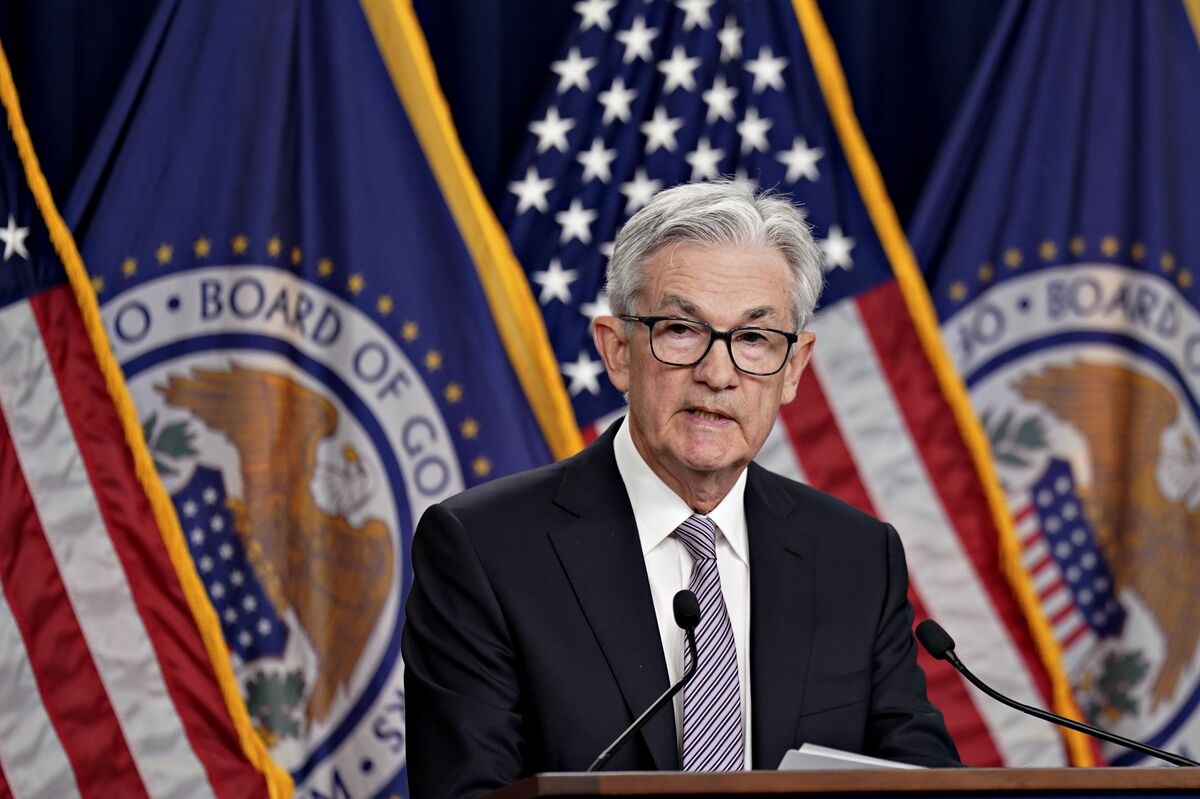
January’s 130,000 job gain offers the Federal Reserve breathing room, but sweeping downward revisions show hiring in 2025 nearly flatlined, complicating the policy outlook.
Federal Reserve officials appear poised to keep interest rates steady for longer after new data showed the U.S. labor market opened 2026 in firmer shape than forecast, even as major revisions revealed that job creation slowed to a crawl last year.
The Bureau of Labor Statistics, in a report delayed by a federal shutdown, said nonfarm payrolls rose by 130,000 in January. Economists surveyed by Reuters had expected a gain of 70,000. The unemployment rate edged down to 4.3% from 4.4%.
The headline strength provides reassurance after months of cooling labor momentum. Yet the broader picture is less straightforward. Revisions released alongside the January data show average monthly job growth in 2025 was about 15,000 — a pace typically associated with the onset of recession rather than a period of solid economic expansion.
Register for Tekedia Mini-MBA edition 20 (June 8 – Sept 5, 2026).
Register for Tekedia AI in Business Masterclass.
Join Tekedia Capital Syndicate and co-invest in great global startups.
Register for Tekedia AI Lab.
A labor market sending mixed signals
The Fed last month voted 10–2 to hold its benchmark rate in a 3.50%–3.75% range, after cutting at each of its final three meetings in 2025. January’s stronger-than-expected payroll figure reduces pressure for immediate action and supports the case for patience.
“With the policy rate around neutral, January’s guidance pointing toward patience and the economy chugging along, an extended pause still seems likely,” Oren Klachkin, financial market economist at Nationwide, wrote in a note.
Interest-rate futures markets shifted after the report. While traders still expect the next rate cut could come at the Fed’s June 16–17 meeting, they now see nearly a 40% probability that policymakers will stay on hold, up from roughly 25% before the release.

Kansas City Fed President Jeffrey Schmid described the January job gain as “good news.” He has argued that slower hiring last year was more closely linked to demographic shifts and immigration policy than to weak labor demand.
The revision that changed the narrative
The more consequential development may be the recalibration of 2025 employment data. According to Reuters, the new estimates show average monthly payroll growth of roughly 15,000 for the year. By comparison, from 2010 to 2019, the U.S. economy added an average of 183,000 jobs per month.
That revision materially alters the narrative of labor resilience that prevailed through much of last year. A near-stagnant hiring environment suggests businesses were far more cautious than previously understood.

A sharp drop in immigration during President Donald Trump’s first year back in office likely contributed to the slowdown. With slower labor-force growth, the economy does not need to generate as many jobs to keep unemployment stable. A smaller pool of workers can mask weak hiring dynamics.
Still, parsing structural supply constraints from softening demand is challenging. The unemployment rate has remained relatively contained, but underlying hiring flows appear subdued.
Laura Ullrich, director of economic research in North America for the Indeed Hiring Lab, described conditions as balanced but fragile.
“The low-hire/low-fire environment continues for now, and the declining unemployment rate is always a welcome sign,” she wrote. “But this balance is precarious.”
Productivity surge complicates policy calculus
Another layer of complexity is productivity. U.S. GDP grew at an annualized 4.4% pace in the third quarter, and although growth is expected to moderate, it continues to exceed the sub-2% speed limit that many Fed officials consider sustainable.
Reuters quoted Rick Rieder, BlackRock’s chief investment officer of global fixed income, saying the divergence between economic growth and hiring could signal rising efficiency.
“In past cycles, GDP growth like this has usually required far more hiring,” he wrote. “The fact that hiring has slowed while growth has advanced may potentially be an early signal of a productivity boom that we expect to continue.”
Whether driven by artificial intelligence adoption, capital deepening, or firms operating leaner amid tariff uncertainty and shifting policy signals, higher productivity could allow output to expand without corresponding employment gains.
If that dynamic holds, it may ease inflationary pressure from wages, giving the Fed more room to wait. However, it also raises the possibility that the labor market is weaker than top-line figures suggest.
Internal debate within the Fed
Fed Governor Christopher Waller, who dissented in favor of holding rates steady last month, had previously argued the labor market in 2025 was weaker than widely believed. On January 30, he said he expected revisions to show “Zero. Zip. Nada” job growth.
While the updated data do not confirm outright stagnation, they reinforce the sense of a labor market that has cooled considerably. The risk for policymakers is that prolonged weak hiring could eventually translate into higher unemployment if economic growth slows.
Currently, inflation remains above the Fed’s 2% target, keeping price stability at the forefront of policy discussions. With rates considered close to neutral and the economy still expanding, officials appear inclined to maintain their current stance while assessing incoming data.
The January report provides near-term reassurance. The revisions, however, introduce a longer-term question: whether the labor market is stabilizing at a lower equilibrium or quietly edging toward vulnerability.
That uncertainty is likely to anchor the Fed’s cautious posture in the months ahead.