

Flock Safety plans to lay off approximately 270 employees, or 18% of its workforce, as the maker of AI-powered surveillance cameras and automated license-plate readers faces mounting opposition from communities, lawmakers and privacy advocates over how its technology is deployed and how the data it collects is used.
The planned reductions follow a voluntary separation programme launched in September and are expected to affect employees at the Atlanta-based company, which has about 1,500 workers. The departing employees are expected to leave at the end of October, according to people familiar with the plans who spoke to Reuters on Thursday.
The layoffs come at a sensitive point for Flock Safety. The company has expanded rapidly, attracting more than $950 million in venture capital and reaching a $7.5 billion valuation in its latest funding round. Yet its growth has coincided with intensifying scrutiny over privacy, law enforcement partnerships, and the potential use of its surveillance network for immigration enforcement.
Register for the next Tekedia Mini-MBA.
Register for Tekedia AI in Business Masterclass.
Join Tekedia Capital Syndicate and co-invest in great global startups.
The situation reveals a growing tension in the market for AI-powered surveillance: technology that law enforcement agencies consider useful for investigating crime is increasingly facing resistance from residents and policymakers concerned about persistent tracking, data sharing and the limits of public oversight.
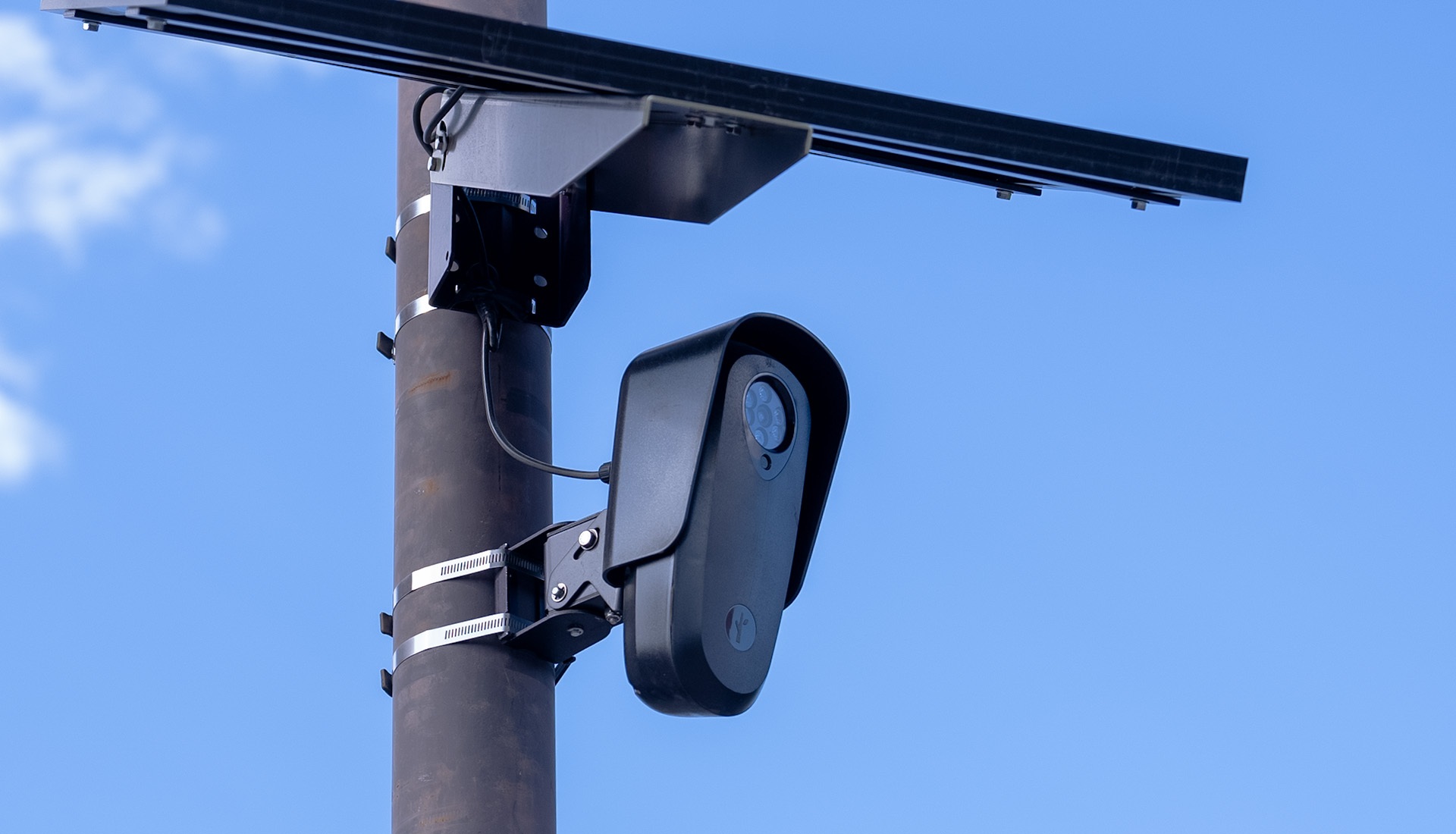
Founded in 2017, Flock Safety operates a network of approximately 120,000 AI-powered cameras installed along streets and highways across 49 states. The cameras automatically read vehicle license plates and record passing vehicles, creating a system that law enforcement agencies can use to investigate crimes and identify vehicles associated with particular incidents.
The company provides cameras and software to more than 4,800 law enforcement agencies and nearly 1,000 businesses. Its products have become part of a wider expansion of automated surveillance, in which AI systems can process large volumes of information that would be difficult to analyze manually.

For police departments, the technology can help investigators identify vehicles connected to reported crimes and establish movement patterns relevant to an investigation. But the same capability raises questions about how long vehicle records should be retained, who can access them, which agencies can obtain the data, and whether people can be tracked without being suspected of wrongdoing.
Those concerns are now affecting public acceptance of the technology.
A recent Reuters/Ipsos poll found that 38% of Americans supported the use of Flock cameras in their communities, while 47% opposed it. The figures indicate that opposition currently exceeds support, although the results do not establish that privacy concerns are the sole reason for respondents’ views.

For a company whose business depends partly on expanding installations across municipalities and commercial properties, public resistance can become a practical obstacle. Local authorities may face pressure to reconsider contracts, while businesses could encounter reputational risks from maintaining relationships with surveillance providers.
The debate also complicates the assumption that demand from law enforcement will translate automatically into sustained commercial growth. Government customers operate within political and legal environments where public opinion can influence procurement decisions and the rules governing surveillance.
Flock’s challenge is therefore not only to demonstrate that its products can help solve crimes, but also to establish that their deployment and data-sharing arrangements satisfy the expectations of communities that may be monitored by the system.
The controversy surrounding Flock has become more pronounced as concerns have emerged about how surveillance data can be used beyond the purposes for which local authorities originally acquired it.
In September, Florida banned automated license-plate readers from state highways, citing privacy risks associated with Flock’s cameras. The decision demonstrated how concerns about surveillance can translate into restrictions on the deployment of the technology.
Flock has also faced scrutiny over reports that its data was used in immigration enforcement. Home Depot investors recently demanded reviews of the retailer’s partnerships with surveillance technology vendors following those reports.
The issue raises questions about whether information collected through local surveillance programmes can be accessed or used by other agencies for purposes that residents may not have anticipated when the systems were installed.
Such questions are considered consequential for networked surveillance platforms. The value of the technology to investigators depends partly on the ability to search and share information across a large network. But expanding access can also increase the risk that data is used in ways that conflict with local policies, public expectations or legal restrictions.
Flock is also facing a privacy lawsuit in Virginia alleging that the widespread deployment of its AI-powered cameras amounts to warrantless surveillance. The allegation remains a legal claim, rather than an established finding of wrongdoing, but it adds to the regulatory and litigation risks confronting the company.
These disputes could influence how surveillance providers design their systems, negotiate contracts and manage data access. They may also encourage customers to demand clearer rules governing retention periods, external access and the circumstances under which records can be searched.
For Flock, the commercial implications extend beyond any individual lawsuit or policy decision. A business model built around a growing network of connected cameras depends on customers being willing and legally able to maintain those installations. Restrictions on deployment or data sharing could affect the utility of the network and the company’s ability to expand into new jurisdictions.
The challenge is gaining more attention because the technology sits at the intersection of public safety, privacy rights, and government authority. Those competing interests can produce different rules across states and municipalities, complicating the development of a consistent national market.
$7.5 Billion Valuation Meets A More Complicated Growth Environment
Flock’s workforce reductions follow a period of substantial investor interest. The company raised $275 million in March in a funding round led by Andreessen Horowitz, bringing its valuation to $7.5 billion.
The funding has supported the development of a new US manufacturing facility and an anticipated expansion into drone products, according to the company. Those plans indicate that Flock intends to extend its presence beyond fixed cameras and license-plate readers into a broader surveillance and security technology market.
The reported layoffs do not, on their own, establish that Flock’s business is contracting or that the cuts are directly attributable to the backlash against its products. The available information does not specify the company’s financial performance, the savings it expects from the reductions, or the precise reasons for the restructuring.
However, the timing places the workforce changes against a backdrop of rising scrutiny that could complicate the company’s next phase of growth.
For venture capital investors, the challenge is to determine whether Flock can continue expanding its customer base and product range while managing regulatory, legal, and reputational risks. A high private-market valuation creates expectations of substantial future growth, but that growth becomes harder to sustain if public resistance limits installations or forces changes to the way the technology operates.
The planned expansion into drones could create additional commercial opportunities, but it may also broaden the questions surrounding the company’s products. As surveillance systems become more capable of collecting and analyzing information, the boundaries around acceptable use, data access, and public accountability are likely to remain central to purchasing decisions.
The controversy also reflects a broader political debate over AI infrastructure in the United States. Flock’s cameras, alongside AI data centers, have become points of contention in this year’s midterm elections, with candidates linking political opponents to the technology.
That development raises the prospect that surveillance contracts could face greater scrutiny as local and national political debates influence public-sector decisions. Companies operating in this market may have to account for political and community acceptance alongside the technical performance of their products.
Flock’s planned reduction of approximately 18% of its workforce is therefore taking place at a time when its technology is both attracting significant investment and generating growing resistance.
The company’s long-term prospects are now partly tied to its ability to maintain demand from police departments and businesses while addressing concerns about privacy and data sharing. Its ability to demonstrate clear safeguards and accountable deployment could become as important to expansion as the accuracy of its cameras.