

Beijing Locks Down as Xi Jinping Showcases Power on Global Stage

Quote from Alex Bobby on September 2, 2025, 4:32 AM
Beijing Tightens Control Ahead of Xi’s Big Moment on the World Stage
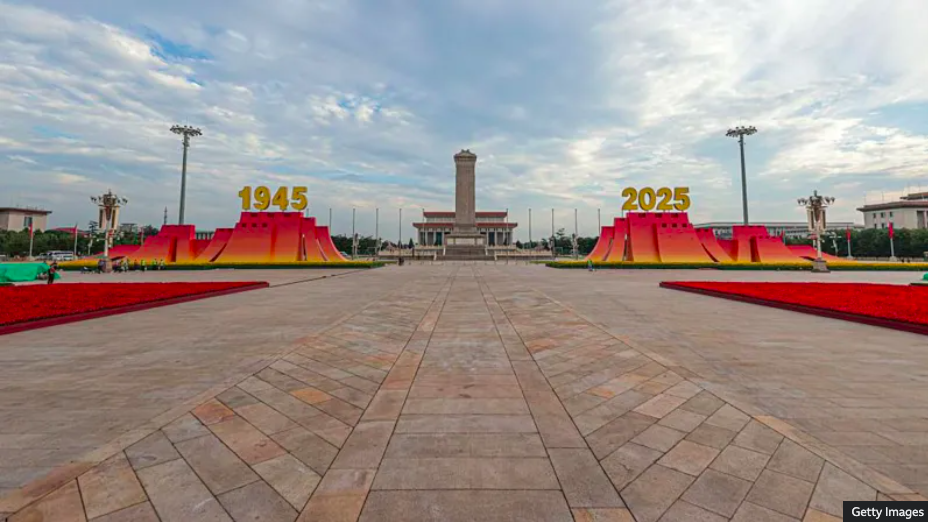
The heart of Beijing is once again being transformed into a theatre of spectacle and symbolism, as President Xi Jinping prepares for one of the most significant moments of his leadership on the global stage. The Chinese capital has been locked down, stage-managed, and decorated for a grand display of military might, national pride, and international diplomacy that is meant to highlight Xi’s central role as both a domestic leader and a global powerbroker.
Eight giant red flags now frame Mao Zedong’s portrait above the Gate of Heavenly Peace, towering over Tiananmen Square. Below, seats have been set aside for 26 foreign heads of state, including Russia’s Vladimir Putin and North Korea’s Kim Jong Un, both high-profile allies whose presence represents a diplomatic coup for Beijing. Across the avenue, massive floral arrangements commemorating the end of World War II rise alongside the seating area for around 50,000 invitees.
For days, tanks and troops have rumbled through the streets in midnight rehearsals, while ordinary Beijingers have been instructed to stay indoors and off their balconies. Roads have been closed, subway lines shut down, and even shared bicycles carted away, leaving the city centre paralysed. Daily life has been upended, all in service of an event designed to broadcast not just military strength but also the personal authority of Xi Jinping at home and abroad.
More Than a Parade
Ostensibly, the parade commemorates the 80th anniversary of Japan’s surrender in World War II—a conflict China remembers as the “people’s war of resistance against Japanese aggression.” But for Xi, it is much more than a simple act of remembrance. The carefully choreographed display is both a domestic rallying cry and an international message.
At home, the event is intended to stir pride and patriotism at a time when the country is grappling with economic challenges. Youth unemployment has soared, housing prices continue to plummet, and demand across the economy remains weak. Meanwhile, Trump-era tariffs are still hitting Chinese exports, and Xi’s ongoing anti-corruption campaign has unsettled political elites. Against this backdrop of discontent, the parade offers a narrative of unity and strength.
Abroad, Xi has used the week to assert China’s role as a central player in a reshaped world order. He recently welcomed Indian Prime Minister Narendra Modi to China for the first time in seven years, seeking to mend a relationship fraught with border tensions. The Shanghai Cooperation Organisation (SCO) summit in Tianjin drew more than 20 world leaders, making it the largest gathering in the group’s history. And now, with both Putin and Kim by his side in Beijing, Xi is sending a strong signal to Washington and its allies: China is not isolated, and its influence is rising.
Allies in the Spotlight
The guest list speaks volumes. Leaders from Iran, Malaysia, Myanmar, Indonesia, Mongolia, Zimbabwe, and several Central Asian states will all be present. Western leaders are largely absent, with the exceptions of Serbia and Slovakia. Kim Jong Un’s attendance is particularly significant: it is the first time a North Korean leader has participated in a Chinese military parade since 1959. His presence underlines a thaw in China-North Korea relations, while also reinforcing the image of an emerging axis of powers opposed to Western dominance.
The symbolism of Xi standing shoulder-to-shoulder with Putin and Kim will not be lost on global audiences. Analysts are already predicting that Western media will frame the trio as an “axis of upheaval,” a coalition that challenges U.S. interests in both Asia and beyond. For Xi, however, the optics underscore his role as the indispensable host and broker of these alliances.
History as a Political Tool
Beijing’s narrative of World War II has always been selective. While much of the resistance against Japanese occupation was carried out by the nationalist forces that later lost the civil war to Mao Zedong, their contributions have been largely erased from official memory. Instead, the Communist Party positions itself as the heroic vanguard of resistance, a theme reinforced in films and television dramas released in the run-up to the anniversary.
State media has been relentless in its campaign to “foster a right view of WWII history.” Yet this focus has also strained relations with Japan. Last week, Beijing lodged a protest with Tokyo after reports emerged that Japan had encouraged European and Asian governments not to attend the parade. The historical dispute underscores how memory and nationalism remain deeply entangled with China’s modern foreign policy.
Tightened Security and Controlled Skies
The preparations have extended beyond propaganda and street closures. Residents have reported the removal of city bikes, the closure of schools and hotels along the parade route, and even restrictions on using balconies during rehearsals. The security blanket has left central Beijing eerily empty, except for the occasional sound of military hardware on the move.
There is also speculation—based on past precedent—that China’s air force may have engaged in weather modification to guarantee clear skies. Cloud seeding has been used before to disperse rain clouds ahead of major events, ensuring that the parade unfolds under perfect blue skies. Whether or not such measures have been used this year, forecasters predict sunny conditions, giving Xi the backdrop he desires for his moment in the spotlight.
Xi’s Defining Moment
For Xi Jinping, the parade represents more than just a commemoration. It is a statement of personal authority, a demonstration of China’s growing military prowess, and an attempt to showcase his vision of a multipolar world in which Beijing rivals Washington as a global leader.
Domestically, it seeks to redirect attention from economic struggles and growing youth disillusionment toward a story of national pride and resilience. Internationally, it aims to display China’s capacity to convene and command, with allies and partners gathered in Tiananmen Square to watch hypersonic weapons and unmanned underwater drones roll past in precise formation.
The spectacle is choreographed down to the smallest detail, but its message is broad: under Xi Jinping, China intends to be seen, respected, and feared.
As the world watches Beijing, Xi’s carefully managed parade may be remembered not only as a commemoration of the past, but as a defining symbol of his ambitions for the future.
Final Thought / Looking Forward:
As the parade unfolds, the world will be watching not just the missiles, tanks, and soldiers marching in sync, but the broader message Beijing wants to send. For Xi Jinping, this is more than a celebration of history—it’s a bold declaration of China’s future role in shaping the global order. Looking ahead, the question remains: how will other world powers respond to a China that is not only tightening control at home but also stepping more confidently onto the world stage?
Conclusion
Beijing’s grand parade is more than a showcase of military might; it is a carefully orchestrated statement of power by Xi Jinping at a pivotal moment. By drawing leaders like Vladimir Putin and Kim Jong Un to Tiananmen Square, while simultaneously projecting historical pride and national unity, Xi is positioning himself as a central figure in shaping a new world order. Yet beneath the spectacle lie China’s domestic challenges—economic headwinds, youth discontent, and growing social pressures—that no parade can fully mask. As Xi basks in the spotlight, the true test will be whether this show of force translates into lasting influence both at home and abroad.
Meta Description:
Beijing tightens control ahead of a grand military parade as Xi Jinping welcomes Putin, Kim, and other world leaders. A display of power, patriotism, and China’s bid to rival the U.S. on the world stage.
Beijing Tightens Control Ahead of Xi’s Big Moment on the World Stage
The heart of Beijing is once again being transformed into a theatre of spectacle and symbolism, as President Xi Jinping prepares for one of the most significant moments of his leadership on the global stage. The Chinese capital has been locked down, stage-managed, and decorated for a grand display of military might, national pride, and international diplomacy that is meant to highlight Xi’s central role as both a domestic leader and a global powerbroker.
Eight giant red flags now frame Mao Zedong’s portrait above the Gate of Heavenly Peace, towering over Tiananmen Square. Below, seats have been set aside for 26 foreign heads of state, including Russia’s Vladimir Putin and North Korea’s Kim Jong Un, both high-profile allies whose presence represents a diplomatic coup for Beijing. Across the avenue, massive floral arrangements commemorating the end of World War II rise alongside the seating area for around 50,000 invitees.
Register for Tekedia Mini-MBA edition 20 (June 8 – Sept 5, 2026).
Register for Tekedia AI in Business Masterclass.
Join Tekedia Capital Syndicate and co-invest in great global startups.
Register for Tekedia AI Lab.
For days, tanks and troops have rumbled through the streets in midnight rehearsals, while ordinary Beijingers have been instructed to stay indoors and off their balconies. Roads have been closed, subway lines shut down, and even shared bicycles carted away, leaving the city centre paralysed. Daily life has been upended, all in service of an event designed to broadcast not just military strength but also the personal authority of Xi Jinping at home and abroad.
More Than a Parade
Ostensibly, the parade commemorates the 80th anniversary of Japan’s surrender in World War II—a conflict China remembers as the “people’s war of resistance against Japanese aggression.” But for Xi, it is much more than a simple act of remembrance. The carefully choreographed display is both a domestic rallying cry and an international message.

At home, the event is intended to stir pride and patriotism at a time when the country is grappling with economic challenges. Youth unemployment has soared, housing prices continue to plummet, and demand across the economy remains weak. Meanwhile, Trump-era tariffs are still hitting Chinese exports, and Xi’s ongoing anti-corruption campaign has unsettled political elites. Against this backdrop of discontent, the parade offers a narrative of unity and strength.
Abroad, Xi has used the week to assert China’s role as a central player in a reshaped world order. He recently welcomed Indian Prime Minister Narendra Modi to China for the first time in seven years, seeking to mend a relationship fraught with border tensions. The Shanghai Cooperation Organisation (SCO) summit in Tianjin drew more than 20 world leaders, making it the largest gathering in the group’s history. And now, with both Putin and Kim by his side in Beijing, Xi is sending a strong signal to Washington and its allies: China is not isolated, and its influence is rising.
Allies in the Spotlight

The guest list speaks volumes. Leaders from Iran, Malaysia, Myanmar, Indonesia, Mongolia, Zimbabwe, and several Central Asian states will all be present. Western leaders are largely absent, with the exceptions of Serbia and Slovakia. Kim Jong Un’s attendance is particularly significant: it is the first time a North Korean leader has participated in a Chinese military parade since 1959. His presence underlines a thaw in China-North Korea relations, while also reinforcing the image of an emerging axis of powers opposed to Western dominance.
The symbolism of Xi standing shoulder-to-shoulder with Putin and Kim will not be lost on global audiences. Analysts are already predicting that Western media will frame the trio as an “axis of upheaval,” a coalition that challenges U.S. interests in both Asia and beyond. For Xi, however, the optics underscore his role as the indispensable host and broker of these alliances.
History as a Political Tool
Beijing’s narrative of World War II has always been selective. While much of the resistance against Japanese occupation was carried out by the nationalist forces that later lost the civil war to Mao Zedong, their contributions have been largely erased from official memory. Instead, the Communist Party positions itself as the heroic vanguard of resistance, a theme reinforced in films and television dramas released in the run-up to the anniversary.
State media has been relentless in its campaign to “foster a right view of WWII history.” Yet this focus has also strained relations with Japan. Last week, Beijing lodged a protest with Tokyo after reports emerged that Japan had encouraged European and Asian governments not to attend the parade. The historical dispute underscores how memory and nationalism remain deeply entangled with China’s modern foreign policy.
Tightened Security and Controlled Skies
The preparations have extended beyond propaganda and street closures. Residents have reported the removal of city bikes, the closure of schools and hotels along the parade route, and even restrictions on using balconies during rehearsals. The security blanket has left central Beijing eerily empty, except for the occasional sound of military hardware on the move.
There is also speculation—based on past precedent—that China’s air force may have engaged in weather modification to guarantee clear skies. Cloud seeding has been used before to disperse rain clouds ahead of major events, ensuring that the parade unfolds under perfect blue skies. Whether or not such measures have been used this year, forecasters predict sunny conditions, giving Xi the backdrop he desires for his moment in the spotlight.
Xi’s Defining Moment
For Xi Jinping, the parade represents more than just a commemoration. It is a statement of personal authority, a demonstration of China’s growing military prowess, and an attempt to showcase his vision of a multipolar world in which Beijing rivals Washington as a global leader.
Domestically, it seeks to redirect attention from economic struggles and growing youth disillusionment toward a story of national pride and resilience. Internationally, it aims to display China’s capacity to convene and command, with allies and partners gathered in Tiananmen Square to watch hypersonic weapons and unmanned underwater drones roll past in precise formation.
The spectacle is choreographed down to the smallest detail, but its message is broad: under Xi Jinping, China intends to be seen, respected, and feared.
As the world watches Beijing, Xi’s carefully managed parade may be remembered not only as a commemoration of the past, but as a defining symbol of his ambitions for the future.
Final Thought / Looking Forward:
As the parade unfolds, the world will be watching not just the missiles, tanks, and soldiers marching in sync, but the broader message Beijing wants to send. For Xi Jinping, this is more than a celebration of history—it’s a bold declaration of China’s future role in shaping the global order. Looking ahead, the question remains: how will other world powers respond to a China that is not only tightening control at home but also stepping more confidently onto the world stage?
Conclusion
Beijing’s grand parade is more than a showcase of military might; it is a carefully orchestrated statement of power by Xi Jinping at a pivotal moment. By drawing leaders like Vladimir Putin and Kim Jong Un to Tiananmen Square, while simultaneously projecting historical pride and national unity, Xi is positioning himself as a central figure in shaping a new world order. Yet beneath the spectacle lie China’s domestic challenges—economic headwinds, youth discontent, and growing social pressures—that no parade can fully mask. As Xi basks in the spotlight, the true test will be whether this show of force translates into lasting influence both at home and abroad.
Meta Description:
Beijing tightens control ahead of a grand military parade as Xi Jinping welcomes Putin, Kim, and other world leaders. A display of power, patriotism, and China’s bid to rival the U.S. on the world stage.
Share this:
- Click to share on Facebook (Opens in new window) Facebook
- Click to share on X (Opens in new window) X
- Click to share on WhatsApp (Opens in new window) WhatsApp
- Click to share on LinkedIn (Opens in new window) LinkedIn
- Click to email a link to a friend (Opens in new window) Email
- Click to print (Opens in new window) Print