

Coca-Cola May Increase Plastic Bottle Use as Trump’s Aluminium Tariffs Raise Can Costs

Quote from Alex Bobby on February 13, 2025, 6:35 AM
Coca-Cola May Shift to More Plastic Bottles Amid Trump's Aluminium Tariffs
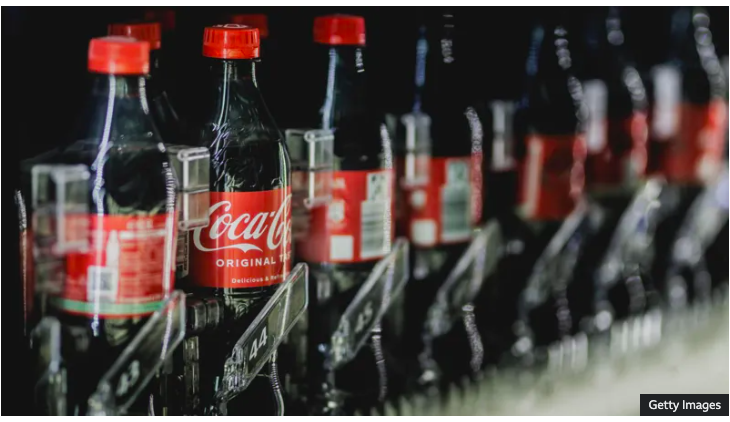
Coca-Cola, the world’s leading beverage company, may have to rely more on plastic bottles for its drinks in the U.S. if tariffs imposed by former President Donald Trump make aluminium cans more expensive. This was revealed by the company’s chief executive, James Quincey, during a call with investors.
Trump recently ordered a 25% import tax on all steel and aluminium entering the U.S., a move that is expected to drive up the price of canned goods, including beverages. This policy is likely to make aluminium cans less cost-effective for companies like Coca-Cola, leading them to explore alternative packaging options.
Coca-Cola’s Sustainability Setback
In December, Coca-Cola revised its sustainability goal of using 50% recycled materials in its packaging by 2030, reducing it to 35% to 40% by 2035. The shift in target reflects the increasing challenges the company faces in maintaining its environmental commitments while also managing business costs.
Environmental groups have consistently criticized Coca-Cola’s plastic use, naming it the “top global plastic polluter” for six consecutive years. The potential increase in plastic packaging due to aluminium tariffs could further tarnish its reputation among sustainability advocates.
Impact of Aluminium Tariffs on Coca-Cola’s Packaging Strategy
Quincey emphasized that while the tariff might raise aluminium costs, the company has flexibility in packaging.
“If one package suffers some increase in input costs, we continue to have other packaging offerings that will allow us to compete in the affordability space,” Quincey stated. “For example, if aluminium cans become more expensive, we can put more emphasis on PET [plastic] bottles.”
Although Quincey downplayed the overall impact of packaging costs on Coca-Cola’s business model, the potential switch to plastic raises concerns about increased environmental harm. Aluminium cans, despite being generally more expensive, are significantly more recyclable than plastic bottles over time.
The Bigger Picture: Aluminium Supply and Tariff Consequences
The U.S. imports nearly half of the aluminium it consumes, according to the United States Geological Survey. A 25% tariff on all aluminium imports is expected to drive up costs for can manufacturers and beverage producers alike.
When Trump first imposed steel and aluminium tariffs in 2018, many can-makers received exemptions from the import taxes. However, this time, Trump has made it clear that there will be no exemptions for individual products or specific countries. This decision will likely hit the beverage and food industry hard, pushing up costs for businesses and, ultimately, consumers.
Trump’s Reversal on Plastic Straw Ban
In a separate policy move that is expected to contribute to plastic pollution, Trump recently signed an executive order reversing a U.S. government initiative to replace plastic straws with paper alternatives. The original measure, introduced by former President Joe Biden, was part of a broader effort to combat plastic pollution, which Biden had termed a “crisis.”
Trump’s reversal of the plastic straw ban, coupled with the aluminium tariff, signals a shift away from environmental priorities in favor of manufacturing and industry protectionism. For companies like Coca-Cola, this could mean a double-edged sword: avoiding higher costs associated with aluminium cans but facing backlash for increased plastic use.
The Environmental and Business Dilemma
Coca-Cola’s situation highlights the broader challenges companies face in balancing environmental responsibility with economic realities. Aluminium cans offer better recyclability but are at risk of becoming prohibitively expensive due to tariffs. Plastic bottles, on the other hand, are cheaper but come with severe environmental consequences.
For consumers, the likely outcome is a greater reliance on plastic-packaged beverages, increasing plastic waste in landfills and oceans. Environmental groups are expected to ramp up pressure on Coca-Cola to find sustainable alternatives despite the cost implications of the new tariffs.
Conclusion
The return of Trump-era tariffs on aluminium poses a significant challenge to Coca-Cola’s packaging strategy. While the company seeks to manage costs by shifting toward plastic bottles, this move may exacerbate plastic pollution concerns and invite criticism from environmentalists. The broader implications of these tariffs extend beyond Coca-Cola, affecting various industries reliant on aluminium imports. As the situation unfolds, both consumers and businesses will have to navigate the economic and environmental trade-offs shaped by these policies.
Coca-Cola May Shift to More Plastic Bottles Amid Trump's Aluminium Tariffs
Coca-Cola, the world’s leading beverage company, may have to rely more on plastic bottles for its drinks in the U.S. if tariffs imposed by former President Donald Trump make aluminium cans more expensive. This was revealed by the company’s chief executive, James Quincey, during a call with investors.
Trump recently ordered a 25% import tax on all steel and aluminium entering the U.S., a move that is expected to drive up the price of canned goods, including beverages. This policy is likely to make aluminium cans less cost-effective for companies like Coca-Cola, leading them to explore alternative packaging options.
Register for Tekedia Mini-MBA edition 20 (June 8 – Sept 5, 2026).
Register for Tekedia AI in Business Masterclass.
Join Tekedia Capital Syndicate and co-invest in great global startups.
Register for Tekedia AI Lab.
Coca-Cola’s Sustainability Setback
In December, Coca-Cola revised its sustainability goal of using 50% recycled materials in its packaging by 2030, reducing it to 35% to 40% by 2035. The shift in target reflects the increasing challenges the company faces in maintaining its environmental commitments while also managing business costs.
Environmental groups have consistently criticized Coca-Cola’s plastic use, naming it the “top global plastic polluter” for six consecutive years. The potential increase in plastic packaging due to aluminium tariffs could further tarnish its reputation among sustainability advocates.
Impact of Aluminium Tariffs on Coca-Cola’s Packaging Strategy
Quincey emphasized that while the tariff might raise aluminium costs, the company has flexibility in packaging.

“If one package suffers some increase in input costs, we continue to have other packaging offerings that will allow us to compete in the affordability space,” Quincey stated. “For example, if aluminium cans become more expensive, we can put more emphasis on PET [plastic] bottles.”
Although Quincey downplayed the overall impact of packaging costs on Coca-Cola’s business model, the potential switch to plastic raises concerns about increased environmental harm. Aluminium cans, despite being generally more expensive, are significantly more recyclable than plastic bottles over time.
The Bigger Picture: Aluminium Supply and Tariff Consequences
The U.S. imports nearly half of the aluminium it consumes, according to the United States Geological Survey. A 25% tariff on all aluminium imports is expected to drive up costs for can manufacturers and beverage producers alike.

When Trump first imposed steel and aluminium tariffs in 2018, many can-makers received exemptions from the import taxes. However, this time, Trump has made it clear that there will be no exemptions for individual products or specific countries. This decision will likely hit the beverage and food industry hard, pushing up costs for businesses and, ultimately, consumers.
Trump’s Reversal on Plastic Straw Ban
In a separate policy move that is expected to contribute to plastic pollution, Trump recently signed an executive order reversing a U.S. government initiative to replace plastic straws with paper alternatives. The original measure, introduced by former President Joe Biden, was part of a broader effort to combat plastic pollution, which Biden had termed a “crisis.”
Trump’s reversal of the plastic straw ban, coupled with the aluminium tariff, signals a shift away from environmental priorities in favor of manufacturing and industry protectionism. For companies like Coca-Cola, this could mean a double-edged sword: avoiding higher costs associated with aluminium cans but facing backlash for increased plastic use.
The Environmental and Business Dilemma
Coca-Cola’s situation highlights the broader challenges companies face in balancing environmental responsibility with economic realities. Aluminium cans offer better recyclability but are at risk of becoming prohibitively expensive due to tariffs. Plastic bottles, on the other hand, are cheaper but come with severe environmental consequences.
For consumers, the likely outcome is a greater reliance on plastic-packaged beverages, increasing plastic waste in landfills and oceans. Environmental groups are expected to ramp up pressure on Coca-Cola to find sustainable alternatives despite the cost implications of the new tariffs.
Conclusion
The return of Trump-era tariffs on aluminium poses a significant challenge to Coca-Cola’s packaging strategy. While the company seeks to manage costs by shifting toward plastic bottles, this move may exacerbate plastic pollution concerns and invite criticism from environmentalists. The broader implications of these tariffs extend beyond Coca-Cola, affecting various industries reliant on aluminium imports. As the situation unfolds, both consumers and businesses will have to navigate the economic and environmental trade-offs shaped by these policies.
Uploaded files:Share this:
- Click to share on Facebook (Opens in new window) Facebook
- Click to share on X (Opens in new window) X
- Click to share on WhatsApp (Opens in new window) WhatsApp
- Click to share on LinkedIn (Opens in new window) LinkedIn
- Click to email a link to a friend (Opens in new window) Email
- Click to print (Opens in new window) Print