

Copenhagen Airport Drone Incursion: Denmark Calls It a Serious Attack on Critical Infrastructure

Quote from Alex Bobby on September 24, 2025, 5:40 AM
Copenhagen Airport Drone Incursion a “Serious Attack” on Critical Infrastructure, Danish PM Says
Air traffic came to a standstill at Copenhagen Airport on Monday evening after multiple drone sightings forced authorities to suspend flights for several hours. While no injuries or damage were reported, Danish Prime Minister Mette Frederiksen on Tuesday labeled the incident a “serious attack on Danish critical infrastructure,” raising alarm across Europe about the potential involvement of Russia.
The drones, which were reported circling the airport for up to four hours, left thousands of passengers stranded and disrupted travel across northern Europe. At least 35 flights bound for Copenhagen were diverted to Malmö, Billund, Aarhus, and Gothenburg, while Oslo Airport in Norway was also forced to shut down temporarily after its own drone sightings.
Although Copenhagen Police suggested the drones’ operator may not have intended physical harm, Frederiksen struck a far graver tone, pointing to a broader pattern of Russian hybrid activity in Europe. “We’ve seen drones over Poland that shouldn’t have been there. We’ve seen activity in Romania, violations of Estonian airspace,” she said. “So I can only say that, in my view, this is a serious attack on Danish critical infrastructure.”
A Disruption With Geopolitical Weight
The incident marks one of the most disruptive drone incursions in Europe since London’s Gatwick Airport was shut down by similar sightings in 2018, stranding 140,000 passengers during the busy Christmas travel season. But unlike Gatwick, Copenhagen’s disruption is unfolding amid heightened geopolitical tensions, especially between NATO members and Russia.
NATO Secretary-General Mark Rutte cautioned that it was “too early to say” whether Moscow was directly involved or whether the incident was connected to recent drone incursions into Polish and Estonian airspace. Still, the suspicion is clear. The war in Ukraine has already seen Russia deploy drones extensively, while European security services have blamed Moscow for a series of sabotage operations targeting energy pipelines, undersea cables, and railways.
Kremlin spokesperson Dmitry Peskov dismissed the allegations outright, calling them “baseless.” But Danish authorities have not ruled out Russian involvement.
A Sophisticated Operation
Jens Jespersen of the Copenhagen Police offered some technical details on Tuesday morning. The drones were flown with significant skill, indicating a pilot capable of operating long-range devices over populated areas. “The way they flew yesterday indicates that what they actually intended was to show off,” Jespersen said.
Police decided against shooting the drones down, citing the enormous risks posed by stray projectiles at a fully loaded international airport. Nearby fuel depots, active runways, and packed passenger terminals made military-style countermeasures too dangerous.
Investigators are now examining how the drones reached Copenhagen’s airspace in the first place. One theory is that they were launched from boats in the narrow straits leading into the Baltic Sea, giving the operator a covert way to position close to the airport without detection.
A Ripple Effect Across the Region
Copenhagen’s closure sent ripples through Scandinavia’s tightly linked aviation network. Malmö and Gothenburg airports in Sweden, along with Aarhus and Billund in Denmark, were forced to handle emergency landings and diverted flights. Norway’s Oslo Airport shut down for four hours after drones were spotted there, compounding the chaos.
By early Tuesday morning, both Copenhagen and Oslo had reopened, but delays and cancellations persisted as airlines scrambled to get planes and crews back on schedule. For thousands of travelers, the disruption served as a stark reminder of how easily Europe’s air traffic can be thrown into disarray by a few unmanned aerial vehicles.
Hybrid Warfare or Reckless Stunt?
The debate now centers on intent. Jespersen’s assessment suggested the pilot wanted to “show off” rather than attack. But Frederiksen’s framing as an “attack” on infrastructure signals that Denmark sees this as more than a prank. The distinction matters.
If this was an act of hybrid warfare—deliberate disruption by a hostile state—then Denmark and NATO may need to rethink their approach to protecting critical infrastructure. If it was instead a rogue individual testing their skills, it still highlights major vulnerabilities in aviation security. Either way, the consequences were real: stranded passengers, diverted flights, and shaken confidence in airport safety.
Lessons From Past Incidents
Drone incursions near airports are not new, but their frequency and complexity are rising. The 2018 Gatwick disruption was one of the first high-profile examples, but incidents have since occurred in Frankfurt, Dublin, and across the United States. Typically, such episodes last minutes or hours, but the Copenhagen case stretched into the night, suggesting careful planning.
Authorities face a dilemma in responding. Shooting drones down can be dangerous, while electronic jamming equipment is not always effective against sophisticated models. That leaves airports reliant on detection, diversion, and patience—none of which reassure travellers.
A Wake-Up Call for Northern Europe
The Copenhagen incursion highlights a new reality: in an era of cheap but capable drones, even the busiest hubs can be paralysed. The fact that the incident occurred in Denmark—home to key NATO installations and positioned strategically on the Baltic Sea—only raises the stakes.
For northern Europe, where tensions with Russia are high, the event underscores how hybrid threats blur the line between nuisance and attack. As Frederiksen warned, “This is a serious attack on Danish critical infrastructure.” Whether symbolic, experimental, or preparatory, such incursions test both resilience and response.
Final Thoughts
The Copenhagen Airport drone incident is more than a travel disruption—it’s a warning. Whether it was a reckless display of skill or part of a coordinated hybrid attack, the vulnerability of airports to drone incursions has been laid bare.
For Denmark and its NATO allies, the episode underlines the urgent need to strengthen airspace defence’s and develop clear protocols for countering unmanned aerial threats. In an era where drones can be launched from miles away—or even offshore—the challenge is as much about resilience and deterrence as detection.
Ultimately, the incident raises a pressing question: if a few drones can ground flights, scatter passengers across multiple countries, and rattle public confidence, what happens when such technology is used with hostile intent? Copenhagen may have avoided disaster this time, but the wake-up call is clear.
Conclusion
Copenhagen Airport’s drone disruption may ultimately be remembered less for the hours of travel chaos than for the security alarm it triggered. With NATO watching closely, Denmark has cast the incident not as a prank but as a potential hostile act—a test of both infrastructure and political will.
Whether Russia was behind it or not, the incursion shows just how vulnerable airports remain in the drone age. As air traffic resumes, the real challenge lies ahead: ensuring that the next swarm of drones does not escalate from disruption into disaster.
Meta Description (under 160 characters):
Drone sightings shut Copenhagen Airport for hours, stranding thousands. Denmark calls it a serious attack as NATO probes possible Russian link.
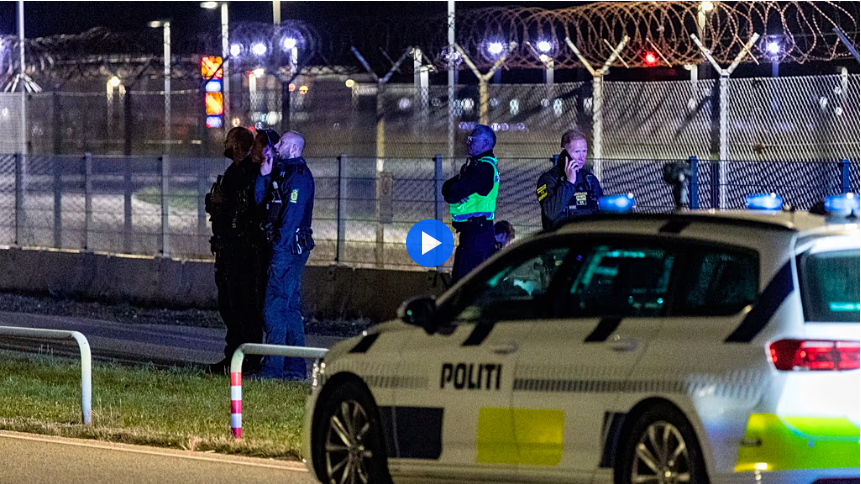
Copenhagen Airport Drone Incursion a “Serious Attack” on Critical Infrastructure, Danish PM Says
Air traffic came to a standstill at Copenhagen Airport on Monday evening after multiple drone sightings forced authorities to suspend flights for several hours. While no injuries or damage were reported, Danish Prime Minister Mette Frederiksen on Tuesday labeled the incident a “serious attack on Danish critical infrastructure,” raising alarm across Europe about the potential involvement of Russia.
The drones, which were reported circling the airport for up to four hours, left thousands of passengers stranded and disrupted travel across northern Europe. At least 35 flights bound for Copenhagen were diverted to Malmö, Billund, Aarhus, and Gothenburg, while Oslo Airport in Norway was also forced to shut down temporarily after its own drone sightings.
Register for Tekedia Mini-MBA edition 20 (June 8 – Sept 5, 2026).
Register for Tekedia AI in Business Masterclass.
Join Tekedia Capital Syndicate and co-invest in great global startups.
Register for Tekedia AI Lab.
Although Copenhagen Police suggested the drones’ operator may not have intended physical harm, Frederiksen struck a far graver tone, pointing to a broader pattern of Russian hybrid activity in Europe. “We’ve seen drones over Poland that shouldn’t have been there. We’ve seen activity in Romania, violations of Estonian airspace,” she said. “So I can only say that, in my view, this is a serious attack on Danish critical infrastructure.”
A Disruption With Geopolitical Weight
The incident marks one of the most disruptive drone incursions in Europe since London’s Gatwick Airport was shut down by similar sightings in 2018, stranding 140,000 passengers during the busy Christmas travel season. But unlike Gatwick, Copenhagen’s disruption is unfolding amid heightened geopolitical tensions, especially between NATO members and Russia.

NATO Secretary-General Mark Rutte cautioned that it was “too early to say” whether Moscow was directly involved or whether the incident was connected to recent drone incursions into Polish and Estonian airspace. Still, the suspicion is clear. The war in Ukraine has already seen Russia deploy drones extensively, while European security services have blamed Moscow for a series of sabotage operations targeting energy pipelines, undersea cables, and railways.
Kremlin spokesperson Dmitry Peskov dismissed the allegations outright, calling them “baseless.” But Danish authorities have not ruled out Russian involvement.
A Sophisticated Operation

Jens Jespersen of the Copenhagen Police offered some technical details on Tuesday morning. The drones were flown with significant skill, indicating a pilot capable of operating long-range devices over populated areas. “The way they flew yesterday indicates that what they actually intended was to show off,” Jespersen said.
Police decided against shooting the drones down, citing the enormous risks posed by stray projectiles at a fully loaded international airport. Nearby fuel depots, active runways, and packed passenger terminals made military-style countermeasures too dangerous.
Investigators are now examining how the drones reached Copenhagen’s airspace in the first place. One theory is that they were launched from boats in the narrow straits leading into the Baltic Sea, giving the operator a covert way to position close to the airport without detection.
A Ripple Effect Across the Region
Copenhagen’s closure sent ripples through Scandinavia’s tightly linked aviation network. Malmö and Gothenburg airports in Sweden, along with Aarhus and Billund in Denmark, were forced to handle emergency landings and diverted flights. Norway’s Oslo Airport shut down for four hours after drones were spotted there, compounding the chaos.
By early Tuesday morning, both Copenhagen and Oslo had reopened, but delays and cancellations persisted as airlines scrambled to get planes and crews back on schedule. For thousands of travelers, the disruption served as a stark reminder of how easily Europe’s air traffic can be thrown into disarray by a few unmanned aerial vehicles.
Hybrid Warfare or Reckless Stunt?
The debate now centers on intent. Jespersen’s assessment suggested the pilot wanted to “show off” rather than attack. But Frederiksen’s framing as an “attack” on infrastructure signals that Denmark sees this as more than a prank. The distinction matters.
If this was an act of hybrid warfare—deliberate disruption by a hostile state—then Denmark and NATO may need to rethink their approach to protecting critical infrastructure. If it was instead a rogue individual testing their skills, it still highlights major vulnerabilities in aviation security. Either way, the consequences were real: stranded passengers, diverted flights, and shaken confidence in airport safety.
Lessons From Past Incidents
Drone incursions near airports are not new, but their frequency and complexity are rising. The 2018 Gatwick disruption was one of the first high-profile examples, but incidents have since occurred in Frankfurt, Dublin, and across the United States. Typically, such episodes last minutes or hours, but the Copenhagen case stretched into the night, suggesting careful planning.
Authorities face a dilemma in responding. Shooting drones down can be dangerous, while electronic jamming equipment is not always effective against sophisticated models. That leaves airports reliant on detection, diversion, and patience—none of which reassure travellers.
A Wake-Up Call for Northern Europe
The Copenhagen incursion highlights a new reality: in an era of cheap but capable drones, even the busiest hubs can be paralysed. The fact that the incident occurred in Denmark—home to key NATO installations and positioned strategically on the Baltic Sea—only raises the stakes.
For northern Europe, where tensions with Russia are high, the event underscores how hybrid threats blur the line between nuisance and attack. As Frederiksen warned, “This is a serious attack on Danish critical infrastructure.” Whether symbolic, experimental, or preparatory, such incursions test both resilience and response.
Final Thoughts
The Copenhagen Airport drone incident is more than a travel disruption—it’s a warning. Whether it was a reckless display of skill or part of a coordinated hybrid attack, the vulnerability of airports to drone incursions has been laid bare.
For Denmark and its NATO allies, the episode underlines the urgent need to strengthen airspace defence’s and develop clear protocols for countering unmanned aerial threats. In an era where drones can be launched from miles away—or even offshore—the challenge is as much about resilience and deterrence as detection.
Ultimately, the incident raises a pressing question: if a few drones can ground flights, scatter passengers across multiple countries, and rattle public confidence, what happens when such technology is used with hostile intent? Copenhagen may have avoided disaster this time, but the wake-up call is clear.
Conclusion
Copenhagen Airport’s drone disruption may ultimately be remembered less for the hours of travel chaos than for the security alarm it triggered. With NATO watching closely, Denmark has cast the incident not as a prank but as a potential hostile act—a test of both infrastructure and political will.
Whether Russia was behind it or not, the incursion shows just how vulnerable airports remain in the drone age. As air traffic resumes, the real challenge lies ahead: ensuring that the next swarm of drones does not escalate from disruption into disaster.
Meta Description (under 160 characters):
Drone sightings shut Copenhagen Airport for hours, stranding thousands. Denmark calls it a serious attack as NATO probes possible Russian link.
Share this:
- Click to share on Facebook (Opens in new window) Facebook
- Click to share on X (Opens in new window) X
- Click to share on WhatsApp (Opens in new window) WhatsApp
- Click to share on LinkedIn (Opens in new window) LinkedIn
- Click to email a link to a friend (Opens in new window) Email
- Click to print (Opens in new window) Print