

EU Commission Calls Libyan Coast Guard Attack on NGO Ship a ‘Worrying Development’

Quote from Alex Bobby on August 27, 2025, 3:25 AM
EU Commission Labels Alleged Libyan Attack on NGO Ship a ‘Worrying Development’
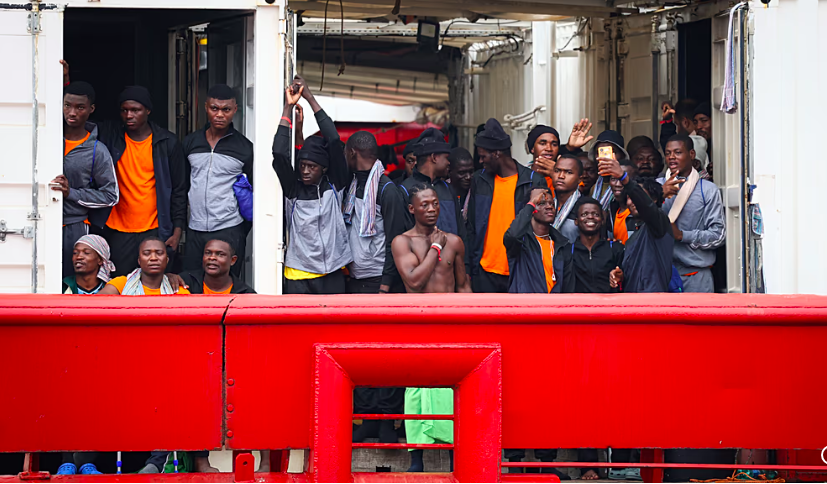
The European Commission has described an alleged attack by the Libyan coast guard on the humanitarian rescue ship Ocean Viking as a “worrying development,” raising fresh questions about Europe’s continued cooperation with Libyan authorities in managing migration flows across the Mediterranean.
The incident, which occurred on Sunday roughly 40 nautical miles off the northern Libyan coast, is one of several cases in which NGO rescue vessels have come under fire from Libyan forces using patrol boats supplied through EU funding. Although no lives were lost, the attack caused significant damage to the Ocean Viking, reigniting concerns about migrant rescue operations, international maritime law, and Europe’s role in supporting Libyan security forces.
Details of the Alleged Attack
According to the NGO operating the Ocean Viking, the vessel was conducting a rescue mission in international waters when it was approached by a Libyan coast guard patrol boat. Despite lacking authority outside Libyan territorial waters, the coast guard demanded that the humanitarian ship leave the area.
Fearing escalation, the Ocean Viking began manoeuvring to comply. At that point, two armed men allegedly opened fire for about 20 minutes, targeting the ship at head height.
While there were no casualties among crew members or the survivors on board, the NGO reported extensive damage. The attack destroyed multiple antennas, shattered four bridge windows, and riddled the vessel with bullet holes. Three rescue boats and other critical equipment were also struck, severely compromising the ship’s ability to carry out its humanitarian mission.
In the aftermath, the Ocean Viking issued a distress call. Under international maritime law, other vessels in the area are obliged to respond and provide assistance to ships in distress. The NGO stated that no aid was forthcoming.
EU Commission Response
Speaking to journalists in Brussels on Tuesday, European Commission spokesperson Markus Lammert confirmed that officials were in contact with Libyan authorities.
“We have seen the press reports, we have reached out to the relevant Libyan authorities regarding this reported incident to clarify the facts. It is for the relevant Libyan authorities to now urgently shed light on what happened,” Lammert said.
Another Commission spokesperson, Paula Pinho, described the alleged shooting as a matter of deep concern:
“It is obviously a worrying development that does not leave us indifferent. We are establishing the facts on that basis and will assess the situation and consider any possible action.”
When pressed on whether the Commission had taken any measures following a similar incident in July 2023, when another EU-funded Libyan patrol boat fired at the Ocean Viking, the Commission was unable to provide a clear response. “We have to come back to this. I'm not aware of this incident which happened a couple of years back, I'm afraid,” Lammert said, despite the event being widely documented just last year.
EU–Libya Cooperation Under Scrutiny
At the heart of the controversy is the European Union’s longstanding cooperation with Libya on migration control. Since 2016, Brussels has provided training, equipment, and vessels to the Libyan coast guard, aiming to prevent irregular migration across the central Mediterranean, the deadliest migration route to Europe.
The patrol boat involved in Sunday’s incident was a Corrubia-class vessel manufactured in Italy and delivered to Libya under an EU-funded program. Two such vessels were handed over to Libyan authorities in June 2023 during a ceremony in Messina, Italy.
While EU officials frame this cooperation as essential to saving lives and preventing dangerous crossings, humanitarian organisation’s argue that it has instead empowered militias and coast guard units with histories of violence and abuse. Reports of Libyan forces firing on rescue ships, mistreating migrants, and cooperating with trafficking networks have only deepened concerns.
The July 2023 attack on the Ocean Viking highlighted these risks, but little appears to have changed in the EU’s approach. Critics warn that continued funding and support without accountability risks further incidents and undermines Europe’s credibility on human rights.
Libya’s Fragmented State
The challenges of working with Libyan authorities stem partly from the country’s unstable political landscape. Since the fall of Muammar Gaddafi in 2011, Libya has been mired in conflict, with rival governments, shifting alliances, and a patchwork of militias controlling different regions.
Amid this instability, Libya has become a major transit hub for migrants and asylum seekers from Africa, the Middle East, and Central Asia. Many pay smugglers to attempt the perilous crossing to Europe, only to be intercepted by Libyan forces or stranded at sea.
Human rights groups have repeatedly documented cases of migrants facing detention, extortion, torture, and abuse at the hands of militias and traffickers in Libya. Against this backdrop, humanitarian rescue missions like those carried out by the Ocean Viking are seen as vital lifelines—yet their operations are increasingly at risk.
International Maritime Law and Accountability
The Ocean Viking was operating in international waters at the time of the alleged attack, making the Libyan coast guard’s actions not only unlawful but a violation of international maritime law.
Under the United Nations Convention on the Law of the Sea (UNCLOS), states do not have jurisdiction to control or expel vessels outside their territorial waters. Additionally, international law requires all ships to render aid to those in distress at sea. The Ocean Viking’s distress call going unanswered raises serious questions about compliance with these obligations.
Humanitarian groups have called for an independent investigation and stronger safeguards to ensure that EU support for Libya does not enable further abuses. Without accountability, they argue, cooperation risks perpetuating a cycle of violence against both migrants and the NGOs working to save them.
Looking Forward
The European Commission’s investigation into the alleged Libyan coast guard attack on the Ocean Viking will be closely watched by NGOs, human rights advocates, and EU member states alike. Beyond clarifying the facts, Brussels faces mounting pressure to reassess its partnership with Libya and ensure EU-funded resources are not misused against humanitarian missions.
If the incident is confirmed, it could spark renewed debate within the EU about accountability, transparency, and the future of cooperation on migration control in the Mediterranean. For now, the safety of NGO crews and the lives of vulnerable migrants remain at stake—making clear that Europe’s decisions in the coming months will carry consequences far beyond the waters off Libya.
Final Thought
The alleged attack on the Ocean Viking highlights a troubling paradox at the heart of EU migration policy: vessels funded to manage migration are instead being used to endanger lives at sea. While the European Commission has promised to clarify the facts, this latest incident underlines the urgent need for accountability and a reassessment of Europe’s cooperation with Libya. Without meaningful action, “worrying developments” risk becoming the new normal in the central Mediterranean.
Conclusion
The alleged shooting on the Ocean Viking has once again thrown the spotlight on Europe’s controversial partnership with Libya in managing Mediterranean migration. While the European Commission has labeled the incident a “worrying development” and pledged to seek clarification, critics argue that the problem runs deeper: the EU’s support has armed and legitimized forces accused of repeated violations of international law.
For the Ocean Viking and the survivors on board, the attack was a terrifying reminder of the dangers that persist—not just from the sea itself, but from those entrusted with its policing. As Brussels weighs its next steps, the incident underscores a broader dilemma: how to balance migration control with human rights and humanitarian obligations.
Until clear accountability is established, the risk remains that EU policy will continue to entangle itself in the violence it claims to be preventing.
Meta Description:
The European Commission condemned an alleged Libyan coast guard attack on the rescue ship Ocean Viking in international waters. The EU-funded patrol vessel fired for 20 minutes, damaging the NGO boat and sparking renewed questions about Europe’s cooperation with Libya on migration control.
EU Commission Labels Alleged Libyan Attack on NGO Ship a ‘Worrying Development’
The European Commission has described an alleged attack by the Libyan coast guard on the humanitarian rescue ship Ocean Viking as a “worrying development,” raising fresh questions about Europe’s continued cooperation with Libyan authorities in managing migration flows across the Mediterranean.
The incident, which occurred on Sunday roughly 40 nautical miles off the northern Libyan coast, is one of several cases in which NGO rescue vessels have come under fire from Libyan forces using patrol boats supplied through EU funding. Although no lives were lost, the attack caused significant damage to the Ocean Viking, reigniting concerns about migrant rescue operations, international maritime law, and Europe’s role in supporting Libyan security forces.
Register for Tekedia Mini-MBA edition 20 (June 8 – Sept 5, 2026).
Register for Tekedia AI in Business Masterclass.
Join Tekedia Capital Syndicate and co-invest in great global startups.
Register for Tekedia AI Lab.
Details of the Alleged Attack
According to the NGO operating the Ocean Viking, the vessel was conducting a rescue mission in international waters when it was approached by a Libyan coast guard patrol boat. Despite lacking authority outside Libyan territorial waters, the coast guard demanded that the humanitarian ship leave the area.
Fearing escalation, the Ocean Viking began manoeuvring to comply. At that point, two armed men allegedly opened fire for about 20 minutes, targeting the ship at head height.

While there were no casualties among crew members or the survivors on board, the NGO reported extensive damage. The attack destroyed multiple antennas, shattered four bridge windows, and riddled the vessel with bullet holes. Three rescue boats and other critical equipment were also struck, severely compromising the ship’s ability to carry out its humanitarian mission.
In the aftermath, the Ocean Viking issued a distress call. Under international maritime law, other vessels in the area are obliged to respond and provide assistance to ships in distress. The NGO stated that no aid was forthcoming.
EU Commission Response

Speaking to journalists in Brussels on Tuesday, European Commission spokesperson Markus Lammert confirmed that officials were in contact with Libyan authorities.
“We have seen the press reports, we have reached out to the relevant Libyan authorities regarding this reported incident to clarify the facts. It is for the relevant Libyan authorities to now urgently shed light on what happened,” Lammert said.
Another Commission spokesperson, Paula Pinho, described the alleged shooting as a matter of deep concern:
“It is obviously a worrying development that does not leave us indifferent. We are establishing the facts on that basis and will assess the situation and consider any possible action.”
When pressed on whether the Commission had taken any measures following a similar incident in July 2023, when another EU-funded Libyan patrol boat fired at the Ocean Viking, the Commission was unable to provide a clear response. “We have to come back to this. I'm not aware of this incident which happened a couple of years back, I'm afraid,” Lammert said, despite the event being widely documented just last year.
EU–Libya Cooperation Under Scrutiny
At the heart of the controversy is the European Union’s longstanding cooperation with Libya on migration control. Since 2016, Brussels has provided training, equipment, and vessels to the Libyan coast guard, aiming to prevent irregular migration across the central Mediterranean, the deadliest migration route to Europe.
The patrol boat involved in Sunday’s incident was a Corrubia-class vessel manufactured in Italy and delivered to Libya under an EU-funded program. Two such vessels were handed over to Libyan authorities in June 2023 during a ceremony in Messina, Italy.
While EU officials frame this cooperation as essential to saving lives and preventing dangerous crossings, humanitarian organisation’s argue that it has instead empowered militias and coast guard units with histories of violence and abuse. Reports of Libyan forces firing on rescue ships, mistreating migrants, and cooperating with trafficking networks have only deepened concerns.
The July 2023 attack on the Ocean Viking highlighted these risks, but little appears to have changed in the EU’s approach. Critics warn that continued funding and support without accountability risks further incidents and undermines Europe’s credibility on human rights.
Libya’s Fragmented State
The challenges of working with Libyan authorities stem partly from the country’s unstable political landscape. Since the fall of Muammar Gaddafi in 2011, Libya has been mired in conflict, with rival governments, shifting alliances, and a patchwork of militias controlling different regions.
Amid this instability, Libya has become a major transit hub for migrants and asylum seekers from Africa, the Middle East, and Central Asia. Many pay smugglers to attempt the perilous crossing to Europe, only to be intercepted by Libyan forces or stranded at sea.
Human rights groups have repeatedly documented cases of migrants facing detention, extortion, torture, and abuse at the hands of militias and traffickers in Libya. Against this backdrop, humanitarian rescue missions like those carried out by the Ocean Viking are seen as vital lifelines—yet their operations are increasingly at risk.
International Maritime Law and Accountability
The Ocean Viking was operating in international waters at the time of the alleged attack, making the Libyan coast guard’s actions not only unlawful but a violation of international maritime law.
Under the United Nations Convention on the Law of the Sea (UNCLOS), states do not have jurisdiction to control or expel vessels outside their territorial waters. Additionally, international law requires all ships to render aid to those in distress at sea. The Ocean Viking’s distress call going unanswered raises serious questions about compliance with these obligations.
Humanitarian groups have called for an independent investigation and stronger safeguards to ensure that EU support for Libya does not enable further abuses. Without accountability, they argue, cooperation risks perpetuating a cycle of violence against both migrants and the NGOs working to save them.
Looking Forward
The European Commission’s investigation into the alleged Libyan coast guard attack on the Ocean Viking will be closely watched by NGOs, human rights advocates, and EU member states alike. Beyond clarifying the facts, Brussels faces mounting pressure to reassess its partnership with Libya and ensure EU-funded resources are not misused against humanitarian missions.
If the incident is confirmed, it could spark renewed debate within the EU about accountability, transparency, and the future of cooperation on migration control in the Mediterranean. For now, the safety of NGO crews and the lives of vulnerable migrants remain at stake—making clear that Europe’s decisions in the coming months will carry consequences far beyond the waters off Libya.
Final Thought
The alleged attack on the Ocean Viking highlights a troubling paradox at the heart of EU migration policy: vessels funded to manage migration are instead being used to endanger lives at sea. While the European Commission has promised to clarify the facts, this latest incident underlines the urgent need for accountability and a reassessment of Europe’s cooperation with Libya. Without meaningful action, “worrying developments” risk becoming the new normal in the central Mediterranean.
Conclusion
The alleged shooting on the Ocean Viking has once again thrown the spotlight on Europe’s controversial partnership with Libya in managing Mediterranean migration. While the European Commission has labeled the incident a “worrying development” and pledged to seek clarification, critics argue that the problem runs deeper: the EU’s support has armed and legitimized forces accused of repeated violations of international law.
For the Ocean Viking and the survivors on board, the attack was a terrifying reminder of the dangers that persist—not just from the sea itself, but from those entrusted with its policing. As Brussels weighs its next steps, the incident underscores a broader dilemma: how to balance migration control with human rights and humanitarian obligations.
Until clear accountability is established, the risk remains that EU policy will continue to entangle itself in the violence it claims to be preventing.
Meta Description:
The European Commission condemned an alleged Libyan coast guard attack on the rescue ship Ocean Viking in international waters. The EU-funded patrol vessel fired for 20 minutes, damaging the NGO boat and sparking renewed questions about Europe’s cooperation with Libya on migration control.
Share this:
- Click to share on Facebook (Opens in new window) Facebook
- Click to share on X (Opens in new window) X
- Click to share on WhatsApp (Opens in new window) WhatsApp
- Click to share on LinkedIn (Opens in new window) LinkedIn
- Click to email a link to a friend (Opens in new window) Email
- Click to print (Opens in new window) Print