

Europe Faces Storms and Wildfires After Heatwave: Is Climate Change to Blame?

Quote from Alex Bobby on July 10, 2025, 5:17 AM
Europe Hit by Storms and Wildfires After Heatwave – Is Climate Change to Blame?
Europe is once again in the grip of extreme weather, as a deadly combination of blistering heatwaves, raging wildfires, and violent storms sweep across the continent. From the Balkans to southern France, weather events once thought rare are becoming dangerously common—and more intense. While these events are partly attributed to local conditions, climate scientists warn that human-driven climate change is playing a central role, making such extremes more frequent, more destructive, and more deadly.
Wildfires Rage Across Southern Europe
In southern France, the city of Marseille is battling a major wildfire that erupted near Les Pennes-Mirabeau earlier this week. Fuelled by dry winds and intense heat, the blaze has already scorched 720 hectares, forced the evacuation of hundreds of homes, and disrupted operations at Marseille Airport and regional train networks. Over 1,000 firefighters have been deployed in an effort to contain the flames.
But the real cause, says climate data scientist Max Dugan-Knight, goes beyond local ignition points like a burning car.
“The real culprit is the current extreme fire weather conditions in France and across Europe,” he explains. “In these dry, hot, and windy conditions, even the smallest spark can ignite a catastrophe.”
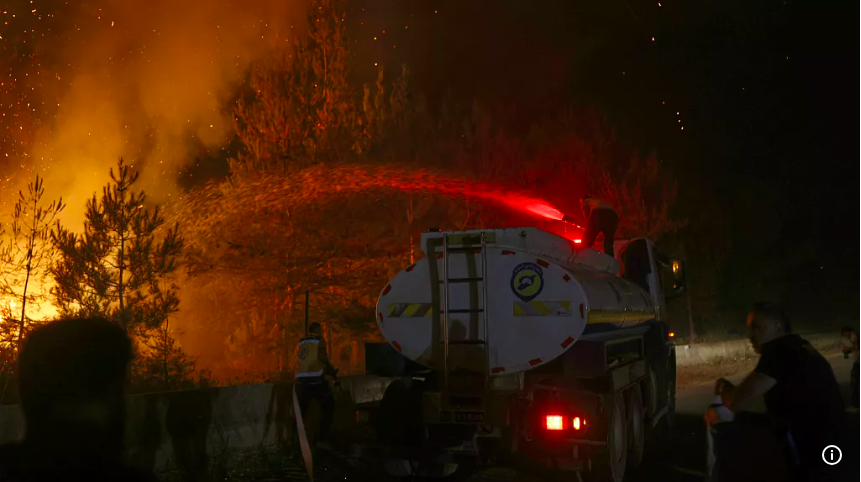
France isn’t alone. Wildfires have also broken out in Spain and Türkiye under similar conditions. In Izmir, Türkiye, fires caused by faulty power lines spread rapidly due to high temperatures, low humidity, and gusting winds. Along the Turkish-Syrian border, blazes have consumed over 10,000 hectares of forest. Syrian emergency minister Raed al-Saleh called it a “tragic loss”, lamenting the destruction of “hundreds of thousands of trees” that once provided clean air to the region.
From Heatwaves to Hailstorms: Europe’s Weather Whiplash
As wildfires rage in the south, the Balkan region is experiencing the opposite extreme: intense storms following oppressive heat. In Croatia, a severe hailstorm tore through cities on Tuesday, following days of 40°C heat. Trees were uprooted, roofs blown off, and streets flooded. In Slovenia, heavy rains and hail battered lowland areas, while snow fell at high altitudes in the Alps—an unsettling juxtaposition in July.
This rapid shift between heat and storms is part of a pattern scientists call “hydroclimate whiplash.”
“It refers to large swings between extreme drought and intense rainfall,” says Dugan-Knight. “The rainfall can cause rapid vegetation growth, which then dries out during the heat, becoming perfect wildfire fuel.”
The Balkans are particularly vulnerable, with Serbia facing a severe drought this summer that has compromised crops and even limited access to drinking water. On the same day as the hailstorms, Serbia also reported over 600 wildfires, injuring six people and stretching emergency services to their limit.
The Climate Connection: More Than Coincidence
These back-to-back disasters are not isolated incidents. Experts increasingly agree that climate change is acting as a force multiplier, intensifying and accelerating Europe’s weather crises.
The European Environment Agency (EEA) recently released its first European Climate Risk Assessment (EUCRA), identifying 36 major climate risks threatening the continent. These include threats to water resources, infrastructure, energy and food security, ecosystems, and public health.
The findings are alarming. Without urgent climate mitigation and adaptation:
- Heatwaves could claim hundreds of thousands of lives annually.
- Coastal flooding could result in €1 trillion in damages per year under high-warming scenarios.
- Food and energy systems could face catastrophic disruption.
“Through its impact on heatwaves and precipitation, climate change is making wildfires more common and more deadly,” Dugan-Knight notes. “And wildfires, in turn, release emissions that further contribute to climate change. It’s a vicious cycle.”
Urgency for Action Grows
While governments and EU institutions are working on green transitions and net-zero targets, the pace of change still lags behind the urgency of the crisis. The 2024 EUCRA report underscores the need for immediate and robust adaptation efforts—from better wildfire management and water infrastructure to disaster response and public health planning.
At the local level, communities across Europe are already feeling the effects. From farmers watching crops wither in the heat, to families evacuating homes ahead of wildfires, to city dwellers dodging falling hail, the human toll is rising.
Final Thought:
Europe’s latest wave of wildfires and storms is not just another season of bad weather—it’s a glimpse into our climate future. The scientific evidence is clear: human-driven climate change is amplifying these extremes, turning once-rare events into deadly new norms. As the continent swings between fire and flood, heat and hail, the message couldn’t be louder or more urgent. The time to act is now—because nature is no longer just sending warnings. It’s demanding a response.
Conclusion: A Summer of Reckoning
As Europe reels from yet another summer of climate chaos, the link to human-driven global warming is no longer a question of speculation but of scientific consensus. The heatwaves, fires, storms, and droughts are not freak incidents—they are warning signs of a rapidly warming planet.
The challenge now is twofold: adapt quickly to protect lives and livelihoods, and cut emissions decisively to prevent even worse disasters. This summer may not be Europe’s last chance, but it is a stark reminder that time—and stability—is running out.
Meta Description:
Europe is experiencing deadly wildfires and storms after record heatwaves. Experts warn climate change is making extreme weather more intense, frequent, and dangerous.
Europe Hit by Storms and Wildfires After Heatwave – Is Climate Change to Blame?
Europe is once again in the grip of extreme weather, as a deadly combination of blistering heatwaves, raging wildfires, and violent storms sweep across the continent. From the Balkans to southern France, weather events once thought rare are becoming dangerously common—and more intense. While these events are partly attributed to local conditions, climate scientists warn that human-driven climate change is playing a central role, making such extremes more frequent, more destructive, and more deadly.
Wildfires Rage Across Southern Europe
Register for Tekedia Mini-MBA edition 20 (June 8 – Sept 5, 2026).
Register for Tekedia AI in Business Masterclass.
Join Tekedia Capital Syndicate and co-invest in great global startups.
Register for Tekedia AI Lab.
In southern France, the city of Marseille is battling a major wildfire that erupted near Les Pennes-Mirabeau earlier this week. Fuelled by dry winds and intense heat, the blaze has already scorched 720 hectares, forced the evacuation of hundreds of homes, and disrupted operations at Marseille Airport and regional train networks. Over 1,000 firefighters have been deployed in an effort to contain the flames.
But the real cause, says climate data scientist Max Dugan-Knight, goes beyond local ignition points like a burning car.
“The real culprit is the current extreme fire weather conditions in France and across Europe,” he explains. “In these dry, hot, and windy conditions, even the smallest spark can ignite a catastrophe.”

France isn’t alone. Wildfires have also broken out in Spain and Türkiye under similar conditions. In Izmir, Türkiye, fires caused by faulty power lines spread rapidly due to high temperatures, low humidity, and gusting winds. Along the Turkish-Syrian border, blazes have consumed over 10,000 hectares of forest. Syrian emergency minister Raed al-Saleh called it a “tragic loss”, lamenting the destruction of “hundreds of thousands of trees” that once provided clean air to the region.
From Heatwaves to Hailstorms: Europe’s Weather Whiplash
As wildfires rage in the south, the Balkan region is experiencing the opposite extreme: intense storms following oppressive heat. In Croatia, a severe hailstorm tore through cities on Tuesday, following days of 40°C heat. Trees were uprooted, roofs blown off, and streets flooded. In Slovenia, heavy rains and hail battered lowland areas, while snow fell at high altitudes in the Alps—an unsettling juxtaposition in July.

This rapid shift between heat and storms is part of a pattern scientists call “hydroclimate whiplash.”
“It refers to large swings between extreme drought and intense rainfall,” says Dugan-Knight. “The rainfall can cause rapid vegetation growth, which then dries out during the heat, becoming perfect wildfire fuel.”
The Balkans are particularly vulnerable, with Serbia facing a severe drought this summer that has compromised crops and even limited access to drinking water. On the same day as the hailstorms, Serbia also reported over 600 wildfires, injuring six people and stretching emergency services to their limit.
The Climate Connection: More Than Coincidence
These back-to-back disasters are not isolated incidents. Experts increasingly agree that climate change is acting as a force multiplier, intensifying and accelerating Europe’s weather crises.
The European Environment Agency (EEA) recently released its first European Climate Risk Assessment (EUCRA), identifying 36 major climate risks threatening the continent. These include threats to water resources, infrastructure, energy and food security, ecosystems, and public health.
The findings are alarming. Without urgent climate mitigation and adaptation:
- Heatwaves could claim hundreds of thousands of lives annually.
- Coastal flooding could result in €1 trillion in damages per year under high-warming scenarios.
- Food and energy systems could face catastrophic disruption.
“Through its impact on heatwaves and precipitation, climate change is making wildfires more common and more deadly,” Dugan-Knight notes. “And wildfires, in turn, release emissions that further contribute to climate change. It’s a vicious cycle.”
Urgency for Action Grows
While governments and EU institutions are working on green transitions and net-zero targets, the pace of change still lags behind the urgency of the crisis. The 2024 EUCRA report underscores the need for immediate and robust adaptation efforts—from better wildfire management and water infrastructure to disaster response and public health planning.
At the local level, communities across Europe are already feeling the effects. From farmers watching crops wither in the heat, to families evacuating homes ahead of wildfires, to city dwellers dodging falling hail, the human toll is rising.
Final Thought:
Europe’s latest wave of wildfires and storms is not just another season of bad weather—it’s a glimpse into our climate future. The scientific evidence is clear: human-driven climate change is amplifying these extremes, turning once-rare events into deadly new norms. As the continent swings between fire and flood, heat and hail, the message couldn’t be louder or more urgent. The time to act is now—because nature is no longer just sending warnings. It’s demanding a response.
Conclusion: A Summer of Reckoning
As Europe reels from yet another summer of climate chaos, the link to human-driven global warming is no longer a question of speculation but of scientific consensus. The heatwaves, fires, storms, and droughts are not freak incidents—they are warning signs of a rapidly warming planet.
The challenge now is twofold: adapt quickly to protect lives and livelihoods, and cut emissions decisively to prevent even worse disasters. This summer may not be Europe’s last chance, but it is a stark reminder that time—and stability—is running out.
Meta Description:
Europe is experiencing deadly wildfires and storms after record heatwaves. Experts warn climate change is making extreme weather more intense, frequent, and dangerous.
Share this:
- Click to share on Facebook (Opens in new window) Facebook
- Click to share on X (Opens in new window) X
- Click to share on WhatsApp (Opens in new window) WhatsApp
- Click to share on LinkedIn (Opens in new window) LinkedIn
- Click to email a link to a friend (Opens in new window) Email
- Click to print (Opens in new window) Print