

"He Is a Human Skeleton": Heartbreaking Plea from Gaza Hostage's Brother Reveals New Depth of Crisis

Quote from Alex Bobby on August 5, 2025, 3:09 AM
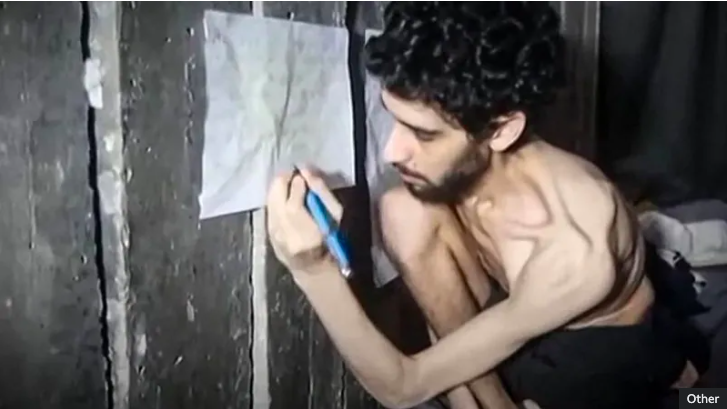
The family of Israeli hostage Evyatar David is grappling with unimaginable anguish after Hamas released a harrowing video showing the 24-year-old in a severely emaciated state. Described by his brother Ilay as "a human skeleton," the footage has sent shockwaves through Israel and the international community, intensifying calls for urgent action to rescue those still held captive in Gaza.
Evyatar was abducted during the October 7, 2023 Hamas-led attack on southern Israel, taken alongside dozens of others from the Nova music festival. In the months since, his fate — like that of many hostages — has remained largely unknown. But over the weekend, the militant group released a video that has left his family shattered and ignited a new wave of public outrage.
"He's a human skeleton. He was being starved to the point where he can be dead at any moment, and he suffers a great deal. He barely can speak, he barely can move," Ilay told the BBC in an emotionally raw interview on Monday.
In the disturbing footage, Evyatar is seen speaking weakly, saying, "I haven't eaten for days... I barely got drinking water." The most chilling moment comes when he is shown digging what he claims will be his own grave.
Ilay revealed that his parents are devastated by the images. His father, he said, could barely recognize Evyatar's voice, while his mother has been crying uncontrollably. “Seeing those images of my brother as a human skeleton, we understood it's a new kind of cruelty,” he said. “It’s the lowest you can get.”
This video follows another released by Palestinian Islamic Jihad, showing hostage Rom Braslavski also appearing malnourished and in deep distress. Both men are among roughly 50 hostages still being held in Gaza, 20 of whom are believed to be alive. Many were taken from the same music festival during the coordinated attack that left over 1,200 Israelis dead and sparked an ongoing war that has devastated Gaza.
The Israeli government and families of hostages are now facing a painful and urgent question: how much longer can they survive?
Families Demand Action
The Israeli public has watched with growing frustration as Prime Minister Benjamin Netanyahu's government appears to prioritise military objectives over a hostage deal. Over the weekend, reports surfaced suggesting that Netanyahu may be preparing to expand the military campaign in Gaza — a move that has alarmed families of the remaining captives.
Standing outside the government compound in Tel Aviv, hostage families and their supporters continue to hold rallies demanding that the government act decisively to bring their loved ones home. Ilay David echoed that call, urging world leaders to intervene.
“We need to give him medicine, to give him food — proper food — and he needs to get this treatment now, or else he will die,” Ilay pleaded. “So we have to be focused on delivering the message: Evyatar is dying.”
While Israel has previously engaged in mediated negotiations with Hamas through Qatar and Egypt, talks have repeatedly broken down. Hamas’s armed wing denies deliberately starving hostages, claiming that captives receive the same food and water that ordinary Gazans and fighters consume. But the evidence in the recent videos suggests otherwise.
Global Condemnation
Western leaders, including those from the U.S., UK, France, and Germany, have condemned Hamas’s treatment of hostages as a clear violation of international humanitarian law. But so far, diplomatic pressure has done little to shift the dynamics on the ground.
International humanitarian organisations have also voiced alarm. Human Rights Watch and Amnesty International both condemned the apparent mistreatment of hostages, warning that starvation and psychological torment amount to war crimes. The Red Cross, while unable to visit the hostages, has repeatedly urged for access to them and for their immediate release.
A Growing Humanitarian Crisis
The war in Gaza, now in its tenth month, has caused an escalating humanitarian catastrophe. The enclave faces widespread famine, with more than half the population displaced, and hospitals overwhelmed or non-functional. Yet the suffering of hostages like Evyatar is a haunting reminder that even in the heart of this wider crisis, individuals are experiencing uniquely harrowing ordeals.
Evyatar’s image — frail, gaunt, and digging a grave — has become a powerful symbol of that suffering.
As the war drags on and political leaders weigh military calculations against human lives, the voice of Ilay David cuts through the noise.
“We’re not just fighting for my brother,” he said. “We’re fighting for what’s left of our humanity.”
Final Thought
The video of Evyatar David is not just a cry for help — it’s a desperate alarm. As the international community continues to grapple with the complex dynamics of the Israel-Gaza conflict, the fate of hostages must not fade into the background. Each moment lost is a moment closer to irreversible tragedy. For the Davids, and for all the families waiting in anguish, time is running out.
Looking Forward
As global outrage grows, the coming days will be critical for both diplomatic and humanitarian efforts. The pressure on the Israeli government to prioritise the safe return of hostages like Evyatar David is mounting, and international mediators may now face renewed urgency to restart negotiations.
Human rights organisations, world leaders, and civil society must keep the spotlight on the hostages — ensuring their stories are not lost in the wider conflict. For families like the Davids, hope hinges not just on military decisions, but on moral ones.
The world is watching. What happens next will not only determine the fate of those still held in Gaza — it will define our response to injustice in its rawest form.
Conclusion
The haunting image of Evyatar David — frail, voiceless, and barely clinging to life — is a brutal reminder of the human cost of inaction. His suffering is not an isolated case, but part of a growing moral and humanitarian emergency that demands an urgent global response. As the war in Gaza continues, the plight of the hostages must remain at the forefront of international concern.
Their survival cannot be treated as collateral to military strategy or political maneuvering. Each day they remain in captivity, deprived of food, medicine, and dignity, is a day that chips away at our collective conscience.
It is time for world leaders to speak in one voice: Enough. Bring them home — before it’s too late.
Meta Description:
A haunting new video shows Israeli hostage Evyatar David starved and emaciated. His brother calls on world leaders to act urgently as hostage families plead for help.
The family of Israeli hostage Evyatar David is grappling with unimaginable anguish after Hamas released a harrowing video showing the 24-year-old in a severely emaciated state. Described by his brother Ilay as "a human skeleton," the footage has sent shockwaves through Israel and the international community, intensifying calls for urgent action to rescue those still held captive in Gaza.
Evyatar was abducted during the October 7, 2023 Hamas-led attack on southern Israel, taken alongside dozens of others from the Nova music festival. In the months since, his fate — like that of many hostages — has remained largely unknown. But over the weekend, the militant group released a video that has left his family shattered and ignited a new wave of public outrage.
"He's a human skeleton. He was being starved to the point where he can be dead at any moment, and he suffers a great deal. He barely can speak, he barely can move," Ilay told the BBC in an emotionally raw interview on Monday.
Register for Tekedia Mini-MBA edition 20 (June 8 – Sept 5, 2026).
Register for Tekedia AI in Business Masterclass.
Join Tekedia Capital Syndicate and co-invest in great global startups.
Register for Tekedia AI Lab.
In the disturbing footage, Evyatar is seen speaking weakly, saying, "I haven't eaten for days... I barely got drinking water." The most chilling moment comes when he is shown digging what he claims will be his own grave.
Ilay revealed that his parents are devastated by the images. His father, he said, could barely recognize Evyatar's voice, while his mother has been crying uncontrollably. “Seeing those images of my brother as a human skeleton, we understood it's a new kind of cruelty,” he said. “It’s the lowest you can get.”
This video follows another released by Palestinian Islamic Jihad, showing hostage Rom Braslavski also appearing malnourished and in deep distress. Both men are among roughly 50 hostages still being held in Gaza, 20 of whom are believed to be alive. Many were taken from the same music festival during the coordinated attack that left over 1,200 Israelis dead and sparked an ongoing war that has devastated Gaza.

The Israeli government and families of hostages are now facing a painful and urgent question: how much longer can they survive?
Families Demand Action
The Israeli public has watched with growing frustration as Prime Minister Benjamin Netanyahu's government appears to prioritise military objectives over a hostage deal. Over the weekend, reports surfaced suggesting that Netanyahu may be preparing to expand the military campaign in Gaza — a move that has alarmed families of the remaining captives.

Standing outside the government compound in Tel Aviv, hostage families and their supporters continue to hold rallies demanding that the government act decisively to bring their loved ones home. Ilay David echoed that call, urging world leaders to intervene.
“We need to give him medicine, to give him food — proper food — and he needs to get this treatment now, or else he will die,” Ilay pleaded. “So we have to be focused on delivering the message: Evyatar is dying.”
While Israel has previously engaged in mediated negotiations with Hamas through Qatar and Egypt, talks have repeatedly broken down. Hamas’s armed wing denies deliberately starving hostages, claiming that captives receive the same food and water that ordinary Gazans and fighters consume. But the evidence in the recent videos suggests otherwise.
Global Condemnation
Western leaders, including those from the U.S., UK, France, and Germany, have condemned Hamas’s treatment of hostages as a clear violation of international humanitarian law. But so far, diplomatic pressure has done little to shift the dynamics on the ground.
International humanitarian organisations have also voiced alarm. Human Rights Watch and Amnesty International both condemned the apparent mistreatment of hostages, warning that starvation and psychological torment amount to war crimes. The Red Cross, while unable to visit the hostages, has repeatedly urged for access to them and for their immediate release.
A Growing Humanitarian Crisis
The war in Gaza, now in its tenth month, has caused an escalating humanitarian catastrophe. The enclave faces widespread famine, with more than half the population displaced, and hospitals overwhelmed or non-functional. Yet the suffering of hostages like Evyatar is a haunting reminder that even in the heart of this wider crisis, individuals are experiencing uniquely harrowing ordeals.
Evyatar’s image — frail, gaunt, and digging a grave — has become a powerful symbol of that suffering.
As the war drags on and political leaders weigh military calculations against human lives, the voice of Ilay David cuts through the noise.
“We’re not just fighting for my brother,” he said. “We’re fighting for what’s left of our humanity.”
Final Thought
The video of Evyatar David is not just a cry for help — it’s a desperate alarm. As the international community continues to grapple with the complex dynamics of the Israel-Gaza conflict, the fate of hostages must not fade into the background. Each moment lost is a moment closer to irreversible tragedy. For the Davids, and for all the families waiting in anguish, time is running out.
Looking Forward
As global outrage grows, the coming days will be critical for both diplomatic and humanitarian efforts. The pressure on the Israeli government to prioritise the safe return of hostages like Evyatar David is mounting, and international mediators may now face renewed urgency to restart negotiations.
Human rights organisations, world leaders, and civil society must keep the spotlight on the hostages — ensuring their stories are not lost in the wider conflict. For families like the Davids, hope hinges not just on military decisions, but on moral ones.
The world is watching. What happens next will not only determine the fate of those still held in Gaza — it will define our response to injustice in its rawest form.
Conclusion
The haunting image of Evyatar David — frail, voiceless, and barely clinging to life — is a brutal reminder of the human cost of inaction. His suffering is not an isolated case, but part of a growing moral and humanitarian emergency that demands an urgent global response. As the war in Gaza continues, the plight of the hostages must remain at the forefront of international concern.
Their survival cannot be treated as collateral to military strategy or political maneuvering. Each day they remain in captivity, deprived of food, medicine, and dignity, is a day that chips away at our collective conscience.
It is time for world leaders to speak in one voice: Enough. Bring them home — before it’s too late.
Meta Description:
A haunting new video shows Israeli hostage Evyatar David starved and emaciated. His brother calls on world leaders to act urgently as hostage families plead for help.
Share this:
- Click to share on Facebook (Opens in new window) Facebook
- Click to share on X (Opens in new window) X
- Click to share on WhatsApp (Opens in new window) WhatsApp
- Click to share on LinkedIn (Opens in new window) LinkedIn
- Click to email a link to a friend (Opens in new window) Email
- Click to print (Opens in new window) Print