

James Dobson, Influential US Evangelical Leader and Focus on the Family Founder, Dies at 89

Quote from Alex Bobby on August 22, 2025, 3:07 AM
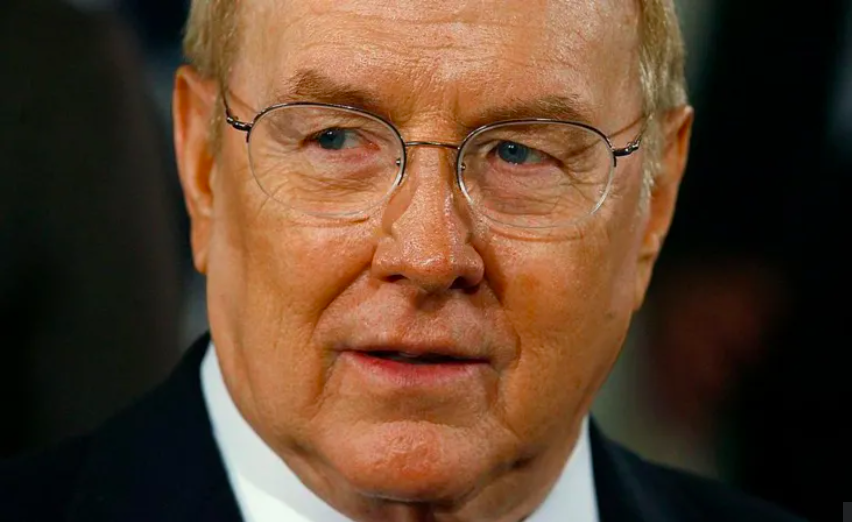
Influential US Evangelical Leader James Dobson Dies Aged 89
Dr James Dobson, one of the most influential evangelical voices in modern American history, has died at the age of 89. For decades, Dobson was a central figure in conservative Christian politics, advising four US presidents, founding powerful advocacy organisations, and shaping the cultural debates around family, sexuality, and religion.
His death marks the end of an era for American evangelicalism — one in which Dobson was both a spiritual guide for millions of conservative Christians and a deeply polarising figure in the nation’s cultural battles.
Early Life and Rise to Prominence
Born in Shreveport, Louisiana, in 1936, Dobson grew up in a religious household that placed great emphasis on faith and family values. He trained as a child psychologist and later served as an associate clinical professor of pediatrics at the University of Southern California School of Medicine.
His professional background in psychology gave him a distinctive authority when he turned to Christian ministry. In 1970, he published Dare to Discipline, the first of more than 70 books, which promoted strict parental authority and the use of corporal punishment. The book proved enormously popular among conservative Christian families and set the tone for his later work, in which he consistently linked religious faith with traditional family structures.
The Birth of Focus on the Family
In 1977, Dobson founded Focus on the Family, an evangelical ministry with the stated mission of affirming “the God-ordained institution of the family.” Through books, seminars, and radio programmes, the organisation quickly grew into one of the largest ministries in the world, with a presence in nearly 100 countries.
Dobson’s daily radio show became a cultural institution in itself, broadcast by over 4,000 stations across North America and reaching millions of listeners. For many American evangelicals, his voice was a trusted presence, offering advice on parenting, marriage, and faith.
Gary Bauer, head of the Dr James Dobson Family Institute, described him as “a pioneer” and “a man of deep conviction whose voice shaped the way generations view faith, family and culture.”
Political Influence and Presidential Adviser
Dobson never ran for public office, but his influence in American politics was undeniable. He founded the Family Research Council in 1981, a conservative think tank that became a leading advocate for traditional family values, pro-life causes, and opposition to LGBTQ+ rights.
His reach extended into the highest levels of government. He was appointed to a national advisory committee on youth justice by President Ronald Reagan in 1982 and later advised both President George H. W. Bush and President George W. Bush. Most recently, he served on Donald Trump’s advisory board for evangelical affairs and endorsed him during the 2020 election.
Tony Perkins, president of the Family Research Council, said following Dobson’s death: “His legacy will be lasting. Dobson will be missed, but like other influential Christian leaders of his era, he has raised many more in his wake.”
A Polarising Legacy
While Dobson commanded enormous respect among conservative Christians, he was also a highly controversial figure. His unwavering opposition to abortion, LGBTQ+ rights, and what he saw as the decline of traditional family values often placed him at the centre of America’s culture wars.
In 2014, he drew sharp criticism for calling President Barack Obama “the abortion president” during a National Day of Prayer event, prompting former California congresswoman Janice Hahn to walk out. Dobson was also a hard-liner on LGBTQ+ issues, resigning from the American Psychological Association in 1973 after it removed homosexuality from its list of mental disorders.
Wayne Besen, director of the LGBTQ+ advocacy organisation Truth Wins Out, said Dobson “used faith as a cudgel to bludgeon vulnerable communities, spread disinformation and inject toxic bigotry into the bloodstream of American culture.” He added: “His legacy is one of cruelty disguised as Christianity. And our nation is worse off because of the relentless campaigns of intolerance he orchestrated.”
In 2010, the Southern Poverty Law Center formally designated the Family Research Council as a hate group, citing its “anti-gay propaganda throughout its history,” a charge Dobson and his allies strongly denied.
Faith, Family, and Conviction
Dobson was never one to retreat from criticism. In a 2019 newsletter, he wrote: “Left-wing activists typically hate committed Christians. It begins with resentment for everything we stand for. They despise this belief system because it threatens their godless worldview.”
He remained a central figure in conservative politics even into his later years. In 2022, after the US Supreme Court overturned Roe v. Wade, Dobson declared victory for the pro-life movement: “At last, the tide has changed, and the legality of abortion has been given to the people to decide — where it belonged in the first place.”
Remembering a Complex Figure
To his supporters, Dobson was a courageous defender of faith, family, and traditional values. To his critics, he was a symbol of intolerance who wielded religion as a political weapon. His influence, however, is undeniable. Few evangelical leaders of the 20th and early 21st centuries have left as deep a mark on American culture and politics.
As Gary Bauer reflected, “Dr Dobson’s steadfast commitment to his faith and family values will continue to inspire future generations, even as his absence leaves a void.”
James Dobson leaves behind not just a ministry, but a movement — one that will continue to shape American evangelicalism for years to come. Whether remembered as a spiritual guide or as a divisive political figure, his legacy is firmly cemented in the story of modern America.
Got it — here’s a “Looking Forward” section you can add to the article after the conclusion to round it off with a forward-facing perspective:
Looking Forward
With James Dobson’s passing, the evangelical movement in the United States finds itself at a crossroads. The institutions he built — Focus on the Family, the Family Research Council, and the many networks of churches and advocacy groups influenced by his teachings — remain active and powerful. But the cultural and political landscape has shifted dramatically since Dobson first rose to prominence in the 1970s.
Younger generations of evangelicals are increasingly divided on issues such as LGBTQ+ rights, gender roles, and the role of religion in politics. Some continue to embrace Dobson’s vision of a staunchly conservative faith that shapes public policy, while others are seeking a more inclusive approach to Christianity.
In this sense, Dobson’s death could signal not only the end of an era but also the beginning of a new phase in American evangelicalism — one that will determine how the movement navigates a rapidly changing cultural environment. His successors face the challenge of preserving the core values he championed, while also engaging with the realities of a society that looks very different from the one Dobson addressed in his early ministry.
As America continues to wrestle with questions of faith, morality, and identity, the institutions and leaders influenced by James Dobson will play a key role in shaping the answers. His absence leaves a void, but it also opens space for new voices to emerge, carrying forward — or perhaps reinterpreting — the legacy of one of the most influential religious figures of the past half-century.
Conclusion and Final Thoughts
The passing of Dr James Dobson closes a significant chapter in American evangelical history. For decades, he was a guiding voice to millions of families who looked to him for spiritual and moral counsel, while also serving as a powerful figure in shaping the nation’s political and cultural debates. His influence stretched far beyond the pulpit, extending into the White House and onto the global stage through Focus on the Family.
Yet, Dobson’s legacy is also one of deep division. His teachings and advocacy offered comfort and clarity to many within the evangelical community but provoked criticism and condemnation from those who saw his views as exclusionary and harmful. In this tension lies the full measure of his impact: a leader who embodied both the devotion and the controversy that continue to define American evangelicalism.
As the movement he helped build continues to evolve, James Dobson will be remembered as a man of unshakable conviction, whose voice shaped debates on faith, family, and morality for generations. Whether celebrated as a champion of Christian values or criticized as a symbol of intolerance, his influence will remain an enduring part of America’s cultural and political fabric.
Influential US Evangelical Leader James Dobson Dies Aged 89
Dr James Dobson, one of the most influential evangelical voices in modern American history, has died at the age of 89. For decades, Dobson was a central figure in conservative Christian politics, advising four US presidents, founding powerful advocacy organisations, and shaping the cultural debates around family, sexuality, and religion.
His death marks the end of an era for American evangelicalism — one in which Dobson was both a spiritual guide for millions of conservative Christians and a deeply polarising figure in the nation’s cultural battles.
Register for Tekedia Mini-MBA edition 20 (June 8 – Sept 5, 2026).
Register for Tekedia AI in Business Masterclass.
Join Tekedia Capital Syndicate and co-invest in great global startups.
Register for Tekedia AI Lab.
Early Life and Rise to Prominence
Born in Shreveport, Louisiana, in 1936, Dobson grew up in a religious household that placed great emphasis on faith and family values. He trained as a child psychologist and later served as an associate clinical professor of pediatrics at the University of Southern California School of Medicine.
His professional background in psychology gave him a distinctive authority when he turned to Christian ministry. In 1970, he published Dare to Discipline, the first of more than 70 books, which promoted strict parental authority and the use of corporal punishment. The book proved enormously popular among conservative Christian families and set the tone for his later work, in which he consistently linked religious faith with traditional family structures.

The Birth of Focus on the Family
In 1977, Dobson founded Focus on the Family, an evangelical ministry with the stated mission of affirming “the God-ordained institution of the family.” Through books, seminars, and radio programmes, the organisation quickly grew into one of the largest ministries in the world, with a presence in nearly 100 countries.
Dobson’s daily radio show became a cultural institution in itself, broadcast by over 4,000 stations across North America and reaching millions of listeners. For many American evangelicals, his voice was a trusted presence, offering advice on parenting, marriage, and faith.

Gary Bauer, head of the Dr James Dobson Family Institute, described him as “a pioneer” and “a man of deep conviction whose voice shaped the way generations view faith, family and culture.”
Political Influence and Presidential Adviser
Dobson never ran for public office, but his influence in American politics was undeniable. He founded the Family Research Council in 1981, a conservative think tank that became a leading advocate for traditional family values, pro-life causes, and opposition to LGBTQ+ rights.
His reach extended into the highest levels of government. He was appointed to a national advisory committee on youth justice by President Ronald Reagan in 1982 and later advised both President George H. W. Bush and President George W. Bush. Most recently, he served on Donald Trump’s advisory board for evangelical affairs and endorsed him during the 2020 election.
Tony Perkins, president of the Family Research Council, said following Dobson’s death: “His legacy will be lasting. Dobson will be missed, but like other influential Christian leaders of his era, he has raised many more in his wake.”
A Polarising Legacy
While Dobson commanded enormous respect among conservative Christians, he was also a highly controversial figure. His unwavering opposition to abortion, LGBTQ+ rights, and what he saw as the decline of traditional family values often placed him at the centre of America’s culture wars.
In 2014, he drew sharp criticism for calling President Barack Obama “the abortion president” during a National Day of Prayer event, prompting former California congresswoman Janice Hahn to walk out. Dobson was also a hard-liner on LGBTQ+ issues, resigning from the American Psychological Association in 1973 after it removed homosexuality from its list of mental disorders.
Wayne Besen, director of the LGBTQ+ advocacy organisation Truth Wins Out, said Dobson “used faith as a cudgel to bludgeon vulnerable communities, spread disinformation and inject toxic bigotry into the bloodstream of American culture.” He added: “His legacy is one of cruelty disguised as Christianity. And our nation is worse off because of the relentless campaigns of intolerance he orchestrated.”
In 2010, the Southern Poverty Law Center formally designated the Family Research Council as a hate group, citing its “anti-gay propaganda throughout its history,” a charge Dobson and his allies strongly denied.
Faith, Family, and Conviction
Dobson was never one to retreat from criticism. In a 2019 newsletter, he wrote: “Left-wing activists typically hate committed Christians. It begins with resentment for everything we stand for. They despise this belief system because it threatens their godless worldview.”
He remained a central figure in conservative politics even into his later years. In 2022, after the US Supreme Court overturned Roe v. Wade, Dobson declared victory for the pro-life movement: “At last, the tide has changed, and the legality of abortion has been given to the people to decide — where it belonged in the first place.”
Remembering a Complex Figure
To his supporters, Dobson was a courageous defender of faith, family, and traditional values. To his critics, he was a symbol of intolerance who wielded religion as a political weapon. His influence, however, is undeniable. Few evangelical leaders of the 20th and early 21st centuries have left as deep a mark on American culture and politics.
As Gary Bauer reflected, “Dr Dobson’s steadfast commitment to his faith and family values will continue to inspire future generations, even as his absence leaves a void.”
James Dobson leaves behind not just a ministry, but a movement — one that will continue to shape American evangelicalism for years to come. Whether remembered as a spiritual guide or as a divisive political figure, his legacy is firmly cemented in the story of modern America.
Got it — here’s a “Looking Forward” section you can add to the article after the conclusion to round it off with a forward-facing perspective:
Looking Forward
With James Dobson’s passing, the evangelical movement in the United States finds itself at a crossroads. The institutions he built — Focus on the Family, the Family Research Council, and the many networks of churches and advocacy groups influenced by his teachings — remain active and powerful. But the cultural and political landscape has shifted dramatically since Dobson first rose to prominence in the 1970s.
Younger generations of evangelicals are increasingly divided on issues such as LGBTQ+ rights, gender roles, and the role of religion in politics. Some continue to embrace Dobson’s vision of a staunchly conservative faith that shapes public policy, while others are seeking a more inclusive approach to Christianity.
In this sense, Dobson’s death could signal not only the end of an era but also the beginning of a new phase in American evangelicalism — one that will determine how the movement navigates a rapidly changing cultural environment. His successors face the challenge of preserving the core values he championed, while also engaging with the realities of a society that looks very different from the one Dobson addressed in his early ministry.
As America continues to wrestle with questions of faith, morality, and identity, the institutions and leaders influenced by James Dobson will play a key role in shaping the answers. His absence leaves a void, but it also opens space for new voices to emerge, carrying forward — or perhaps reinterpreting — the legacy of one of the most influential religious figures of the past half-century.
Conclusion and Final Thoughts
The passing of Dr James Dobson closes a significant chapter in American evangelical history. For decades, he was a guiding voice to millions of families who looked to him for spiritual and moral counsel, while also serving as a powerful figure in shaping the nation’s political and cultural debates. His influence stretched far beyond the pulpit, extending into the White House and onto the global stage through Focus on the Family.
Yet, Dobson’s legacy is also one of deep division. His teachings and advocacy offered comfort and clarity to many within the evangelical community but provoked criticism and condemnation from those who saw his views as exclusionary and harmful. In this tension lies the full measure of his impact: a leader who embodied both the devotion and the controversy that continue to define American evangelicalism.
As the movement he helped build continues to evolve, James Dobson will be remembered as a man of unshakable conviction, whose voice shaped debates on faith, family, and morality for generations. Whether celebrated as a champion of Christian values or criticized as a symbol of intolerance, his influence will remain an enduring part of America’s cultural and political fabric.
Uploaded files:Share this:
- Click to share on Facebook (Opens in new window) Facebook
- Click to share on X (Opens in new window) X
- Click to share on WhatsApp (Opens in new window) WhatsApp
- Click to share on LinkedIn (Opens in new window) LinkedIn
- Click to email a link to a friend (Opens in new window) Email
- Click to print (Opens in new window) Print