

Myanmar Junta Claims Bombed Hospital Was Militant Base After Airstrike Kills Dozens in Rakhine State

Quote from Alex Bobby on December 13, 2025, 4:59 AM
Myanmar Junta Defends Deadly Hospital Airstrike as ‘Counter-Terrorism Operation’
Myanmar’s military junta defends a deadly airstrike on a hospital in Rakhine state as a counter-terrorism operation, as the UN and WHO condemn the attack and report dozens of civilian deaths, including patients and medical workers.
Myanmar’s military junta has defended a deadly airstrike on a hospital in the western town of Mrauk-U, claiming the facility was being used as a base by armed opposition groups. The attack, which local rescuers and media reports say killed more than 30 people, has sparked widespread international condemnation and renewed scrutiny of the military’s conduct in the country’s escalating civil conflict.
In a statement published on Saturday by the state-run Global New Light of Myanmar, the military acknowledged responsibility for Wednesday night’s bombing of the hospital in Rakhine state. The junta’s information office said the strike was part of “necessary security measures” carried out during a counter-terrorism operation targeting armed groups allegedly operating from the hospital complex.
According to the statement, opposition forces — including the ethnic Arakan Army (AA) and the People’s Defence Force (PDF), pro-democracy militias formed after the 2021 military takeover — were using the hospital as a base. The military asserted that those killed or injured were members or supporters of armed groups, insisting that civilians were not targeted.
However, these claims sharply contradict accounts from local rescue workers, medical staff, and international organisations.
Civilian Deaths Reported
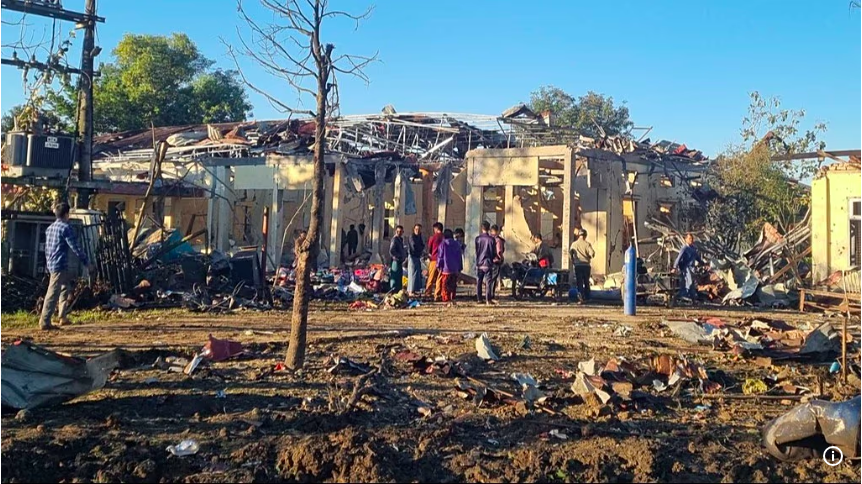
A senior official with a local rescue service in Rakhine told the Associated Press that at least 34 people were killed, including patients, medical workers and children. Around 80 others were injured, many critically. The official said an army fighter jet dropped two bombs directly on Mrauk-U People’s Hospital, destroying much of the building.
The airstrike reportedly took place late Wednesday night in Mrauk-U township, an area currently controlled by the Arakan Army. Images and testimonies from the aftermath showed extensive damage to hospital wards and emergency rooms, leaving survivors scrambling for medical care in an already overstretched region.
Local residents described scenes of panic as patients were trapped under rubble, while medical staff attempted to evacuate the wounded amid fears of further strikes.
International Condemnation
The United Nations said on Thursday that the hospital bombing was part of a broader pattern of attacks causing severe harm to civilians and civilian infrastructure across Myanmar. In a statement, the UN warned that repeated strikes on protected sites were devastating communities and undermining access to essential services.
World Health Organization Director-General Tedros Adhanom Ghebreyesus said he was “appalled” by the attack, stressing that the hospital was a critical healthcare provider for the region.
“Mrauk-U People’s Hospital is the primary health care centre in the area, providing health and emergency services, obstetric care, and surgical capacity,” Ghebreyesus said in a post on X. “This attack will disrupt access to health care for entire communities that depend on it.”
He added that this was the 67th verified attack on a hospital, clinic or medical facility in Myanmar this year alone, according to WHO records, and called for an immediate halt to such assaults.
“Every attack on health care is an attack on humanity,” he said. “Health facilities, patients and health workers must be protected at all times.”
Conflict in Rakhine State
Mrauk-U lies about 530 kilometres northwest of Yangon, Myanmar’s largest city, and has been under Arakan Army control since February 2024. The AA is the military wing of the Rakhine ethnic minority movement, which has long sought greater autonomy from Myanmar’s central government.
Since launching a major offensive in November 2023, the Arakan Army has seized 14 of Rakhine’s 17 townships, including a strategically important regional military headquarters. The fighting has displaced tens of thousands of civilians and severely damaged infrastructure across the state.
In a statement released on Thursday, the Arakan Army vowed to pursue accountability for the hospital strike in cooperation with international organisations, promising “strong and decisive action” against the military.
The group also reported that the army carried out additional overnight airstrikes in five towns across Rakhine following the hospital bombing, killing at least eight more civilians and injuring nearly a dozen others.
A Country in Prolonged Crisis
Myanmar has remained in deep turmoil since the military seized power in a coup in February 2021, overturning a democratically elected government. The takeover triggered mass protests, a violent crackdown, and the emergence of armed resistance movements across the country.
Today, large parts of Myanmar are engulfed in conflict involving ethnic armed organisations, pro-democracy militias, and the military, which has increasingly relied on airpower to suppress opposition. Human rights groups have repeatedly accused the junta of indiscriminate bombing, extrajudicial killings, and attacks on civilian infrastructure — allegations the military routinely denies.
The bombing of Mrauk-U’s hospital has become a stark symbol of the human cost of the conflict, raising urgent questions about accountability, civilian protection, and respect for international humanitarian law.
As fighting intensifies and healthcare systems collapse under repeated attacks, humanitarian agencies warn that Myanmar’s civilian population is bearing the heaviest burden of a war with no clear end in sight.
Conclusion
The airstrike on Mrauk-U People’s Hospital underscores the devastating toll Myanmar’s protracted conflict continues to exact on civilians and essential services. While the military junta maintains that the attack was a counter-terrorism operation, mounting evidence from local rescuers, medical staff and international organisations points to significant civilian casualties and the destruction of a critical healthcare facility. The incident adds to a growing pattern of assaults on medical infrastructure that have left vulnerable communities without lifesaving care. As calls for accountability intensify, the hospital bombing stands as a grim reminder that without restraint, protection of civilians, and meaningful steps toward dialogue, Myanmar’s crisis will continue to deepen — with ordinary people paying the highest price.
Myanmar Junta Defends Deadly Hospital Airstrike as ‘Counter-Terrorism Operation’
Myanmar’s military junta defends a deadly airstrike on a hospital in Rakhine state as a counter-terrorism operation, as the UN and WHO condemn the attack and report dozens of civilian deaths, including patients and medical workers.
Myanmar’s military junta has defended a deadly airstrike on a hospital in the western town of Mrauk-U, claiming the facility was being used as a base by armed opposition groups. The attack, which local rescuers and media reports say killed more than 30 people, has sparked widespread international condemnation and renewed scrutiny of the military’s conduct in the country’s escalating civil conflict.
In a statement published on Saturday by the state-run Global New Light of Myanmar, the military acknowledged responsibility for Wednesday night’s bombing of the hospital in Rakhine state. The junta’s information office said the strike was part of “necessary security measures” carried out during a counter-terrorism operation targeting armed groups allegedly operating from the hospital complex.
Register for Tekedia Mini-MBA edition 20 (June 8 – Sept 5, 2026).
Register for Tekedia AI in Business Masterclass.
Join Tekedia Capital Syndicate and co-invest in great global startups.
Register for Tekedia AI Lab.
According to the statement, opposition forces — including the ethnic Arakan Army (AA) and the People’s Defence Force (PDF), pro-democracy militias formed after the 2021 military takeover — were using the hospital as a base. The military asserted that those killed or injured were members or supporters of armed groups, insisting that civilians were not targeted.
However, these claims sharply contradict accounts from local rescue workers, medical staff, and international organisations.
Civilian Deaths Reported

A senior official with a local rescue service in Rakhine told the Associated Press that at least 34 people were killed, including patients, medical workers and children. Around 80 others were injured, many critically. The official said an army fighter jet dropped two bombs directly on Mrauk-U People’s Hospital, destroying much of the building.
The airstrike reportedly took place late Wednesday night in Mrauk-U township, an area currently controlled by the Arakan Army. Images and testimonies from the aftermath showed extensive damage to hospital wards and emergency rooms, leaving survivors scrambling for medical care in an already overstretched region.
Local residents described scenes of panic as patients were trapped under rubble, while medical staff attempted to evacuate the wounded amid fears of further strikes.

International Condemnation
The United Nations said on Thursday that the hospital bombing was part of a broader pattern of attacks causing severe harm to civilians and civilian infrastructure across Myanmar. In a statement, the UN warned that repeated strikes on protected sites were devastating communities and undermining access to essential services.
World Health Organization Director-General Tedros Adhanom Ghebreyesus said he was “appalled” by the attack, stressing that the hospital was a critical healthcare provider for the region.
“Mrauk-U People’s Hospital is the primary health care centre in the area, providing health and emergency services, obstetric care, and surgical capacity,” Ghebreyesus said in a post on X. “This attack will disrupt access to health care for entire communities that depend on it.”
He added that this was the 67th verified attack on a hospital, clinic or medical facility in Myanmar this year alone, according to WHO records, and called for an immediate halt to such assaults.
“Every attack on health care is an attack on humanity,” he said. “Health facilities, patients and health workers must be protected at all times.”
Conflict in Rakhine State
Mrauk-U lies about 530 kilometres northwest of Yangon, Myanmar’s largest city, and has been under Arakan Army control since February 2024. The AA is the military wing of the Rakhine ethnic minority movement, which has long sought greater autonomy from Myanmar’s central government.
Since launching a major offensive in November 2023, the Arakan Army has seized 14 of Rakhine’s 17 townships, including a strategically important regional military headquarters. The fighting has displaced tens of thousands of civilians and severely damaged infrastructure across the state.
In a statement released on Thursday, the Arakan Army vowed to pursue accountability for the hospital strike in cooperation with international organisations, promising “strong and decisive action” against the military.
The group also reported that the army carried out additional overnight airstrikes in five towns across Rakhine following the hospital bombing, killing at least eight more civilians and injuring nearly a dozen others.
A Country in Prolonged Crisis
Myanmar has remained in deep turmoil since the military seized power in a coup in February 2021, overturning a democratically elected government. The takeover triggered mass protests, a violent crackdown, and the emergence of armed resistance movements across the country.
Today, large parts of Myanmar are engulfed in conflict involving ethnic armed organisations, pro-democracy militias, and the military, which has increasingly relied on airpower to suppress opposition. Human rights groups have repeatedly accused the junta of indiscriminate bombing, extrajudicial killings, and attacks on civilian infrastructure — allegations the military routinely denies.
The bombing of Mrauk-U’s hospital has become a stark symbol of the human cost of the conflict, raising urgent questions about accountability, civilian protection, and respect for international humanitarian law.
As fighting intensifies and healthcare systems collapse under repeated attacks, humanitarian agencies warn that Myanmar’s civilian population is bearing the heaviest burden of a war with no clear end in sight.
Conclusion
The airstrike on Mrauk-U People’s Hospital underscores the devastating toll Myanmar’s protracted conflict continues to exact on civilians and essential services. While the military junta maintains that the attack was a counter-terrorism operation, mounting evidence from local rescuers, medical staff and international organisations points to significant civilian casualties and the destruction of a critical healthcare facility. The incident adds to a growing pattern of assaults on medical infrastructure that have left vulnerable communities without lifesaving care. As calls for accountability intensify, the hospital bombing stands as a grim reminder that without restraint, protection of civilians, and meaningful steps toward dialogue, Myanmar’s crisis will continue to deepen — with ordinary people paying the highest price.
Uploaded files:Share this:
- Click to share on Facebook (Opens in new window) Facebook
- Click to share on X (Opens in new window) X
- Click to share on WhatsApp (Opens in new window) WhatsApp
- Click to share on LinkedIn (Opens in new window) LinkedIn
- Click to email a link to a friend (Opens in new window) Email
- Click to print (Opens in new window) Print