

Nezha 2 Shatters $1.37 Billion Box Office—A Reflection of China's Rebellious Spirit?

Quote from Alex Bobby on February 18, 2025, 5:20 AM
Animated Film Nezha 2 Breaks 10 Billion Yuan Box Office, Setting a New Record in Chinese Cinema History
The animated film Nezha 2 has shattered Chinese box office records, surpassing 10 billion yuan in revenue, making it the first Asian film to achieve this milestone. The film's success was fueled by extensive screenings across Chinese theaters, pushing its box office earnings ever higher. However, behind the skyrocketing numbers, the movie’s rebellious spirit and theme of "defying fate" have not only resonated with audiences but also sparked heated debates on censorship and nationalism. Industry experts caution that while Chinese animated films have seen explosive growth under the "New National Trend" movement, Nezha 2’s success may be fleeting if high-quality productions cannot be consistently delivered.
A 10-Billion-Yuan Box Office Sensation: Defying Fate or Emotional Catharsis?
A supernatural outcast challenging the system and rewriting destiny—Nezha 2 not only became a cultural phenomenon but also revitalised China's struggling film industry. The story’s core message of "defying fate" has been widely interpreted as a symbolic rebellion against real-world pressures.
According to data from Lighthouse Professional Edition, as of February 13, Nezha 2 had surpassed 10 billion yuan (approximately $1.37 billion), making it the highest-grossing animated film in a single market worldwide. On Weibo, the hashtag “Nezha 2 Global Box Office Record” topped the trending charts, garnering over 250 million views.
On February 11, People’s Daily, the official newspaper of the Chinese Communist Party, reported that many young viewers saw themselves reflected in Nezha 2, signaling a new phase in Chinese filmmaking that embraces realism and emotional resonance.
On social media, the line "My fate is determined by me, not by the heavens" sparked intense discussion, with many believing that Nezha embodies the younger generation's resistance to reality and desire for change. A popular blogger from Henan, Xiaoye’s Melon Field, praised the film as more than just a box office victory, calling it "a powerful display of cultural confidence in China's new mythology era."
Another blogger from Shanghai, Chen Ru Shi Shuo, described the film’s iconic line as "an essential element of the Chinese collective consciousness—an unbroken lineage of independence, autonomy, and defiance spanning thousands of years."
However, a more skeptical take came from a blogger in Heilongjiang, Listening to the Rain 0513, who wrote:
"When we’re young, we all think we’re Nezha: ‘My fate is determined by me, not by the heavens.’ But as we grow older, we realise we’re all just groundhogs struggling to make a living."Similarly, Guangdong blogger Yu Mei’s Self-Discipline and Money-Making Journal noted:
"In modern society, many face immense pressure and yearn to control their destiny but often feel powerless. Nezha's rebellious spirit and determination make him relatable. Watching the film gives viewers a brief sense of ‘idealistic triumph.’"This emotional release, driven by Nezha’s defiant character, has been described as a "pressure compensation"phenomenon. Zhang, a former film director from Shenzhen, told Voice of America that the film resonated deeply with Chinese parents—mostly from the ‘80s and ‘90s generation—who struggle with rigid social hierarchies and mounting life pressures.
"In a society with little social mobility, changing one’s destiny is nearly impossible," Zhang explained. "Nezha’s desperate fight symbolises rebellion—similar to the Red Guards' sentiment in the past. But since real-world rebellion is no longer an option, movies like this serve as a form of psychological escapism."
Challenging Authority? The Limits of Rebellion in Chinese Cinema
Despite Nezha 2’s rebellious themes, industry insiders believe the film stayed within China's strict censorship boundaries.
Zhang pointed out that Nezha’s defiance is directed at “feudal remnants” rather than the current political system, allowing it to pass censorship without issue.
"In a totalitarian regime, you may be powerful, but you will never overthrow me," Zhang remarked. "That’s the unshakable arrogance of authoritarianism. If Nezha had succeeded in toppling the heavens, the film would never have been approved."
Ng Kwok Kwan, an associate professor at Hong Kong Baptist University’s School of Film, explained that while fantasy films offer entertainment and an outlet for imagination, they must still adhere to implicit political boundaries.
"The film’s ‘rebellion’ is contained—it doesn’t challenge the highest authority. It provides psychological comfort rather than actual dissent," Ng told Voice of America. "Chinese fantasy films, myths, and comedies have a complex, symbiotic relationship with censorship."
Ng also noted that Nezha 2’s themes of family conflict and intergenerational struggles, coupled with the festive atmosphere of the Lunar New Year release, contributed to its broad appeal.
The Rise of "New National Trend" and Cultural Nationalism
Beyond its storytelling and emotional impact, Nezha 2's success is also a product of China's growing emphasis on "New National Trend" (Xin Guo Chao)—a movement that fuses traditional Chinese culture with modern aesthetics.
Ng observed that China’s animation industry has made significant strides in both storytelling and visual presentation. By blending traditional cultural symbols with contemporary animation, the industry has tapped into a powerful source of national pride.
"When a film effectively integrates Chinese heritage with a compelling narrative, it evokes genuine nationalistic sentiment," Ng said.
However, Zhang warned that the rising tide of cultural nationalism—seen in the glorification of New National Trend—could be problematic.
"Blindly idolising national culture without critical reflection can lead to an exclusionary form of nationalism," he cautioned. "Traditional cultural elements originate from feudal societies. Overemphasising them could hinder the film industry’s ability to evolve creatively."
A Box Office Miracle or a One-Time Phenomenon?
Despite Nezha 2’s record-breaking earnings, Zhang believes its success was largely driven by state-backed screening policies rather than purely organic demand.
In 2023, China implemented the "Domestic Animation Film Revitalization Plan," mandating that theaters allocate at least 25% of their screenings to domestic animated films. This policy ensured that Nezha 2 dominated theater schedules nationwide.
A film blogger from Fujian, who requested anonymity, told Voice of America that Nezha 2’s unprecedented box office success was the result of four key factors:
- Strong production quality
- Strategic Lunar New Year release
- Lack of major competition
- Aggressive social media marketing
"China’s film industry has suffered from too many poorly made films," the blogger said. "With Hollywood struggling and Marvel fatigue setting in, Nezha 2 was the perfect storm of familiarity, nostalgia, and a festive release period."
Moreover, China’s box office revenue-sharing model incentivised theaters to prioritise films like Nezha 2, even leading some shuttered cinemas to reopen just to capitalise on its success.
While the film’s Hollywood-style storytelling and top-tier animation have earned widespread praise, the blogger emphasised that the true test for Chinese animation lies ahead.
"If China’s film industry can’t consistently produce high-quality works, Nezha 2 will remain an anomaly rather than a turning point," he concluded. "Relying on government support and nationalist sentiment isn't a sustainable path to success."
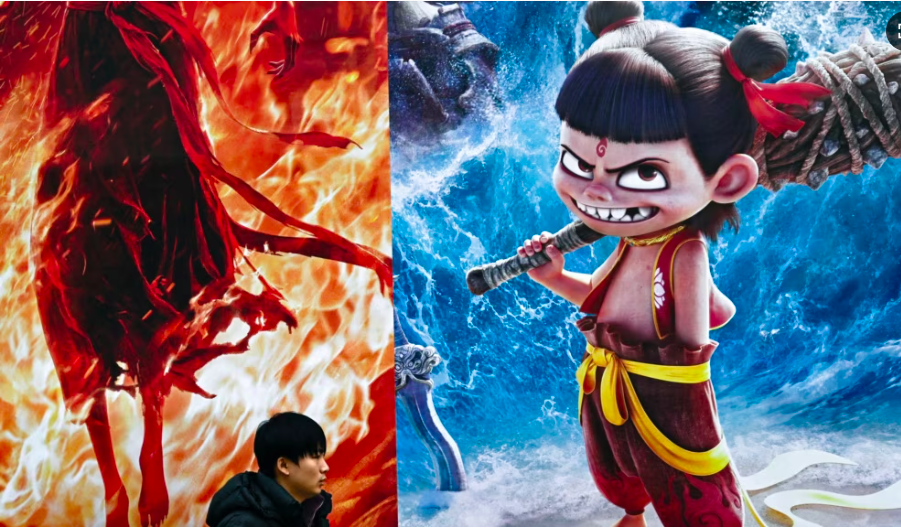
Animated Film Nezha 2 Breaks 10 Billion Yuan Box Office, Setting a New Record in Chinese Cinema History
The animated film Nezha 2 has shattered Chinese box office records, surpassing 10 billion yuan in revenue, making it the first Asian film to achieve this milestone. The film's success was fueled by extensive screenings across Chinese theaters, pushing its box office earnings ever higher. However, behind the skyrocketing numbers, the movie’s rebellious spirit and theme of "defying fate" have not only resonated with audiences but also sparked heated debates on censorship and nationalism. Industry experts caution that while Chinese animated films have seen explosive growth under the "New National Trend" movement, Nezha 2’s success may be fleeting if high-quality productions cannot be consistently delivered.
A 10-Billion-Yuan Box Office Sensation: Defying Fate or Emotional Catharsis?
A supernatural outcast challenging the system and rewriting destiny—Nezha 2 not only became a cultural phenomenon but also revitalised China's struggling film industry. The story’s core message of "defying fate" has been widely interpreted as a symbolic rebellion against real-world pressures.
According to data from Lighthouse Professional Edition, as of February 13, Nezha 2 had surpassed 10 billion yuan (approximately $1.37 billion), making it the highest-grossing animated film in a single market worldwide. On Weibo, the hashtag “Nezha 2 Global Box Office Record” topped the trending charts, garnering over 250 million views.
Register for Tekedia Mini-MBA edition 20 (June 8 – Sept 5, 2026).
Register for Tekedia AI in Business Masterclass.
Join Tekedia Capital Syndicate and co-invest in great global startups.
Register for Tekedia AI Lab.
On February 11, People’s Daily, the official newspaper of the Chinese Communist Party, reported that many young viewers saw themselves reflected in Nezha 2, signaling a new phase in Chinese filmmaking that embraces realism and emotional resonance.
On social media, the line "My fate is determined by me, not by the heavens" sparked intense discussion, with many believing that Nezha embodies the younger generation's resistance to reality and desire for change. A popular blogger from Henan, Xiaoye’s Melon Field, praised the film as more than just a box office victory, calling it "a powerful display of cultural confidence in China's new mythology era."
Another blogger from Shanghai, Chen Ru Shi Shuo, described the film’s iconic line as "an essential element of the Chinese collective consciousness—an unbroken lineage of independence, autonomy, and defiance spanning thousands of years."

However, a more skeptical take came from a blogger in Heilongjiang, Listening to the Rain 0513, who wrote:
"When we’re young, we all think we’re Nezha: ‘My fate is determined by me, not by the heavens.’ But as we grow older, we realise we’re all just groundhogs struggling to make a living."
Similarly, Guangdong blogger Yu Mei’s Self-Discipline and Money-Making Journal noted:
"In modern society, many face immense pressure and yearn to control their destiny but often feel powerless. Nezha's rebellious spirit and determination make him relatable. Watching the film gives viewers a brief sense of ‘idealistic triumph.’"
This emotional release, driven by Nezha’s defiant character, has been described as a "pressure compensation"phenomenon. Zhang, a former film director from Shenzhen, told Voice of America that the film resonated deeply with Chinese parents—mostly from the ‘80s and ‘90s generation—who struggle with rigid social hierarchies and mounting life pressures.

"In a society with little social mobility, changing one’s destiny is nearly impossible," Zhang explained. "Nezha’s desperate fight symbolises rebellion—similar to the Red Guards' sentiment in the past. But since real-world rebellion is no longer an option, movies like this serve as a form of psychological escapism."
Challenging Authority? The Limits of Rebellion in Chinese Cinema
Despite Nezha 2’s rebellious themes, industry insiders believe the film stayed within China's strict censorship boundaries.
Zhang pointed out that Nezha’s defiance is directed at “feudal remnants” rather than the current political system, allowing it to pass censorship without issue.
"In a totalitarian regime, you may be powerful, but you will never overthrow me," Zhang remarked. "That’s the unshakable arrogance of authoritarianism. If Nezha had succeeded in toppling the heavens, the film would never have been approved."
Ng Kwok Kwan, an associate professor at Hong Kong Baptist University’s School of Film, explained that while fantasy films offer entertainment and an outlet for imagination, they must still adhere to implicit political boundaries.
"The film’s ‘rebellion’ is contained—it doesn’t challenge the highest authority. It provides psychological comfort rather than actual dissent," Ng told Voice of America. "Chinese fantasy films, myths, and comedies have a complex, symbiotic relationship with censorship."
Ng also noted that Nezha 2’s themes of family conflict and intergenerational struggles, coupled with the festive atmosphere of the Lunar New Year release, contributed to its broad appeal.
The Rise of "New National Trend" and Cultural Nationalism
Beyond its storytelling and emotional impact, Nezha 2's success is also a product of China's growing emphasis on "New National Trend" (Xin Guo Chao)—a movement that fuses traditional Chinese culture with modern aesthetics.
Ng observed that China’s animation industry has made significant strides in both storytelling and visual presentation. By blending traditional cultural symbols with contemporary animation, the industry has tapped into a powerful source of national pride.
"When a film effectively integrates Chinese heritage with a compelling narrative, it evokes genuine nationalistic sentiment," Ng said.
However, Zhang warned that the rising tide of cultural nationalism—seen in the glorification of New National Trend—could be problematic.
"Blindly idolising national culture without critical reflection can lead to an exclusionary form of nationalism," he cautioned. "Traditional cultural elements originate from feudal societies. Overemphasising them could hinder the film industry’s ability to evolve creatively."
A Box Office Miracle or a One-Time Phenomenon?
Despite Nezha 2’s record-breaking earnings, Zhang believes its success was largely driven by state-backed screening policies rather than purely organic demand.
In 2023, China implemented the "Domestic Animation Film Revitalization Plan," mandating that theaters allocate at least 25% of their screenings to domestic animated films. This policy ensured that Nezha 2 dominated theater schedules nationwide.
A film blogger from Fujian, who requested anonymity, told Voice of America that Nezha 2’s unprecedented box office success was the result of four key factors:
- Strong production quality
- Strategic Lunar New Year release
- Lack of major competition
- Aggressive social media marketing
"China’s film industry has suffered from too many poorly made films," the blogger said. "With Hollywood struggling and Marvel fatigue setting in, Nezha 2 was the perfect storm of familiarity, nostalgia, and a festive release period."
Moreover, China’s box office revenue-sharing model incentivised theaters to prioritise films like Nezha 2, even leading some shuttered cinemas to reopen just to capitalise on its success.
While the film’s Hollywood-style storytelling and top-tier animation have earned widespread praise, the blogger emphasised that the true test for Chinese animation lies ahead.
"If China’s film industry can’t consistently produce high-quality works, Nezha 2 will remain an anomaly rather than a turning point," he concluded. "Relying on government support and nationalist sentiment isn't a sustainable path to success."
Uploaded files:Share this:
- Click to share on Facebook (Opens in new window) Facebook
- Click to share on X (Opens in new window) X
- Click to share on WhatsApp (Opens in new window) WhatsApp
- Click to share on LinkedIn (Opens in new window) LinkedIn
- Click to email a link to a friend (Opens in new window) Email
- Click to print (Opens in new window) Print