

Smuggling Tunnel Discovered Under Poland–Belarus Border as Over 180 Migrants Enter Illegally

Quote from Alex Bobby on December 13, 2025, 4:22 AM
Underground Infiltration: Smuggling Tunnel From Belarus Into Poland Discovered
Polish border guards uncover a nearly 100-metre tunnel used to smuggle more than 180 migrants from Belarus into Poland, highlighting new and sophisticated methods of illegal border crossings.
Polish authorities have uncovered a sophisticated underground tunnel used to smuggle migrants from Belarus into Poland, revealing a new and alarming method of illegal border crossings along the European Union’s eastern frontier. According to Poland’s Border Guard, more than 180 foreign nationals entered Polish territory through the tunnel, which was dug beneath a dam near the town of Narewka in the Podlasie region.
The discovery highlights the evolving tactics used by migrant smuggling networks operating along the Polish-Belarusian border, an area that has remained under intense security scrutiny for several years due to heightened migration pressure and geopolitical tensions.
Tunnel Hidden Beneath the Border
Border Guard officials said the tunnel was nearly 100 metres long and approximately 1.5 metres high, allowing people to move through it in a crouched position. The entrance was concealed in dense forest on the Belarusian side, located about 50 metres from the border, while the exit emerged just 10 metres inside Polish territory.
The tunnel ran beneath a dam, a strategic location that helped disguise its presence and reduce the likelihood of detection by surface patrols. Authorities believe the construction required significant planning, technical knowledge and manpower, pointing to the involvement of organised smuggling networks rather than spontaneous crossings.
“This was not an improvised passage,” a Border Guard spokesperson said. “The tunnel was carefully positioned and deliberately hidden, indicating a well-coordinated operation.”
Rapid Detection and Arrests
Despite the tunnel’s concealment, Polish authorities were able to respond swiftly. Border officials credited integrated electronic surveillance systems, including motion sensors and monitoring technology, with detecting unusual activity once migrants began emerging on the Polish side.
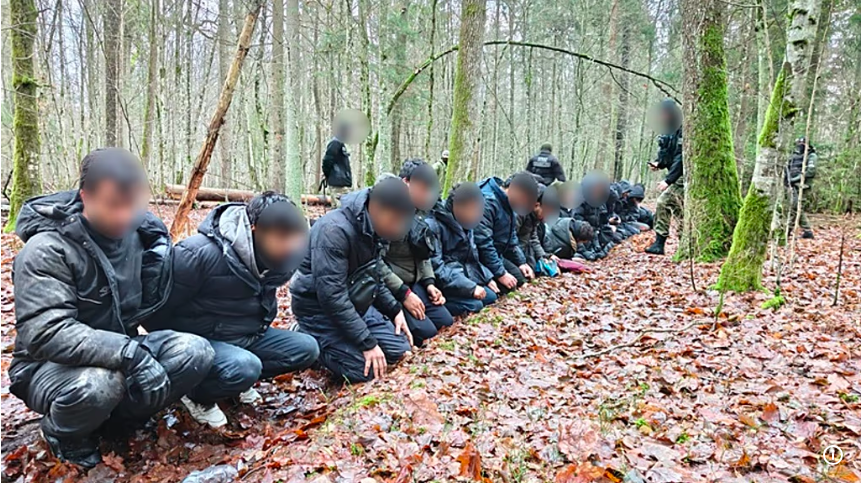
As a result, more than 130 migrants were quickly apprehended, while search operations continue for the remaining individuals who managed to disperse into nearby forested areas. Authorities confirmed that the majority of those who entered Poland through the tunnel have now been detained.
The response involved Border Guard officers, soldiers, police units and tracking dogs, who combed the area around Narewka to locate those attempting to evade capture. Officials said the coordinated effort allowed for the rapid containment of the situation and prevented migrants from moving deeper into Polish territory.
Who Were the Migrants?
According to the Border Guard, Afghan and Pakistani nationals made up the largest proportion of those detained. However, the group was diverse, also including individuals from India, Nepal and Bangladesh.
This mix of nationalities reflects broader migration patterns along eastern routes into the European Union, where migrants from South Asia, the Middle East and beyond attempt to reach Western Europe via Belarus and neighbouring states.
Polish authorities said all apprehended individuals are being processed in accordance with national and EU regulations. This includes identity verification, medical checks and decisions regarding detention, asylum claims or removal procedures.
A Changing Smuggling Landscape
The discovery of the tunnel marks a significant shift in the methods used by smuggling networks along the Polish-Belarusian border. In recent years, most illegal crossings involved migrants attempting to breach fences, cut through barriers or cross rivers under cover of darkness.
The use of an underground tunnel suggests smugglers are adapting to heightened border fortifications, which include reinforced fencing, constant patrols and advanced surveillance systems installed by Poland since the migration crisis escalated in 2021.
Security analysts note that tunnels require far greater investment than surface crossings, indicating that smuggling groups may be responding to tougher enforcement by turning to more complex and risky solutions.
“This shows how criminal networks evolve when borders become harder to cross,” said a regional security expert. “The more barriers are reinforced, the more inventive smugglers become.”
Broader Political and Security Context
The Polish-Belarusian border has been at the centre of diplomatic and security tensions for several years. Poland and the European Union have accused Belarus of facilitating irregular migration as part of a broader strategy to destabilise EU member states — allegations Minsk has repeatedly denied.
Poland has responded by expanding border security measures, deploying troops and constructing fortified barriers along large sections of the frontier. The discovery of the tunnel is likely to intensify calls for continued vigilance and further investment in border protection.
Officials said investigations are underway to determine who financed and constructed the tunnel, how long it had been in operation, and whether similar underground routes exist elsewhere along the border.
Ongoing Search and Investigation
While most migrants have been detained, authorities confirmed that the search for remaining individuals is ongoing. Patrols remain active in the Podlasie region, and surveillance has been increased in surrounding areas to prevent further illegal crossings.
The tunnel itself has been secured and will be dismantled after forensic examinations are completed. Border Guard officials said the structure will be analysed to better understand how it was built and how similar attempts can be detected in the future.
Looking Forward
The discovery of the smuggling tunnel near Narewka is likely to prompt a renewed reassessment of border security along Poland’s frontier with Belarus. Authorities are expected to intensify underground monitoring, expand the use of advanced detection technologies, and increase patrol coordination to prevent similar infiltration routes from emerging unnoticed. As smuggling networks continue to adapt, border protection strategies will need to evolve just as rapidly.
At the same time, the incident reinforces the need for broader regional and European cooperation to address the root causes driving irregular migration and the criminal networks that profit from it. Without coordinated action that combines security enforcement, intelligence sharing and humanitarian considerations, such incidents are likely to recur. Looking ahead, the challenge will be not only to secure borders more effectively, but also to balance enforcement with sustainable, long-term solutions to migration pressures facing Europe.
Conclusion
The discovery of a smuggling tunnel under the Polish-Belarusian border underscores the growing sophistication of migrant trafficking networks and the persistent pressures facing Europe’s eastern frontier. While Polish authorities were able to detect and disrupt the operation swiftly, the incident highlights the constant challenge of securing borders against increasingly complex methods of illegal entry.
As investigations continue and security measures are reviewed, the case serves as a stark reminder that migration pressures — and the criminal networks exploiting them — remain a dynamic and evolving threat requiring sustained regional cooperation and vigilance.
Underground Infiltration: Smuggling Tunnel From Belarus Into Poland Discovered
Polish border guards uncover a nearly 100-metre tunnel used to smuggle more than 180 migrants from Belarus into Poland, highlighting new and sophisticated methods of illegal border crossings.
Polish authorities have uncovered a sophisticated underground tunnel used to smuggle migrants from Belarus into Poland, revealing a new and alarming method of illegal border crossings along the European Union’s eastern frontier. According to Poland’s Border Guard, more than 180 foreign nationals entered Polish territory through the tunnel, which was dug beneath a dam near the town of Narewka in the Podlasie region.
The discovery highlights the evolving tactics used by migrant smuggling networks operating along the Polish-Belarusian border, an area that has remained under intense security scrutiny for several years due to heightened migration pressure and geopolitical tensions.
Register for Tekedia Mini-MBA edition 20 (June 8 – Sept 5, 2026).
Register for Tekedia AI in Business Masterclass.
Join Tekedia Capital Syndicate and co-invest in great global startups.
Register for Tekedia AI Lab.
Tunnel Hidden Beneath the Border
Border Guard officials said the tunnel was nearly 100 metres long and approximately 1.5 metres high, allowing people to move through it in a crouched position. The entrance was concealed in dense forest on the Belarusian side, located about 50 metres from the border, while the exit emerged just 10 metres inside Polish territory.
The tunnel ran beneath a dam, a strategic location that helped disguise its presence and reduce the likelihood of detection by surface patrols. Authorities believe the construction required significant planning, technical knowledge and manpower, pointing to the involvement of organised smuggling networks rather than spontaneous crossings.

“This was not an improvised passage,” a Border Guard spokesperson said. “The tunnel was carefully positioned and deliberately hidden, indicating a well-coordinated operation.”
Rapid Detection and Arrests
Despite the tunnel’s concealment, Polish authorities were able to respond swiftly. Border officials credited integrated electronic surveillance systems, including motion sensors and monitoring technology, with detecting unusual activity once migrants began emerging on the Polish side.

As a result, more than 130 migrants were quickly apprehended, while search operations continue for the remaining individuals who managed to disperse into nearby forested areas. Authorities confirmed that the majority of those who entered Poland through the tunnel have now been detained.
The response involved Border Guard officers, soldiers, police units and tracking dogs, who combed the area around Narewka to locate those attempting to evade capture. Officials said the coordinated effort allowed for the rapid containment of the situation and prevented migrants from moving deeper into Polish territory.
Who Were the Migrants?
According to the Border Guard, Afghan and Pakistani nationals made up the largest proportion of those detained. However, the group was diverse, also including individuals from India, Nepal and Bangladesh.
This mix of nationalities reflects broader migration patterns along eastern routes into the European Union, where migrants from South Asia, the Middle East and beyond attempt to reach Western Europe via Belarus and neighbouring states.
Polish authorities said all apprehended individuals are being processed in accordance with national and EU regulations. This includes identity verification, medical checks and decisions regarding detention, asylum claims or removal procedures.
A Changing Smuggling Landscape
The discovery of the tunnel marks a significant shift in the methods used by smuggling networks along the Polish-Belarusian border. In recent years, most illegal crossings involved migrants attempting to breach fences, cut through barriers or cross rivers under cover of darkness.
The use of an underground tunnel suggests smugglers are adapting to heightened border fortifications, which include reinforced fencing, constant patrols and advanced surveillance systems installed by Poland since the migration crisis escalated in 2021.
Security analysts note that tunnels require far greater investment than surface crossings, indicating that smuggling groups may be responding to tougher enforcement by turning to more complex and risky solutions.
“This shows how criminal networks evolve when borders become harder to cross,” said a regional security expert. “The more barriers are reinforced, the more inventive smugglers become.”
Broader Political and Security Context
The Polish-Belarusian border has been at the centre of diplomatic and security tensions for several years. Poland and the European Union have accused Belarus of facilitating irregular migration as part of a broader strategy to destabilise EU member states — allegations Minsk has repeatedly denied.
Poland has responded by expanding border security measures, deploying troops and constructing fortified barriers along large sections of the frontier. The discovery of the tunnel is likely to intensify calls for continued vigilance and further investment in border protection.
Officials said investigations are underway to determine who financed and constructed the tunnel, how long it had been in operation, and whether similar underground routes exist elsewhere along the border.
Ongoing Search and Investigation
While most migrants have been detained, authorities confirmed that the search for remaining individuals is ongoing. Patrols remain active in the Podlasie region, and surveillance has been increased in surrounding areas to prevent further illegal crossings.
The tunnel itself has been secured and will be dismantled after forensic examinations are completed. Border Guard officials said the structure will be analysed to better understand how it was built and how similar attempts can be detected in the future.
Looking Forward
The discovery of the smuggling tunnel near Narewka is likely to prompt a renewed reassessment of border security along Poland’s frontier with Belarus. Authorities are expected to intensify underground monitoring, expand the use of advanced detection technologies, and increase patrol coordination to prevent similar infiltration routes from emerging unnoticed. As smuggling networks continue to adapt, border protection strategies will need to evolve just as rapidly.
At the same time, the incident reinforces the need for broader regional and European cooperation to address the root causes driving irregular migration and the criminal networks that profit from it. Without coordinated action that combines security enforcement, intelligence sharing and humanitarian considerations, such incidents are likely to recur. Looking ahead, the challenge will be not only to secure borders more effectively, but also to balance enforcement with sustainable, long-term solutions to migration pressures facing Europe.
Conclusion
The discovery of a smuggling tunnel under the Polish-Belarusian border underscores the growing sophistication of migrant trafficking networks and the persistent pressures facing Europe’s eastern frontier. While Polish authorities were able to detect and disrupt the operation swiftly, the incident highlights the constant challenge of securing borders against increasingly complex methods of illegal entry.
As investigations continue and security measures are reviewed, the case serves as a stark reminder that migration pressures — and the criminal networks exploiting them — remain a dynamic and evolving threat requiring sustained regional cooperation and vigilance.
Uploaded files:Share this:
- Click to share on Facebook (Opens in new window) Facebook
- Click to share on X (Opens in new window) X
- Click to share on WhatsApp (Opens in new window) WhatsApp
- Click to share on LinkedIn (Opens in new window) LinkedIn
- Click to email a link to a friend (Opens in new window) Email
- Click to print (Opens in new window) Print