

UN General Assembly Day Two: Trump’s Ukraine Remark, Zelensky’s Warning, and Middle East Tensions

Quote from Alex Bobby on September 27, 2025, 11:35 AM
As the United Nations General Assembly entered its second day, global leaders convened under the shadow of intensifying conflicts and rising geopolitical divisions. From Ukraine’s fight for survival against Russia to long-simmering disputes in the Middle East, the speeches and sideline conversations revealed both a sense of urgency and a lack of consensus on how to move forward.
Yet one comment dominated chatter in the hallways of the UN headquarters in New York: Donald Trump’s assertion that Ukraine could “win all of Ukraine back in its original form.” The remark, delivered during his address on day one, loomed large over the proceedings, setting a charged tone for the debates that followed.
Trump’s Bold Claim on Ukraine
Donald Trump’s statement — suggesting Kyiv can fully reclaim its internationally recognised territory, including areas currently occupied by Russia — was met with skepticism and cautious optimism in equal measure. For Ukraine, it was a message of support that seemed to validate the legitimacy of its struggle. For others, particularly European allies, it raised questions about whether Trump’s words were merely rhetorical or indicative of a policy shift should he regain power in Washington.
Diplomats privately noted that while the statement energised Ukraine’s supporters, it also risked inflaming tensions with Moscow, where Vladimir Putin continues to frame the war as an existential fight against Western encroachment.
Zelensky’s Warning: “Stopping Him Now Is Cheaper”
Ukrainian President Volodymyr Zelensky, speaking on the assembly floor, used his platform to renew warnings about Russia’s continued aggression. With Russia showing no signs of retreat, Zelensky insisted that the international community cannot afford complacency.
“Putin will keep driving the war forward,” he said bluntly. “Stopping him now is cheaper.”
His remarks drew applause from several Western delegations, though they underscored the fatigue creeping into the international community after more than two years of war. For Ukraine, the challenge lies not only on the battlefield but also in sustaining global solidarity as the conflict drags on.
Estonia Echoes the Alarm
Zelensky’s message found strong reinforcement from Estonia’s president, who took the floor fresh from reports of a recent Russian incursion into Estonian airspace. The Baltic leader warned that Moscow’s appetite for aggression extends beyond Ukraine and represents a direct threat to NATO’s eastern flank.
“The Kremlin is willing to inflict destruction without limit,” he said, urging for greater collective action and stronger defensive commitments. The warning reflected the deep anxiety among Russia’s smaller neighbours, who view the conflict in Ukraine as a frontline in their own struggle for security.
Rubio to Lavrov: “Stop the Killing”
Outside the chamber, US Secretary of State Marco Rubio confronted Russian Foreign Minister Sergei Lavrov in what sources described as a tense exchange. Rubio reportedly told Lavrov to “stop the killing,” a remark that captured the bluntness of US frustration with Moscow’s war.
Though the exchange was brief, it highlighted the limits of diplomacy at a time when relations between Washington and Moscow remain at their lowest point since the Cold War.
Syria Returns to the Podium After Five Decades
The Middle East also claimed a significant portion of attention. Ahmad al-Sharaa, Syria’s president, became the first Syrian leader to address the General Assembly since 1967. His speech focused heavily on sanctions, which he called devastating to his country’s economic recovery.
He urged the international community to ease restrictions and demanded condemnation of recent Israeli strikes on Syrian territory. While his appearance signalled Syria’s attempt to reassert itself on the global stage, reactions in the hall were mixed, with Western delegations largely unmoved by his appeals.
Iran’s Assurances — and Macron’s Ultimatum
Iranian President Masoud Pezeshkian also took to the podium, reiterating that his country has “not sought and will never seek” to develop nuclear weapons. His remarks were aimed at easing fears of a renewed arms race in the Middle East, though they were quickly followed by a stern warning from France’s Emmanuel Macron.
Macron declared that Iran has only “hours” left to agree to international inspections of its nuclear programme or face fresh sanctions. The blunt ultimatum underscored the urgency felt by Western powers over the state of negotiations, which have stalled amid mounting mistrust.
A Fractured Global Landscape
Day two of the General Assembly revealed a world body struggling to respond coherently to simultaneous crises. Ukraine remains the dominant concern, but the renewed presence of Syria and rising tensions over Iran highlight the multiplicity of challenges confronting the international community.
For some, the session demonstrated the UN’s continued relevance as a forum for dialogue, however strained. For others, the gulf between rhetoric and action once again exposed the limitations of an institution bound by competing national interests.
Looking Forward
As the UN General Assembly continues, the debates are set to intensify. Ukraine’s allies will push for stronger commitments against Russian aggression, while Moscow looks to counter the narrative on the global stage. The Middle East, too, will remain in sharp focus, with Syria’s re-emergence and Iran’s nuclear standoff testing the resolve of world powers.
The days ahead will reveal whether the speeches made in New York translate into meaningful action—or whether they remain lofty words overshadowed by hard realities. For now, all eyes are on the negotiations still unfolding in the corridors of the UN.
Final Thoughts
Day two of the UN General Assembly was a reminder that the world’s most urgent crises do not exist in isolation. Trump’s bold remarks about Ukraine framed a day dominated by warnings from Zelensky and Estonia about unchecked Russian aggression. On the sidelines, tense exchanges between Washington and Moscow reinforced the fragility of diplomacy.
At the same time, the return of Syria’s president to the UN stage after more than five decades, alongside sharp disputes over Iran’s nuclear programme, revealed how the Middle East remains a powder keg. Macron’s ultimatum to Tehran underscored how quickly the clock is ticking.
Ultimately, the General Assembly once again highlighted both the necessity and the limitations of global dialogue. Leaders may share stages and speeches, but finding common ground in an era of competing national interests remains the UN’s greatest battle.
Conclusion
The second day of the UN General Assembly underscored both the urgency of today’s global challenges and the difficulty of forging common solutions. Trump’s bold words about Ukraine’s future hung over the chamber, even as Zelensky and Estonia issued stark reminders off the costs of inaction.
Meanwhile, Syria’s return to the podium after decades of absence highlighted unresolved Middle Eastern conflicts, while Iran’s nuclear assurances were met with skepticism and hard deadlines from the West.
As leaders prepare for further debates in the days ahead, the question remains whether the UN can translate rhetoric into meaningful action. For now, the General Assembly remains a mirror of a fractured international order — one where words carry weight but solutions remain elusive.
Meta Description
"At the UN General Assembly’s second day, Trump’s claim that Kyiv can win back all its territory loomed over debates. Zelensky and Estonia warned of Russian aggression, Syria returned to the podium after decades, and Macron issued Iran a nuclear ultimatum."
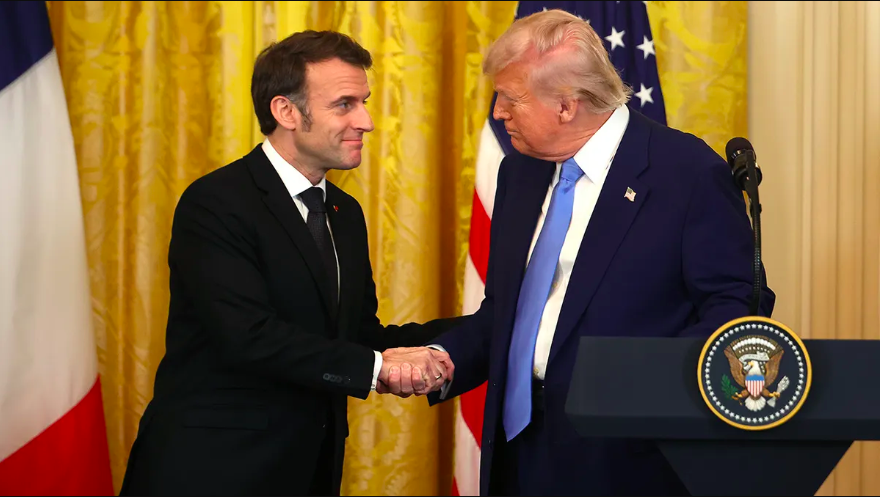
As the United Nations General Assembly entered its second day, global leaders convened under the shadow of intensifying conflicts and rising geopolitical divisions. From Ukraine’s fight for survival against Russia to long-simmering disputes in the Middle East, the speeches and sideline conversations revealed both a sense of urgency and a lack of consensus on how to move forward.
Yet one comment dominated chatter in the hallways of the UN headquarters in New York: Donald Trump’s assertion that Ukraine could “win all of Ukraine back in its original form.” The remark, delivered during his address on day one, loomed large over the proceedings, setting a charged tone for the debates that followed.
Trump’s Bold Claim on Ukraine
Register for Tekedia Mini-MBA edition 20 (June 8 – Sept 5, 2026).
Register for Tekedia AI in Business Masterclass.
Join Tekedia Capital Syndicate and co-invest in great global startups.
Register for Tekedia AI Lab.
Donald Trump’s statement — suggesting Kyiv can fully reclaim its internationally recognised territory, including areas currently occupied by Russia — was met with skepticism and cautious optimism in equal measure. For Ukraine, it was a message of support that seemed to validate the legitimacy of its struggle. For others, particularly European allies, it raised questions about whether Trump’s words were merely rhetorical or indicative of a policy shift should he regain power in Washington.
Diplomats privately noted that while the statement energised Ukraine’s supporters, it also risked inflaming tensions with Moscow, where Vladimir Putin continues to frame the war as an existential fight against Western encroachment.
Zelensky’s Warning: “Stopping Him Now Is Cheaper”

Ukrainian President Volodymyr Zelensky, speaking on the assembly floor, used his platform to renew warnings about Russia’s continued aggression. With Russia showing no signs of retreat, Zelensky insisted that the international community cannot afford complacency.
“Putin will keep driving the war forward,” he said bluntly. “Stopping him now is cheaper.”
His remarks drew applause from several Western delegations, though they underscored the fatigue creeping into the international community after more than two years of war. For Ukraine, the challenge lies not only on the battlefield but also in sustaining global solidarity as the conflict drags on.

Estonia Echoes the Alarm
Zelensky’s message found strong reinforcement from Estonia’s president, who took the floor fresh from reports of a recent Russian incursion into Estonian airspace. The Baltic leader warned that Moscow’s appetite for aggression extends beyond Ukraine and represents a direct threat to NATO’s eastern flank.
“The Kremlin is willing to inflict destruction without limit,” he said, urging for greater collective action and stronger defensive commitments. The warning reflected the deep anxiety among Russia’s smaller neighbours, who view the conflict in Ukraine as a frontline in their own struggle for security.
Rubio to Lavrov: “Stop the Killing”
Outside the chamber, US Secretary of State Marco Rubio confronted Russian Foreign Minister Sergei Lavrov in what sources described as a tense exchange. Rubio reportedly told Lavrov to “stop the killing,” a remark that captured the bluntness of US frustration with Moscow’s war.
Though the exchange was brief, it highlighted the limits of diplomacy at a time when relations between Washington and Moscow remain at their lowest point since the Cold War.
Syria Returns to the Podium After Five Decades
The Middle East also claimed a significant portion of attention. Ahmad al-Sharaa, Syria’s president, became the first Syrian leader to address the General Assembly since 1967. His speech focused heavily on sanctions, which he called devastating to his country’s economic recovery.
He urged the international community to ease restrictions and demanded condemnation of recent Israeli strikes on Syrian territory. While his appearance signalled Syria’s attempt to reassert itself on the global stage, reactions in the hall were mixed, with Western delegations largely unmoved by his appeals.
Iran’s Assurances — and Macron’s Ultimatum
Iranian President Masoud Pezeshkian also took to the podium, reiterating that his country has “not sought and will never seek” to develop nuclear weapons. His remarks were aimed at easing fears of a renewed arms race in the Middle East, though they were quickly followed by a stern warning from France’s Emmanuel Macron.
Macron declared that Iran has only “hours” left to agree to international inspections of its nuclear programme or face fresh sanctions. The blunt ultimatum underscored the urgency felt by Western powers over the state of negotiations, which have stalled amid mounting mistrust.
A Fractured Global Landscape
Day two of the General Assembly revealed a world body struggling to respond coherently to simultaneous crises. Ukraine remains the dominant concern, but the renewed presence of Syria and rising tensions over Iran highlight the multiplicity of challenges confronting the international community.
For some, the session demonstrated the UN’s continued relevance as a forum for dialogue, however strained. For others, the gulf between rhetoric and action once again exposed the limitations of an institution bound by competing national interests.
Looking Forward
As the UN General Assembly continues, the debates are set to intensify. Ukraine’s allies will push for stronger commitments against Russian aggression, while Moscow looks to counter the narrative on the global stage. The Middle East, too, will remain in sharp focus, with Syria’s re-emergence and Iran’s nuclear standoff testing the resolve of world powers.
The days ahead will reveal whether the speeches made in New York translate into meaningful action—or whether they remain lofty words overshadowed by hard realities. For now, all eyes are on the negotiations still unfolding in the corridors of the UN.
Final Thoughts
Day two of the UN General Assembly was a reminder that the world’s most urgent crises do not exist in isolation. Trump’s bold remarks about Ukraine framed a day dominated by warnings from Zelensky and Estonia about unchecked Russian aggression. On the sidelines, tense exchanges between Washington and Moscow reinforced the fragility of diplomacy.
At the same time, the return of Syria’s president to the UN stage after more than five decades, alongside sharp disputes over Iran’s nuclear programme, revealed how the Middle East remains a powder keg. Macron’s ultimatum to Tehran underscored how quickly the clock is ticking.
Ultimately, the General Assembly once again highlighted both the necessity and the limitations of global dialogue. Leaders may share stages and speeches, but finding common ground in an era of competing national interests remains the UN’s greatest battle.
Conclusion
The second day of the UN General Assembly underscored both the urgency of today’s global challenges and the difficulty of forging common solutions. Trump’s bold words about Ukraine’s future hung over the chamber, even as Zelensky and Estonia issued stark reminders off the costs of inaction.
Meanwhile, Syria’s return to the podium after decades of absence highlighted unresolved Middle Eastern conflicts, while Iran’s nuclear assurances were met with skepticism and hard deadlines from the West.
As leaders prepare for further debates in the days ahead, the question remains whether the UN can translate rhetoric into meaningful action. For now, the General Assembly remains a mirror of a fractured international order — one where words carry weight but solutions remain elusive.
Meta Description
"At the UN General Assembly’s second day, Trump’s claim that Kyiv can win back all its territory loomed over debates. Zelensky and Estonia warned of Russian aggression, Syria returned to the podium after decades, and Macron issued Iran a nuclear ultimatum."
Share this:
- Click to share on Facebook (Opens in new window) Facebook
- Click to share on X (Opens in new window) X
- Click to share on WhatsApp (Opens in new window) WhatsApp
- Click to share on LinkedIn (Opens in new window) LinkedIn
- Click to email a link to a friend (Opens in new window) Email
- Click to print (Opens in new window) Print