

Unveiling Sex, Sleaze & Subversion: Inside The New Micro Cinema Nickel London’s Grindhouse Revival

Quote from Alex Bobby on June 1, 2025, 4:39 AM
The Nickel: London’s Micro Grindhouse Resurrecting the Spirit of Cinema’s Wild Side
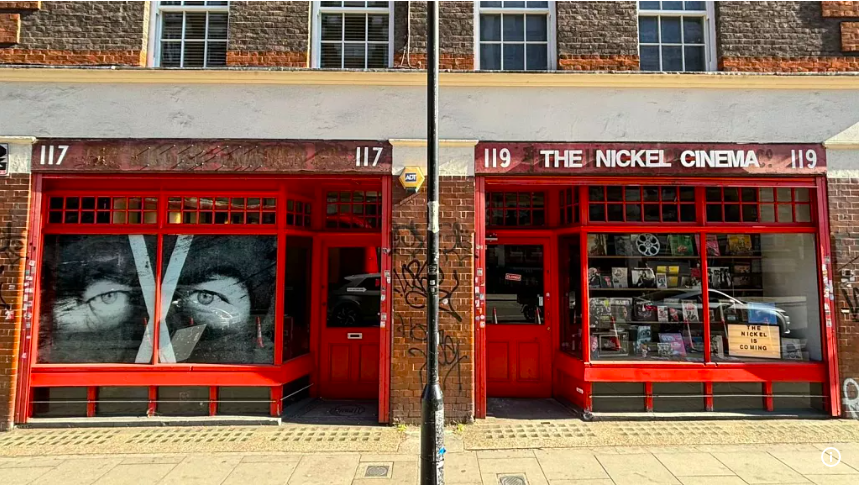
On a quiet street in central London, a red-painted building catches the eye with a poster-sized image of The Man with the X-Ray Eyes glaring out onto the pavement. Step inside, and you’ll find yourself plunged into a cinematic fever dream. Tonight’s feature? Ruggero Deodato’s The Washing Machine, an Italian murder mystery overflowing with psychosexual tension, bleeding appliances, and a memorably unhinged use of a refrigerator. Welcome to The Nickel, London’s boldest new micro cinema—and a lifeline for film lovers seeking something messier, weirder, and more alive than what mainstream screens currently offer.
Founded by filmmaker and programmer Dominic Hicks, The Nickel draws inspiration from the grind-house theatres of mid-century America and the sleazy brilliance of exploitation cinema. Its ethos is simple but radical in the age of streaming sameness: show the wildest, most unhinged, most unforgettable films—on analogue formats, in the company of strangers. As Hicks puts it: “A safe place for weirdos and outsiders.”
A Freaky Film Sanctuary
The Nickel’s June debut brings a slate of gloriously off-kilter programming, from Todd Browning’s silent horror The Unknown, to Roman Polanski’s erotic thriller Bitter Moon, to David Winters’ Cannes-set giallo The Last Horror Film. The selections reflect Hicks’ admiration for the late, legendary Scala cinema—London’s 1980s haven for the transgressive and strange.
“I like films where the beauty in them comes through how the audience receives and nurtures them in their collective imagination,” Hicks tells Euronews Culture. “Whether it's the practical effects, or the score, or the bad acting they find really quotable—it belongs to the audience in the long run.”
This kind of cult programming has become increasingly rare in a cinematic landscape dominated by franchise fatigue and algorithmic curation. But The Nickel is part of a scrappy, rebellious network across Europe pushing back. From Liverpool’s trans-inclusive Paraphysis Cinema to Paris’s feminist Tonnerre, hyperlocal film spaces are reclaiming cinema as a communal, countercultural experience.
Embracing the Tangible and the Tangential
Part of what sets The Nickel apart is its commitment to analogue formats. Before raising nearly £14,000 to build out a permanent home, Hicks ran screenings at his local pub and The Cinema Museum, often relying on rare 16mm prints. These physical reels do more than deliver nostalgia—they offer texture, unpredictability, and the occasional magic of mechanical error.
“There was one time the projector got stuck and burned the film,” Hicks recalls. “Everybody was just delighted. It was like we’d seen a shooting star.”
This analogue charm is key to The Nickel’s appeal. In the digital age—when films are streamed, skipped, and compressed—projecting a physical print becomes an act of reverence. Like vinyl for music lovers, celluloid carries presence and imperfection. You’re not just watching a film; you’re participating in a moment that won’t repeat.
A Space for Film and for Filmmakers
Though The Nickel is still under construction during my visit, its spirit is already alive. The entrance is lined with obscure VHS and DVD releases, their lurid cover art promising all manner of deranged delights. In the dim basement, a bar is taking shape, soon to double as a communal hub for workshops and collaborative film projects.
“Ultimately, the plan is to have everybody create projects together, then we can screen them here,” says Hicks. “Working on weird shit, with weird people—that’s the dream.”
The Nickel isn’t just a cinema; it’s a clubhouse for cinephiles, filmmakers, and the curious. And in a post-lockdown world starved for in-person cultural experiences, its arrival feels not just exciting, but necessary.
A Rebellion Against Monoculture
Hicks’ approach stands in stark contrast to the rising tide of “new literalism” in mainstream film—a term writer Namwali Serpell used to describe recent works that over-explain their messages and flatten moral ambiguity. By embracing the tonal chaos and ethical murk of 1970s exploitation films, The Nickel reasserts cinema’s power to provoke, perplex, and polarise.
“I actually prefer when it’s not abundantly clear if the filmmakers had the right morals,” Hicks says. “That doesn’t mean the film is promoting something bad. I think audiences are intelligent enough to challenge what they’re seeing.”
This attitude taps into a deeper yearning: for art that’s dangerous, unpredictable, and truly collective. At The Nickel, viewers are encouraged not just to consume, but to react. Laugh, cringe, gasp—together. It's in the mess and madness that cinema becomes most alive.
The Future Is Weird
The Nickel opens at a precarious time for cinemas. According to the Independent Cinema Office, nearly a third of the UK’s independent cinemas are under threat. Even beloved institutions like The Prince Charles Cinema in London are fighting redevelopment.
But Hicks remains hopeful. “I think we’re seeing a return to neighbourhood, smaller, independent cinema,” he says. “Because multiplexes don’t give people a compelling enough reason to leave there sofas.”
As the credits roll on The Washing Machine, the room buzzes with giddy disbelief. It’s not just the film that’s intoxicating—it’s the experience of being together, sharing something absurd and unforgettable. In an era of algorithmic blandness, The Nickel offers a defiant, delirious alternative: a micro grind-house with a macro mission to keep cinema strange, social, and gloriously alive.
The Nickel opens its doors in London on 11 June. Bring your curiosity, your weirdness, and maybe a love of fridge-related horror.
Conclusion
At a time when mainstream cinemas struggle to survive and streaming platforms dominate with polished, predictable content, The Nickel stands out as a beacon for the bizarre and beloved. It’s more than a cinema—it’s a gathering place for misfits, cinephiles, and creators who believe in the magic of the collective viewing experience. Through freaky programming, analogue formats, and a fearless love of the strange, The Nickel reminds us that cinema doesn’t have to be safe or sanitised to be meaningful. In fact, it’s often in the discomfort, the absurdity, and the unexpected that we find the purest connection—to art, to each other, and to ourselves.
The Nickel: London’s Micro Grindhouse Resurrecting the Spirit of Cinema’s Wild Side
On a quiet street in central London, a red-painted building catches the eye with a poster-sized image of The Man with the X-Ray Eyes glaring out onto the pavement. Step inside, and you’ll find yourself plunged into a cinematic fever dream. Tonight’s feature? Ruggero Deodato’s The Washing Machine, an Italian murder mystery overflowing with psychosexual tension, bleeding appliances, and a memorably unhinged use of a refrigerator. Welcome to The Nickel, London’s boldest new micro cinema—and a lifeline for film lovers seeking something messier, weirder, and more alive than what mainstream screens currently offer.
Founded by filmmaker and programmer Dominic Hicks, The Nickel draws inspiration from the grind-house theatres of mid-century America and the sleazy brilliance of exploitation cinema. Its ethos is simple but radical in the age of streaming sameness: show the wildest, most unhinged, most unforgettable films—on analogue formats, in the company of strangers. As Hicks puts it: “A safe place for weirdos and outsiders.”
Register for Tekedia Mini-MBA edition 20 (June 8 – Sept 5, 2026).
Register for Tekedia AI in Business Masterclass.
Join Tekedia Capital Syndicate and co-invest in great global startups.
Register for Tekedia AI Lab.
A Freaky Film Sanctuary
The Nickel’s June debut brings a slate of gloriously off-kilter programming, from Todd Browning’s silent horror The Unknown, to Roman Polanski’s erotic thriller Bitter Moon, to David Winters’ Cannes-set giallo The Last Horror Film. The selections reflect Hicks’ admiration for the late, legendary Scala cinema—London’s 1980s haven for the transgressive and strange.
“I like films where the beauty in them comes through how the audience receives and nurtures them in their collective imagination,” Hicks tells Euronews Culture. “Whether it's the practical effects, or the score, or the bad acting they find really quotable—it belongs to the audience in the long run.”

This kind of cult programming has become increasingly rare in a cinematic landscape dominated by franchise fatigue and algorithmic curation. But The Nickel is part of a scrappy, rebellious network across Europe pushing back. From Liverpool’s trans-inclusive Paraphysis Cinema to Paris’s feminist Tonnerre, hyperlocal film spaces are reclaiming cinema as a communal, countercultural experience.
Embracing the Tangible and the Tangential
Part of what sets The Nickel apart is its commitment to analogue formats. Before raising nearly £14,000 to build out a permanent home, Hicks ran screenings at his local pub and The Cinema Museum, often relying on rare 16mm prints. These physical reels do more than deliver nostalgia—they offer texture, unpredictability, and the occasional magic of mechanical error.

“There was one time the projector got stuck and burned the film,” Hicks recalls. “Everybody was just delighted. It was like we’d seen a shooting star.”
This analogue charm is key to The Nickel’s appeal. In the digital age—when films are streamed, skipped, and compressed—projecting a physical print becomes an act of reverence. Like vinyl for music lovers, celluloid carries presence and imperfection. You’re not just watching a film; you’re participating in a moment that won’t repeat.
A Space for Film and for Filmmakers
Though The Nickel is still under construction during my visit, its spirit is already alive. The entrance is lined with obscure VHS and DVD releases, their lurid cover art promising all manner of deranged delights. In the dim basement, a bar is taking shape, soon to double as a communal hub for workshops and collaborative film projects.
“Ultimately, the plan is to have everybody create projects together, then we can screen them here,” says Hicks. “Working on weird shit, with weird people—that’s the dream.”
The Nickel isn’t just a cinema; it’s a clubhouse for cinephiles, filmmakers, and the curious. And in a post-lockdown world starved for in-person cultural experiences, its arrival feels not just exciting, but necessary.
A Rebellion Against Monoculture
Hicks’ approach stands in stark contrast to the rising tide of “new literalism” in mainstream film—a term writer Namwali Serpell used to describe recent works that over-explain their messages and flatten moral ambiguity. By embracing the tonal chaos and ethical murk of 1970s exploitation films, The Nickel reasserts cinema’s power to provoke, perplex, and polarise.
“I actually prefer when it’s not abundantly clear if the filmmakers had the right morals,” Hicks says. “That doesn’t mean the film is promoting something bad. I think audiences are intelligent enough to challenge what they’re seeing.”
This attitude taps into a deeper yearning: for art that’s dangerous, unpredictable, and truly collective. At The Nickel, viewers are encouraged not just to consume, but to react. Laugh, cringe, gasp—together. It's in the mess and madness that cinema becomes most alive.
The Future Is Weird
The Nickel opens at a precarious time for cinemas. According to the Independent Cinema Office, nearly a third of the UK’s independent cinemas are under threat. Even beloved institutions like The Prince Charles Cinema in London are fighting redevelopment.
But Hicks remains hopeful. “I think we’re seeing a return to neighbourhood, smaller, independent cinema,” he says. “Because multiplexes don’t give people a compelling enough reason to leave there sofas.”
As the credits roll on The Washing Machine, the room buzzes with giddy disbelief. It’s not just the film that’s intoxicating—it’s the experience of being together, sharing something absurd and unforgettable. In an era of algorithmic blandness, The Nickel offers a defiant, delirious alternative: a micro grind-house with a macro mission to keep cinema strange, social, and gloriously alive.
The Nickel opens its doors in London on 11 June. Bring your curiosity, your weirdness, and maybe a love of fridge-related horror.
Conclusion
At a time when mainstream cinemas struggle to survive and streaming platforms dominate with polished, predictable content, The Nickel stands out as a beacon for the bizarre and beloved. It’s more than a cinema—it’s a gathering place for misfits, cinephiles, and creators who believe in the magic of the collective viewing experience. Through freaky programming, analogue formats, and a fearless love of the strange, The Nickel reminds us that cinema doesn’t have to be safe or sanitised to be meaningful. In fact, it’s often in the discomfort, the absurdity, and the unexpected that we find the purest connection—to art, to each other, and to ourselves.
Uploaded files:Share this:
- Click to share on Facebook (Opens in new window) Facebook
- Click to share on X (Opens in new window) X
- Click to share on WhatsApp (Opens in new window) WhatsApp
- Click to share on LinkedIn (Opens in new window) LinkedIn
- Click to email a link to a friend (Opens in new window) Email
- Click to print (Opens in new window) Print